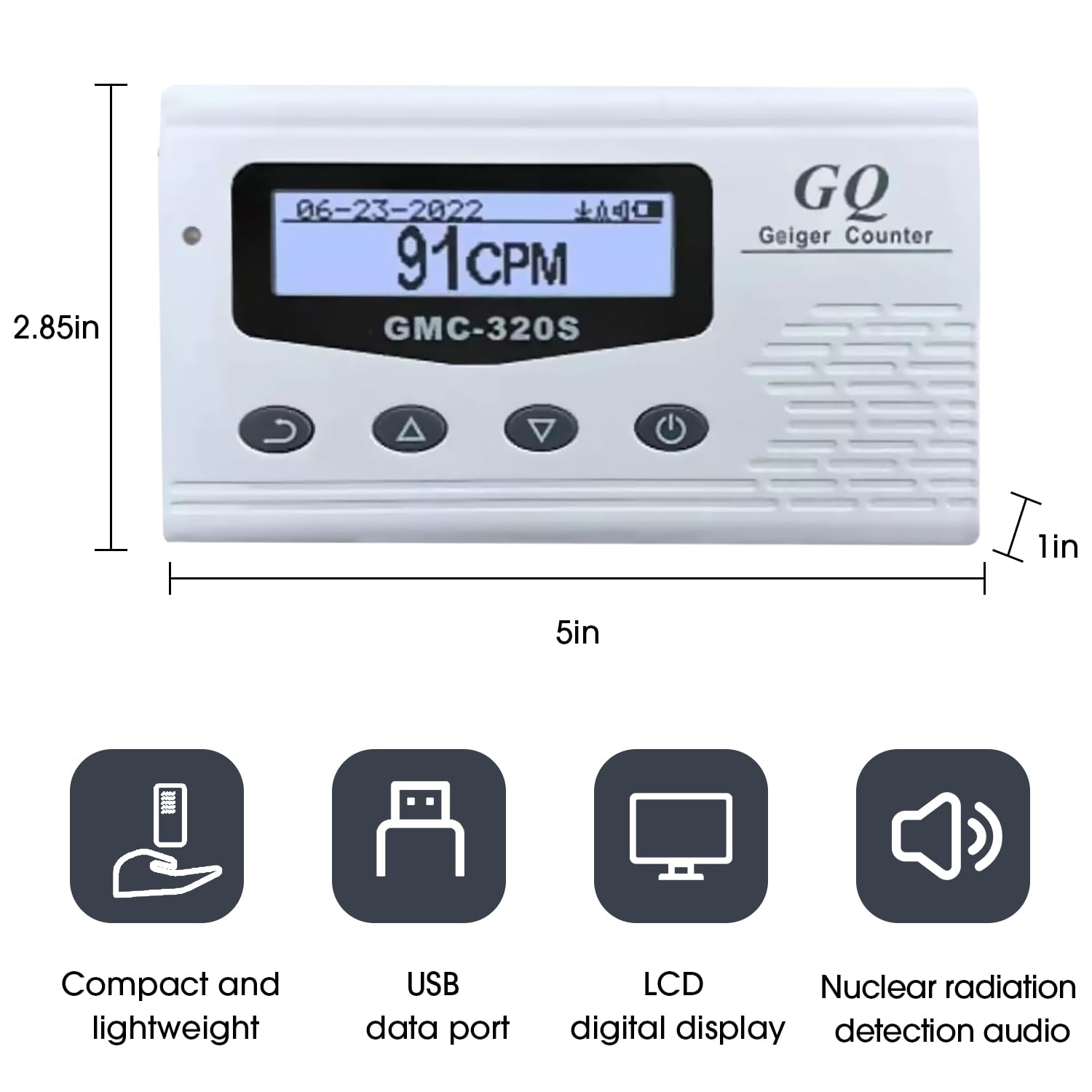
The exact order can vary substantially because activity, geometry, shielding, and the 320S detector’s response all matter.
| Rank | Source | Expected usefulness with GMC-320S | Notes |
|---|---|---|---|
| 1 | Banana | Very weak | ~65 Bq K-40 per 500 g. Good sanity check, but don’t expect a dramatic increase. Canadian Nuclear Safety Commission |
| 2 | Potatoes / carrots | Very weak | Similar K-40 activity; potatoes ~63 Bq/500 g. Canadian Nuclear Safety Commission |
| 3 | Brazil nuts | Weak | ~103 Bq K-40/500 g, plus naturally occurring radium-226. Better than bananas. Canadian Nuclear Safety Commission |
| 4 | Granite / granite countertop | Weak–moderate | Uranium/thorium/potassium occur naturally in rocks. A large piece close to the detector is much more useful than food. Canadian Nuclear Safety Commission |
| 5 | Pottery / ceramic containing natural minerals | Moderate | Some glazes and mineral-rich ceramics can produce measurable increases. |
| 6 | Uranium glass | Moderate–strong | A small piece can produce a very obvious response on a 320S. |
| 7 | Uranium-glazed vintage pottery | Strong | Particularly good for demonstrating the 320S’s beta/gamma response. GQ’s forum has reports of very large increases with uranium-glazed pottery. GQ Electronics |
| 8 | Thorium-containing old lantern mantle | Strong | Some older mantles used thorium compounds. Don’t burn, cut, crush, or otherwise disturb one. |
| 9 | Uranium ore specimen | Very strong | Natural uranium ore can produce thousands of CPM on this class of instrument. One published GMC-320 example reports ~2,905 CPM. MCU Mall |
| 10 | Commercially sold educational/check source | Very strong | A properly packaged, legally sold check source can give you a repeatable test signal. Don’t improvise with loose radioactive material. |


