There are several important stages used to describe the Penal Times, and the dates are often oversimplified.
The broad period
| Period | What was happening to Irish Catholics |
|---|---|
| 1649–1653 | Cromwellian conquest of Ireland. Catholic clergy were targeted and Catholic religious institutions were dismantled. |
| 1650s–1660 | Commonwealth/Cromwellian rule. Priests were hunted, expelled or forced underground. An official order in 1655 actually revived the banishment of priests. |
| 1660–1688 | Restoration brought a considerable Catholic revival and relative relaxation, although restrictions remained. |
| 1688–1691 | Williamite War. After the defeat of the Jacobites and the Treaty of Limerick (1691), Catholics initially had expectations of substantial religious toleration. |
| 1695–1740s | The Penal Laws progressively restricted Catholic religious, political, educational and property rights. This is the period most people mean by the Penal Times. |
| 1740s–1780s | Gradual relaxation. Public Catholic worship became increasingly tolerated, priests could operate more openly, and Catholic chapels began to reappear. |
| 1782 onward | Major relaxation of restrictions, followed by further Catholic Relief Acts. |
| 1793–1829 | Progressive emancipation, culminating in Catholic Emancipation in 1829. |
The really important distinction is that Cromwell’s persecution and the later Penal Laws aren’t quite one continuous legal regime. There was a period between the Restoration and the Williamite settlement when Catholic life revived considerably.
The period you’re probably looking for: roughly 1650–1780
If you’re looking at genealogy, however, I’d divide it differently.
The period of greatest difficulty for Catholic parish records was approximately:
c. 1650 → c. 1750
with a particularly severe phase around 1690–1745.
A contemporary Irish folk-history source describes the Penal Times as 1690–1776, specifically remembering that Catholics were forbidden to practise openly, priests had to celebrate Mass secretly, and “mountain Mass” became a feature of Catholic life.
But that’s a retrospective traditional definition rather than a precise legal boundary.
And the “drawn and quartered” part is important
There really was an extraordinarily severe legal framework surrounding Catholic priests.
Under the post-Reformation legislation, a Catholic priest who returned to Ireland after being banished could face the death penalty, and priests who were captured could be executed. The Cromwellian period was especially brutal.
The Irish Statute Book records, for example, an August 1655 order expressly reviving the banishment of all priests.
But I would not describe the entire 1650–1770 period as one in which every priest who publicly celebrated Mass was automatically “drawn and quartered.” The actual law and its enforcement changed substantially over time.
In particular, by the early 18th century the state was moving toward registration and regulation of priests rather than simply exterminating the Catholic clergy. There was a proclamation ordering the registration of Catholic priests in February 1701, followed later that year by another ordering enforcement of the laws against Catholic ecclesiastics.
That’s a fascinating transition.
When could Catholics start rebuilding their institutional life?
This is where your question about churches and records becomes especially interesting.
There wasn’t a single day when Catholicism suddenly became legal.
Instead, there was a long transition from clandestine Catholicism to tolerated public Catholicism.
By the 1740s–1750s, the situation had changed substantially. An account held by the National Archives describes 1745 as an important relaxation, with public worship permitted and priests and friars increasingly able to move openly.
Then the major relief measures of the later 18th century progressively removed the legal barriers.
So, for practical purposes:
1650s–1740s: underground/clandestine Catholic Ireland
1740s–1770s: transition toward openly tolerated Catholicism
1770s–1790s: rebuilding of Catholic institutions and churches
1790s–1829: increasingly full legal restoration, culminating in emancipation.
This matters enormously for your West Cork genealogy
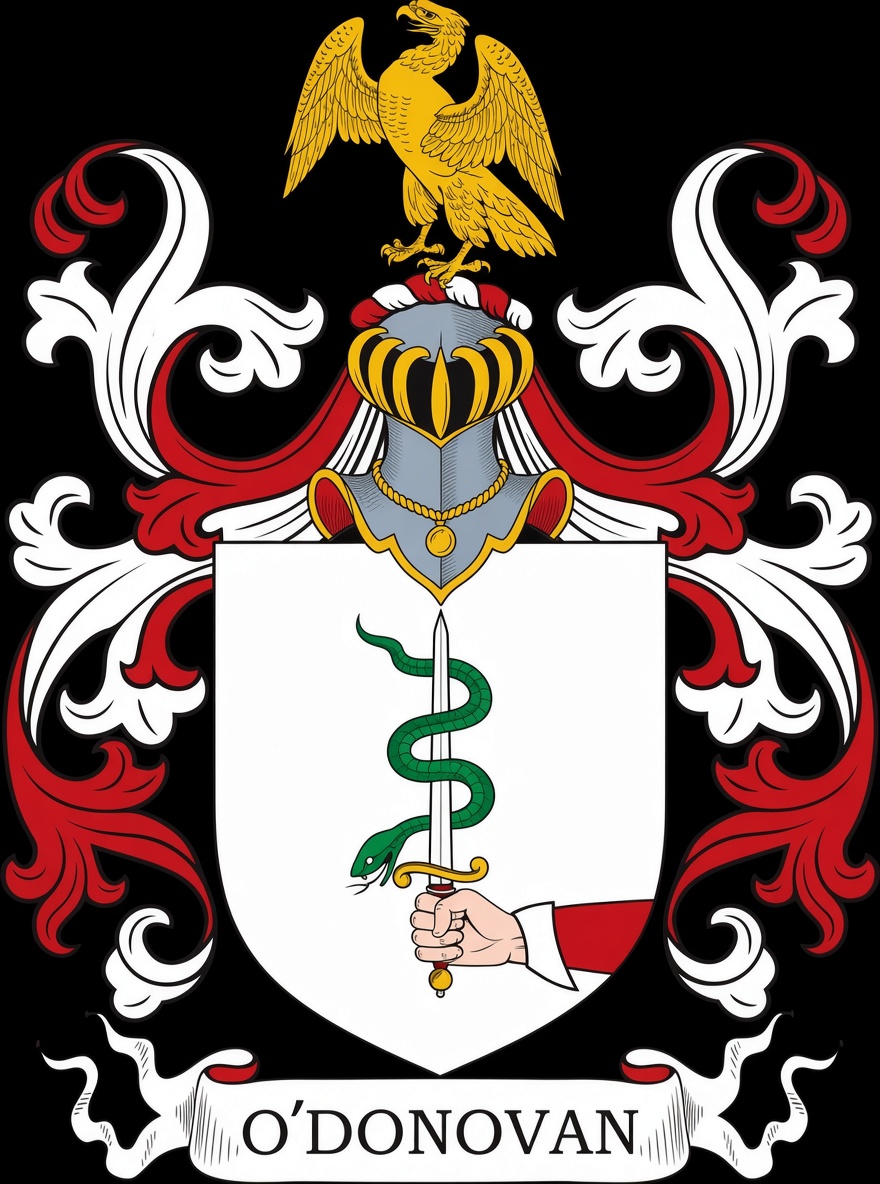
If you’re tracing O’Donovan / Donovan families in West Cork, this period is precisely where you can run into a huge documentary gap.
A Catholic family could have continued to live in the same townland for generations while:
- baptisms weren’t recorded in a conventional parish register;
- marriages might be clandestine or recorded much later;
- priests might operate out of houses, barns or remote Mass rocks;
- burials might occur without the sort of surviving parish documentation you would expect;
- older parish churches could have been unavailable to Catholics;
- records could subsequently be reconstructed from memory or later entries.
And then, as Catholic parish organization recovered in the 18th century, the documentary trail becomes progressively richer.
So if you’re trying to determine “when did my West Cork ancestors go from having almost no Catholic documentary trail to having regular parish records?”, I would not use 1829 as the answer. 1829 is political emancipation, not the beginning of Catholic religious record-keeping.
I’d focus particularly on c. 1740–1800, and then identify the specific Catholic parish in West Cork and determine the exact year its surviving baptism, marriage and burial registers begin.