DAVOS2026: Change Adoption Models: A Comprehensive Guide

Create your own magic with Web 7.0™ / TDW AgenticOS™. Imagine the possibilities.

Copyright © 2019-2025 Michael Herman (Bindloss, Alberta, Canada) – Creative Commons Attribution-ShareAlike 4.0 International Public License
Web 7.0, TDW AgenticOS™ and Hyperonomy are trademarks of the Web 7.0 Foundation. All Rights Reserved.

[Original Title: Technology Adoption Models: A Comprehensive Guide]

This article documents more than 20 technology adoption models that the author has encountered over his 45+ year career …some models that he didn’t even realize he knew about ;-).  Here they there are, in no particular order.

NOTE: Each model progresses from left-to-right along an unspecified timeline.  The implication is that it is possible to superimpose two or more models on top of each other for deeper understanding and for creating more tangible, more illustrative, depictions of your corporate, product, and project strategies.

An example is: Model 10. Technology Adoption Lifecycle illuminated by the Gartner Hype Cycle.

Technology Adoption Models

NOTE: Click on any of the figures to enlarge them.

Model 1. Crossing the Chasm: Technology Adoption Lifecycle
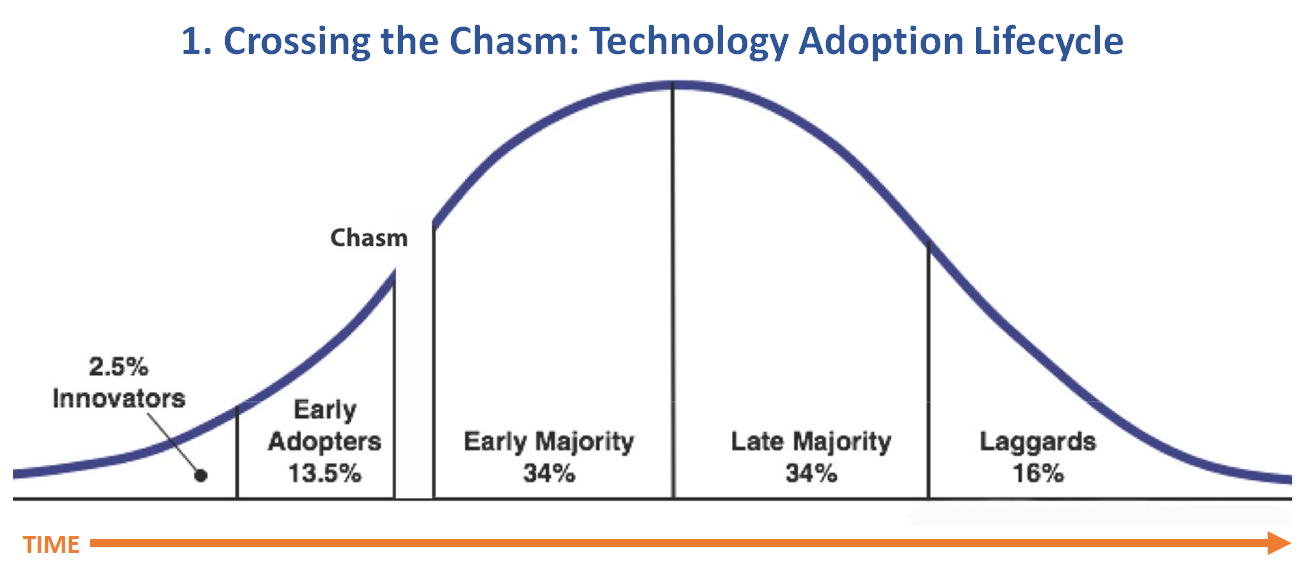
1. Crossing the Chasm-Technology Adoption Lifecycle

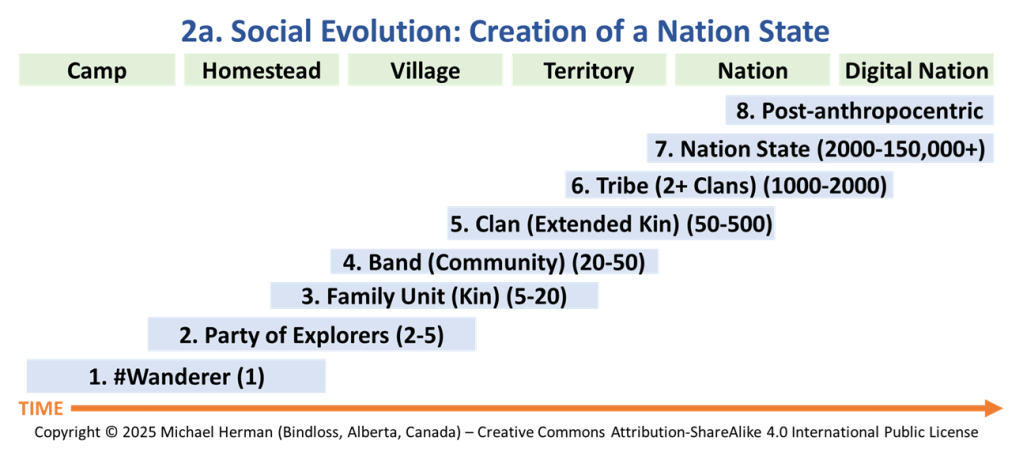
Model 2a. Social Evolution: Creation of Nation State

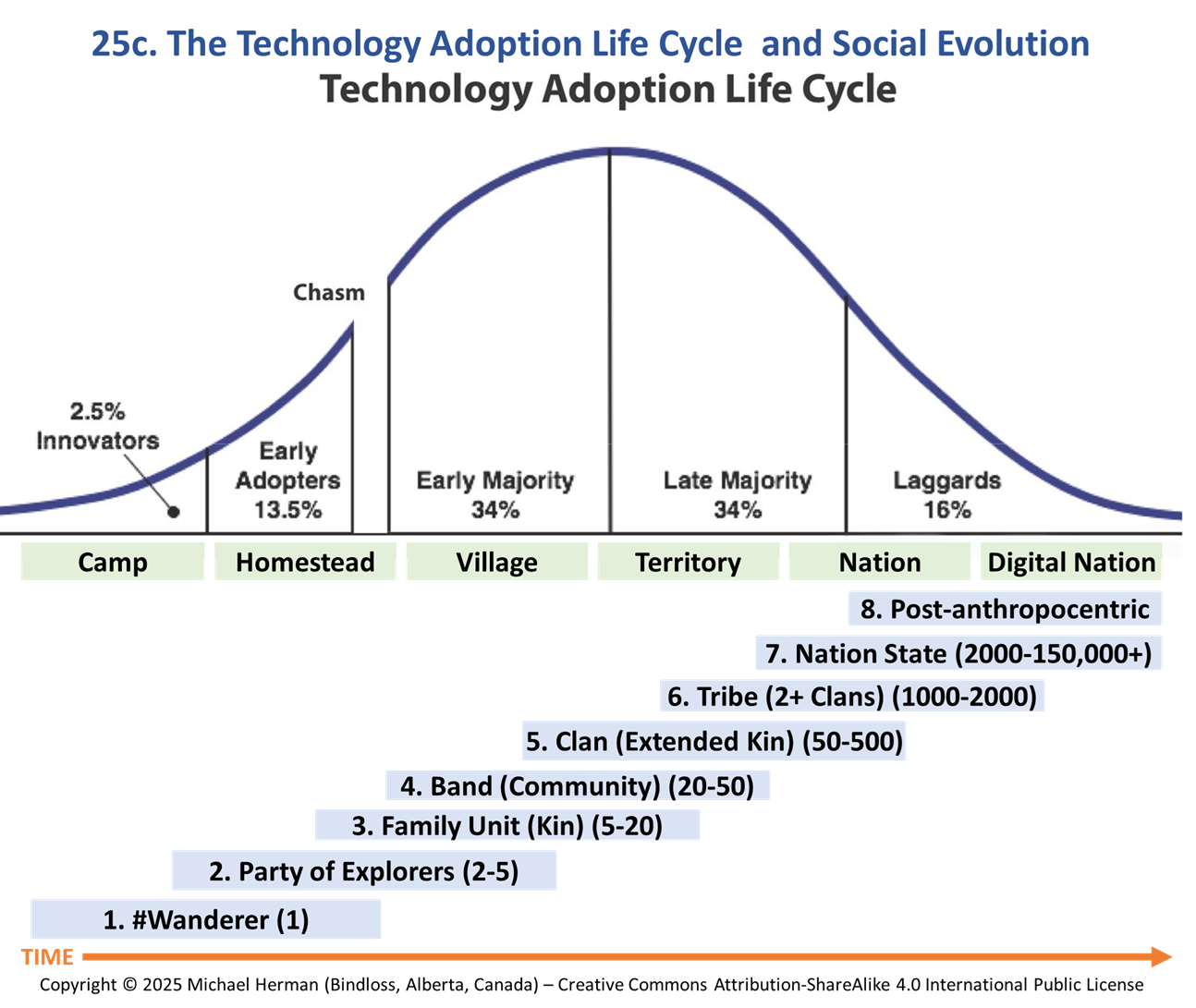
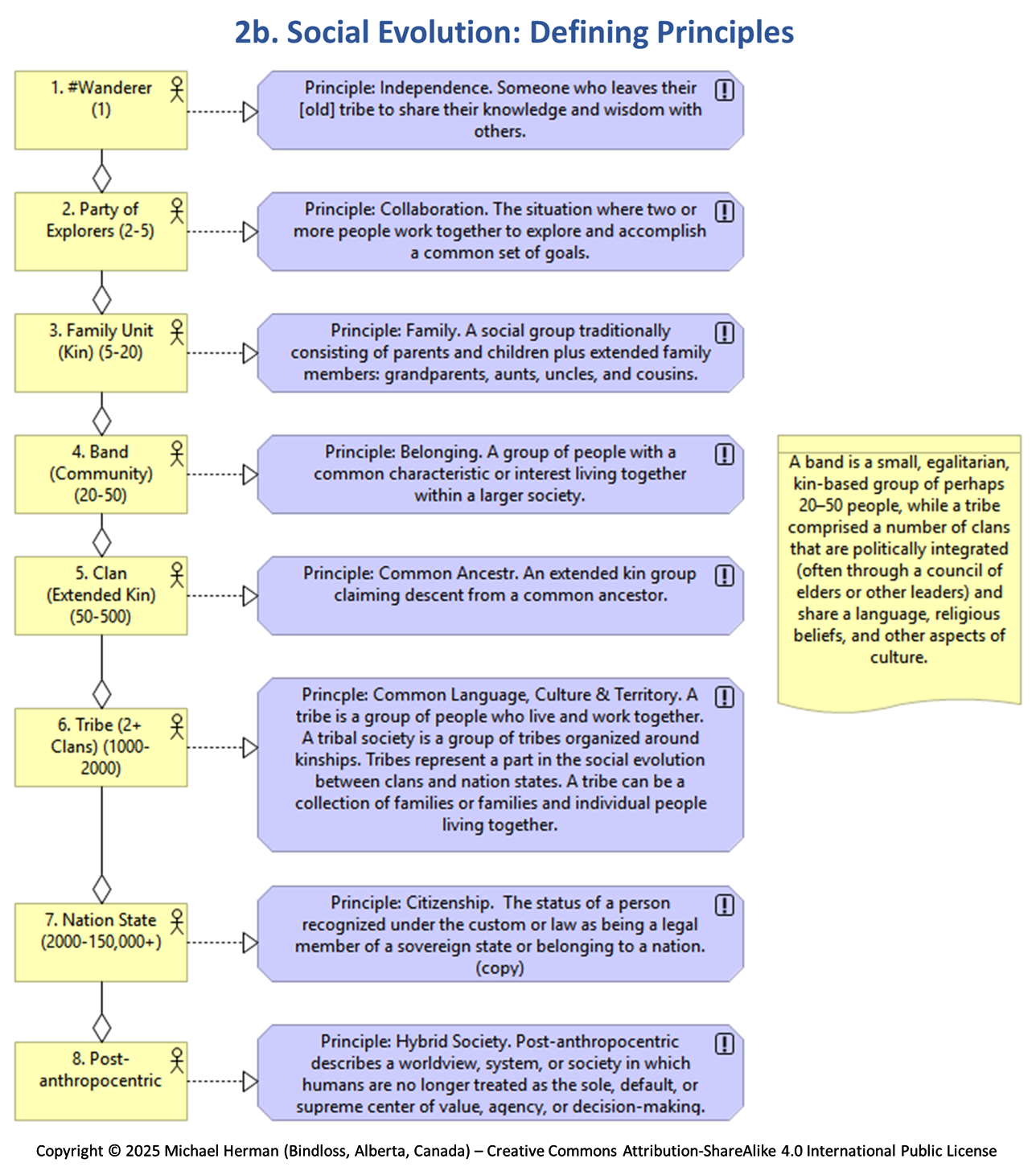
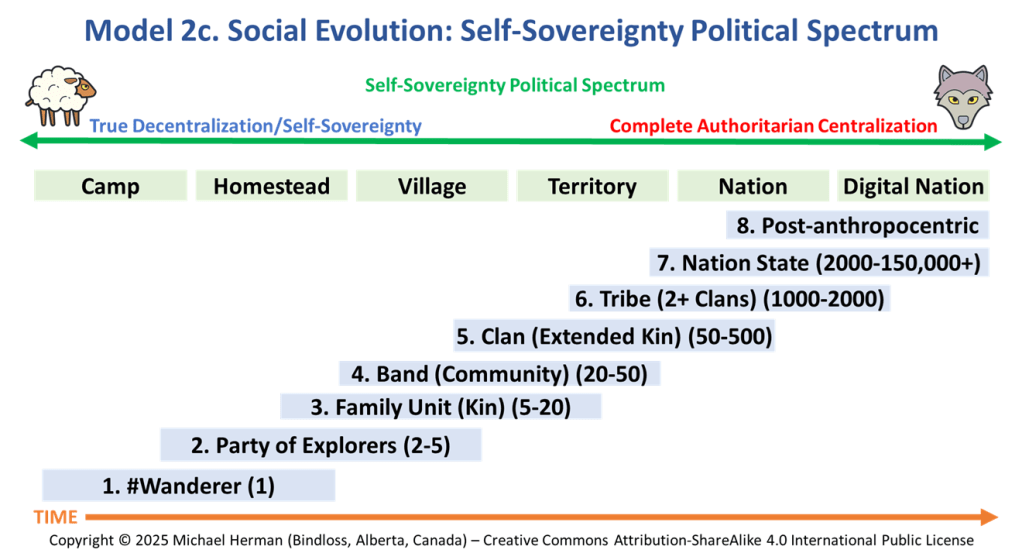
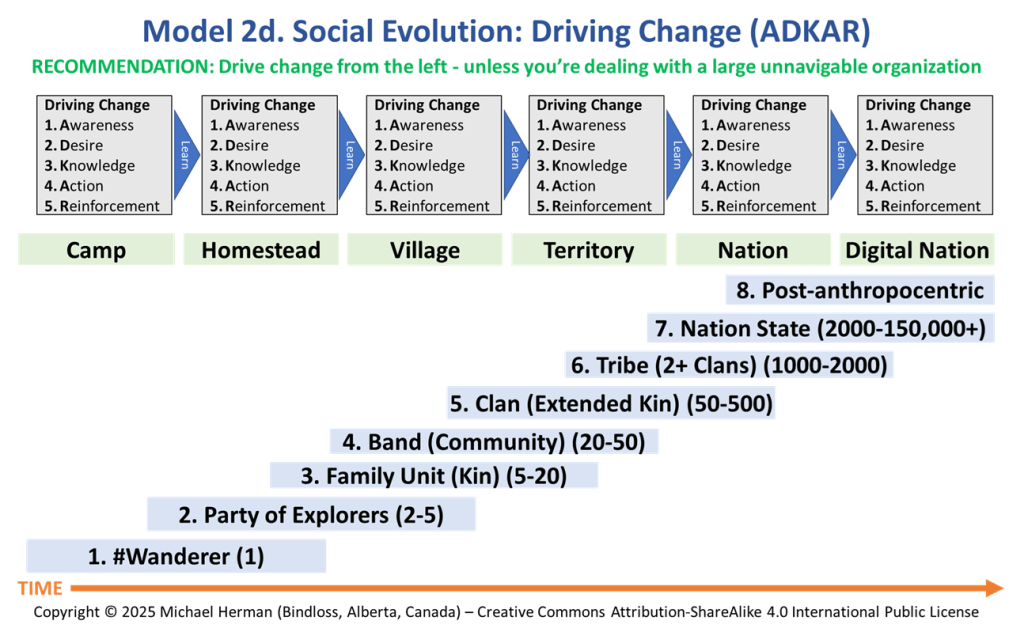
A #wanderer is someone who leaves their tribe to share their knowledge and wisdom with others; to later form a party of explorers to explore and conquer a common set of goals; and, even further on, create a clan, a band, a tribe, and a tribal society, a group of people who live and work together – a group of tribes organized around kinships.
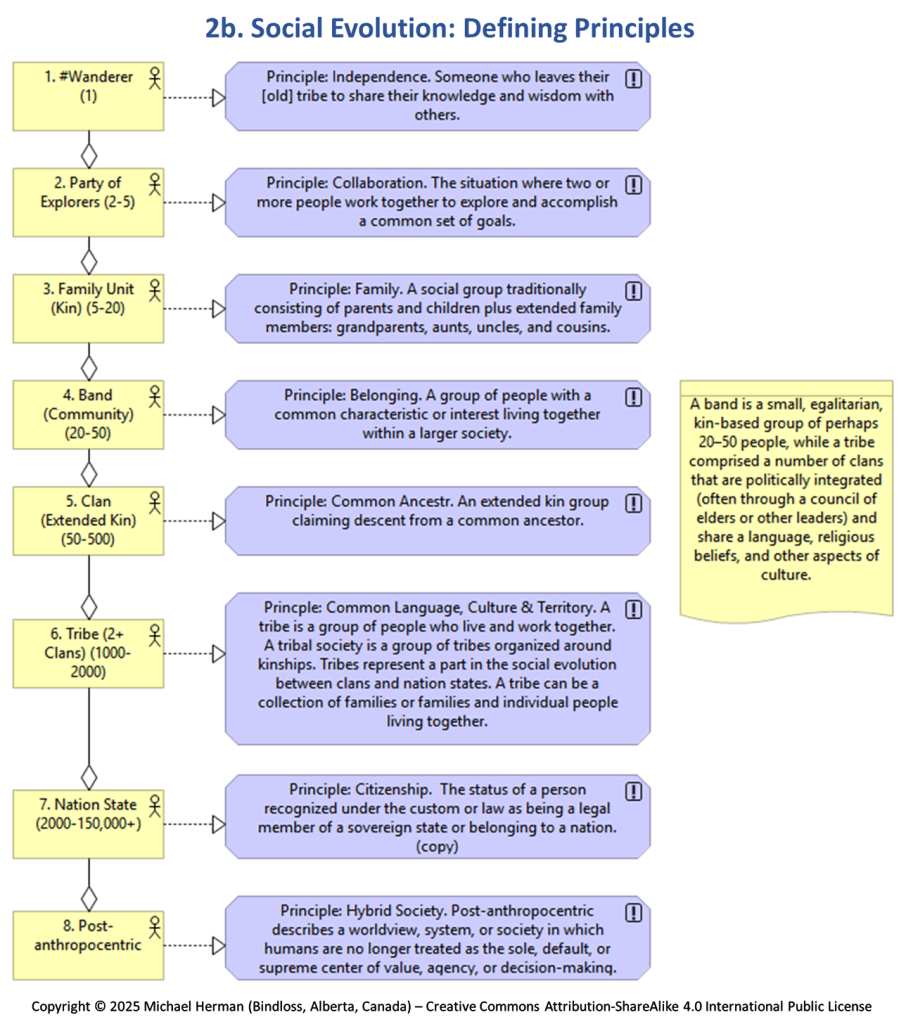
Model 2b. Social Evolution: Defining Principles

A #wanderer is someone who leaves their tribe to share their knowledge and wisdom with others; to later form a party of explorers to explore and conquer a common set of goals; and, even further on, create a clan, a band, a tribe, and a tribal society, a group of people who live and work together – a group of tribes organized around kinships.
Model 2c. Social Evolution: Self-Sovereignty Political Spectrum
Model 2d. Social Evolution: Driving Change (ADKAR)
Model 3. Phases of Foundational Technology Adoption
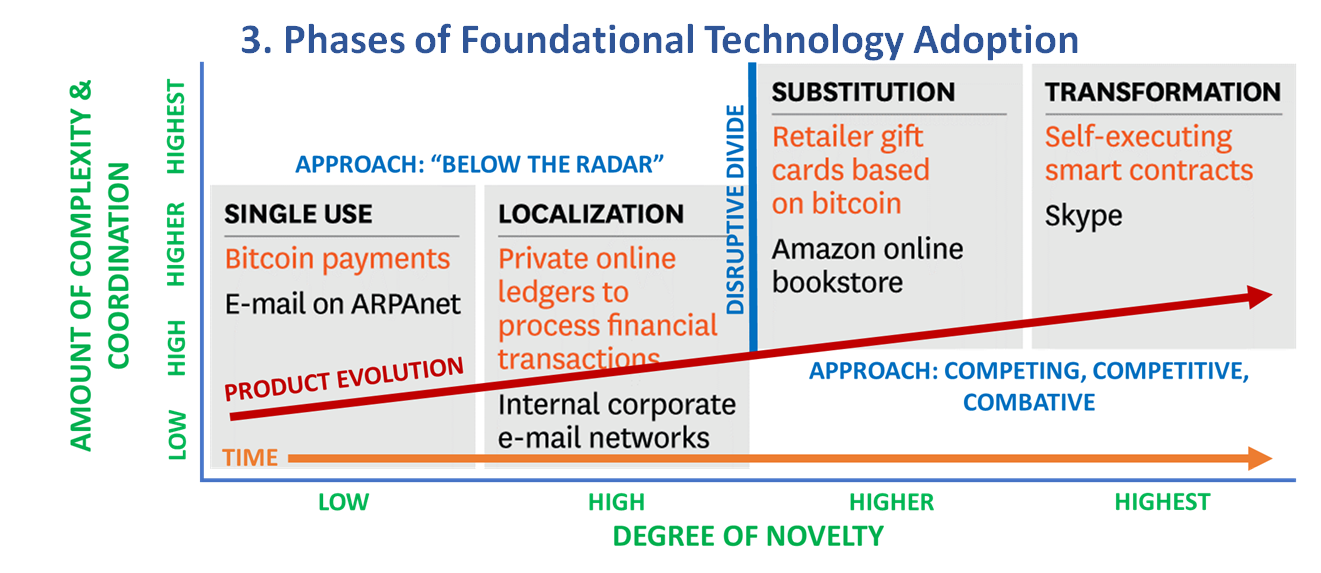
3. Phases of Foundational Technology Adoption

Model 4. Phases of Desire and Action

4. Phases of Desire and Action

Model 5. Phases of Understanding

5. Phases of Understanding

Model 6. Classic Enterprise Solution Sales and Adoption Lifecycle

6. Classic Enterprise Solution Sales and Adoption Lifecycle

Model 7. ICRVA (I CRaVe A) Process

7. ICRVA (I CRaVe A) Process

Model 8. Three-letter Words

8. Three-Letter Words

Model 9. Gartner Hype Cycle
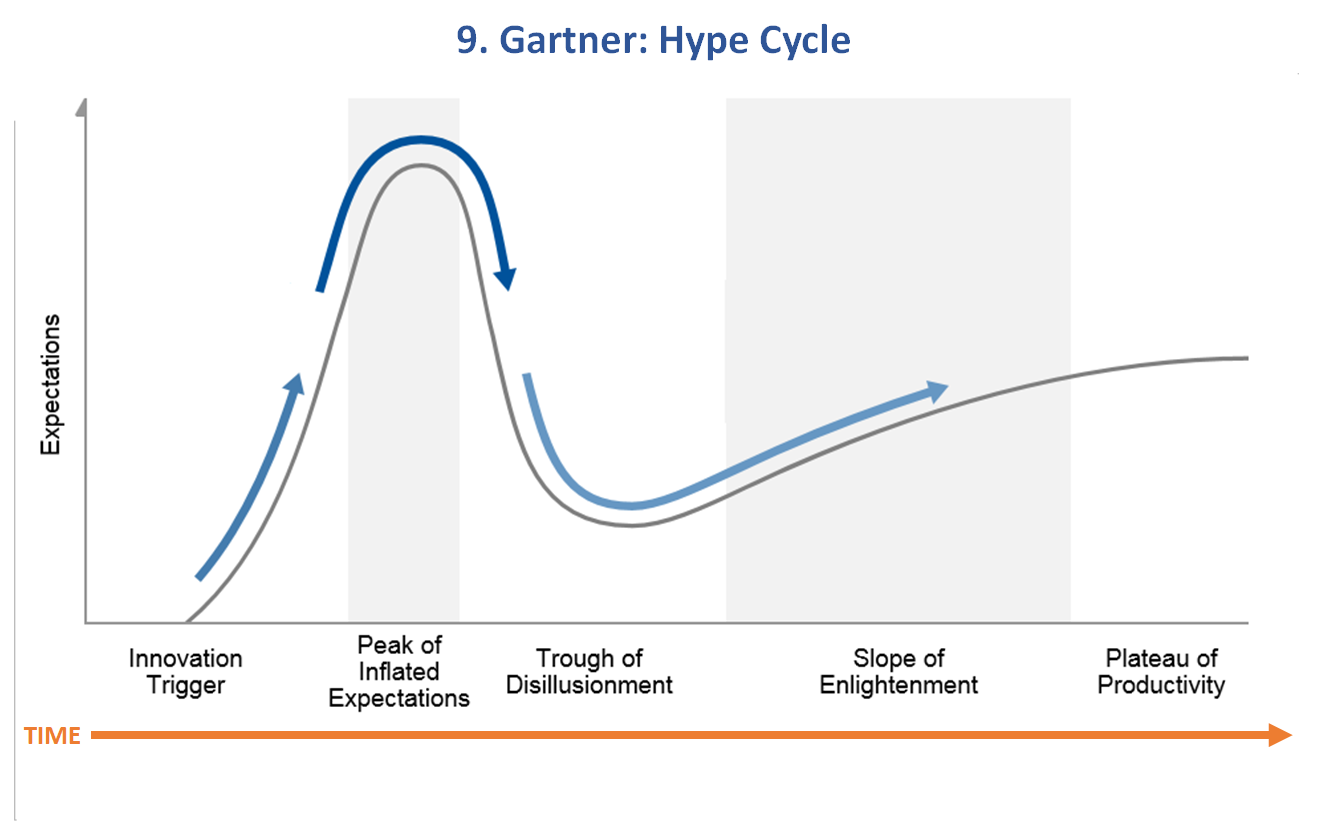
9. Gartner-Hype Cycle

Model 10. Technology Adoption Lifecycle illuminated by the Gartner Hype Cycle
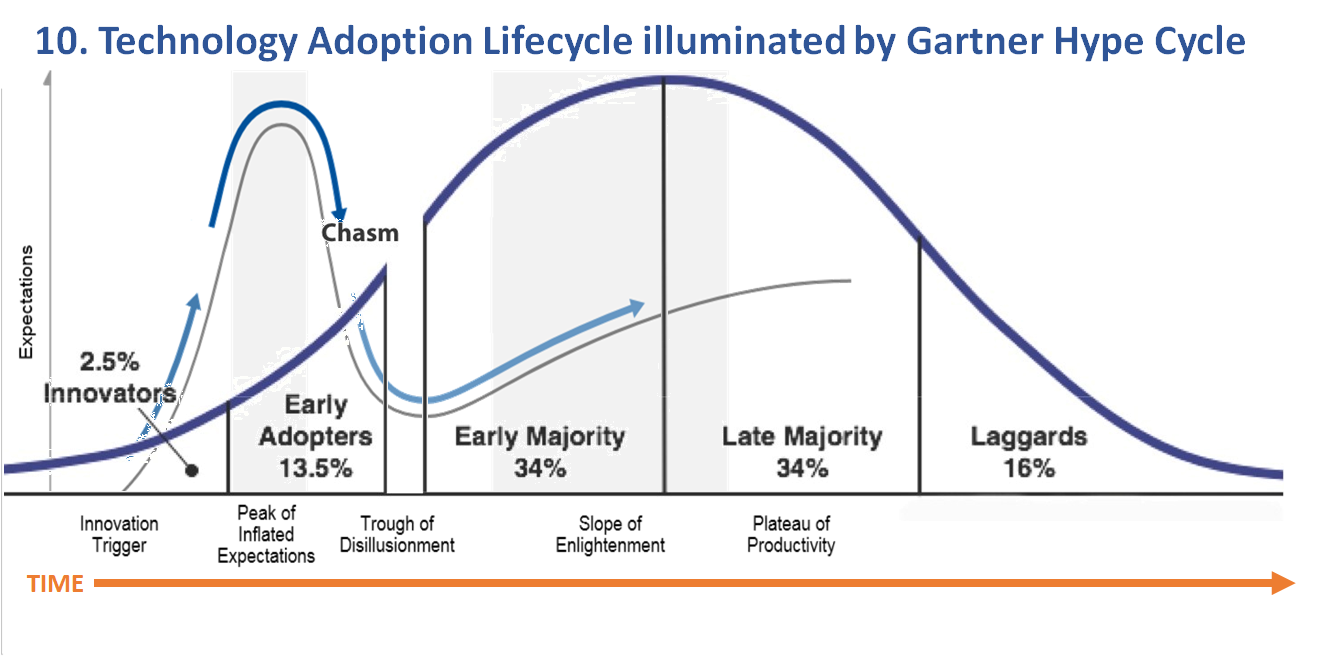
10. TAC-Hype Cycle

Model 11. World Wide Web Consortium (W3C): Tenth Anniversary
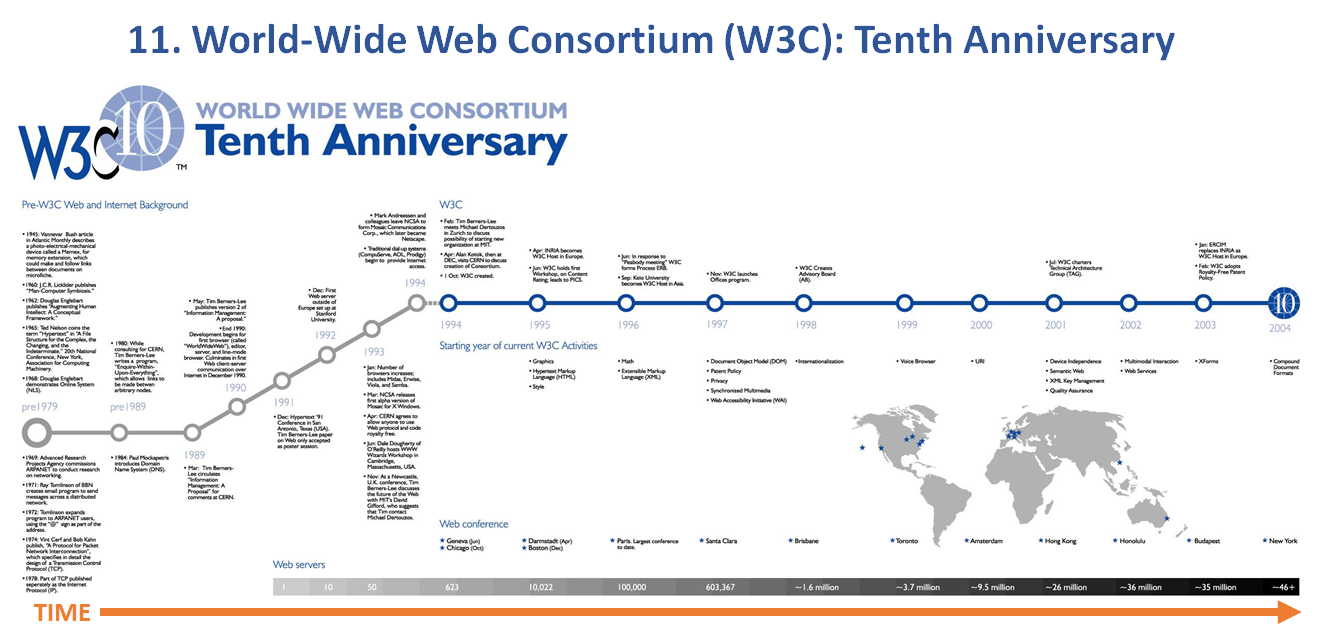
11. World-Wide Web Consortium (W3C)-Tenth Anniversary

Model 12. Systems Co-existence and Migration
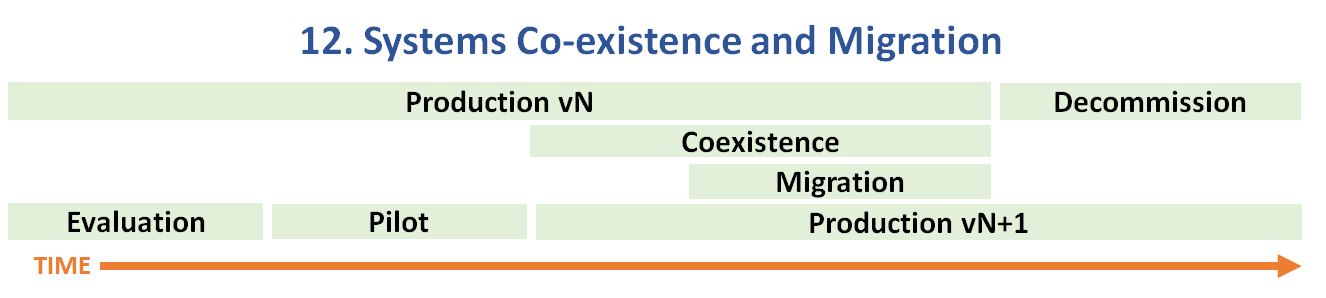
12. Systems Co-existence and Migration

Model 13. Embrace, Extend, and Extinguish
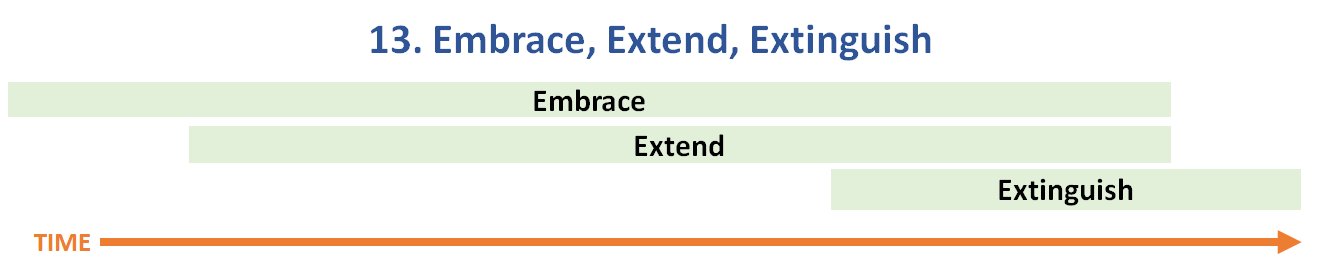
13. Embrace-Extend-Extinguish

Model 14. Take-off Velocity (v2)
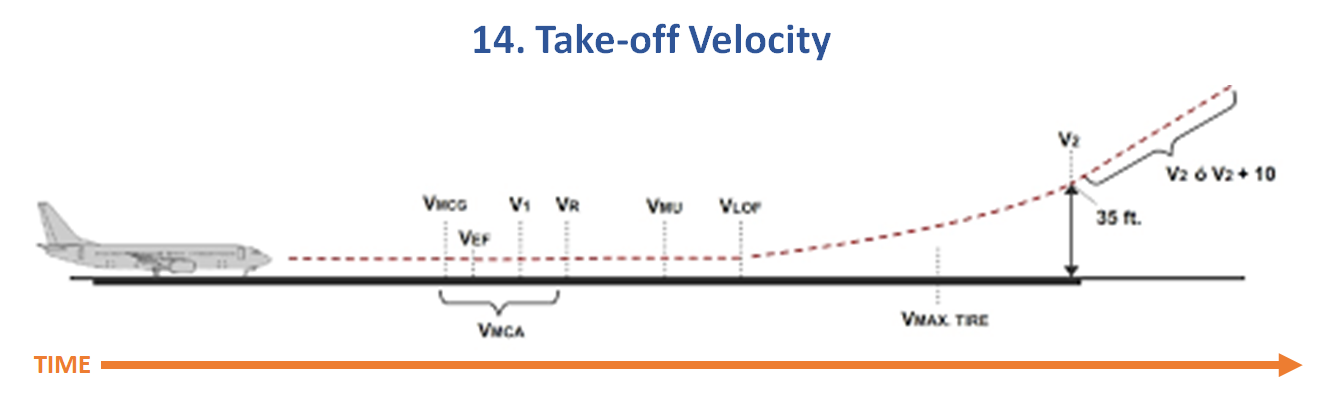
14. Takeoff Velocity-v2

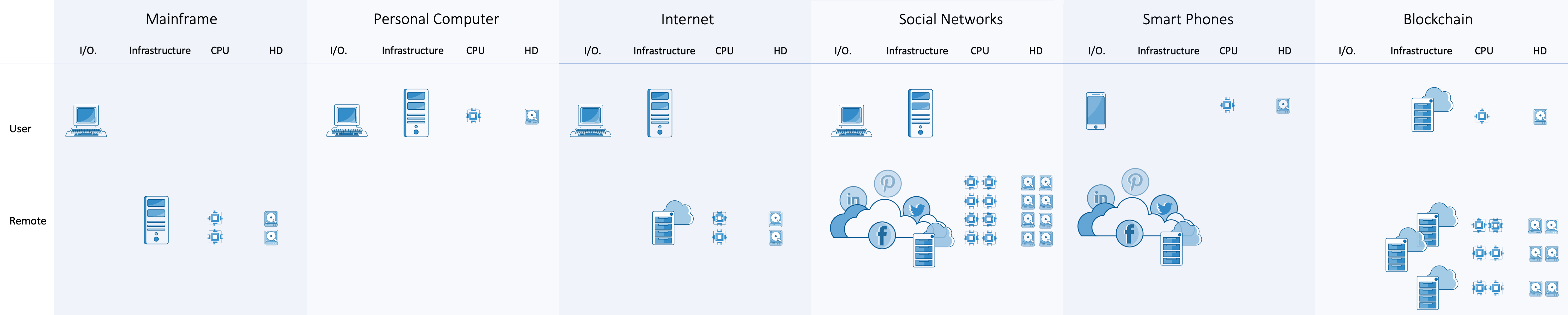
Model 15. From Mainframe to Blockchain

15. From Mainframe to Blockchain-header

0_BJ5SrrZXvXqhi8QMiXj9mw

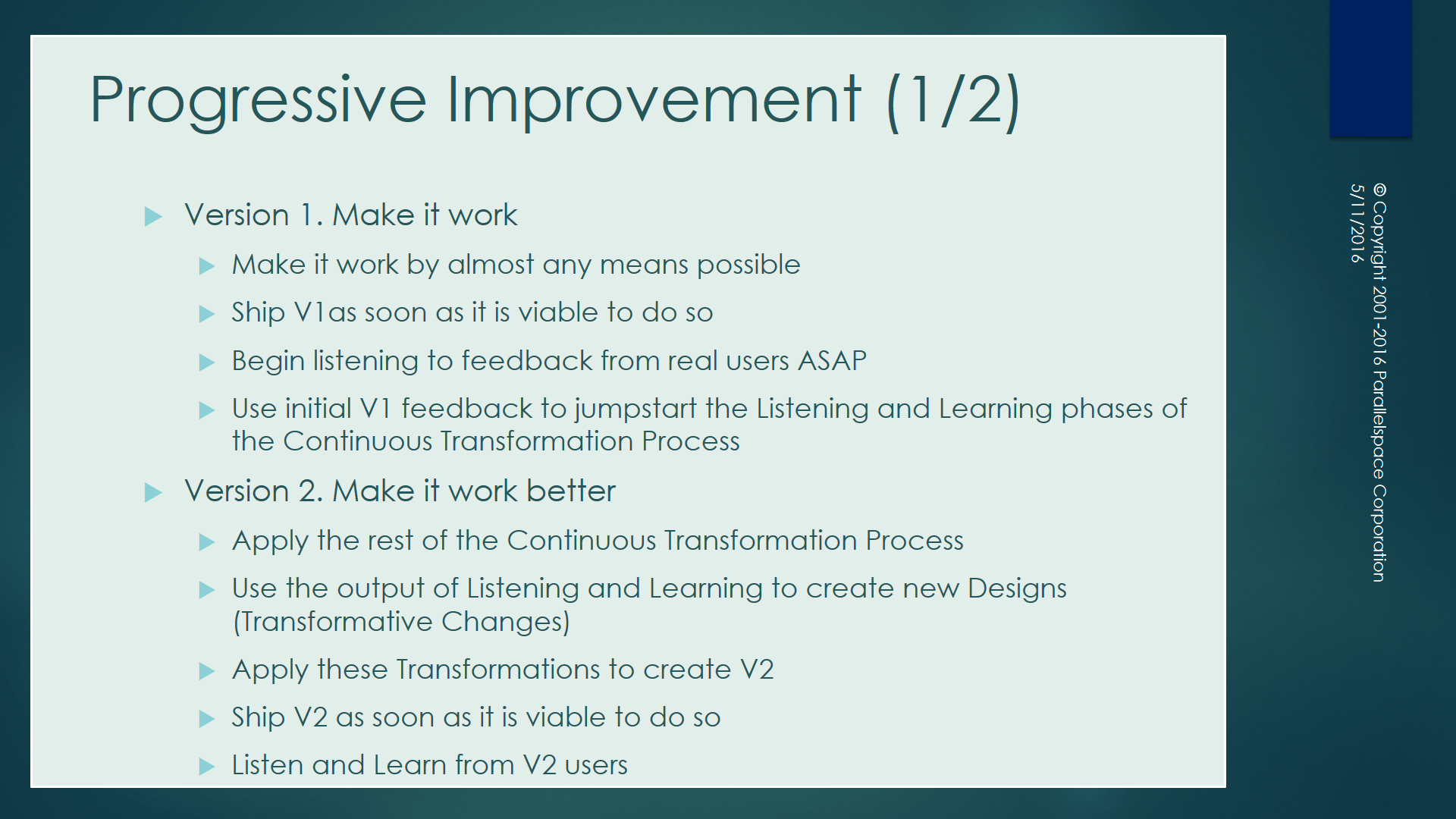
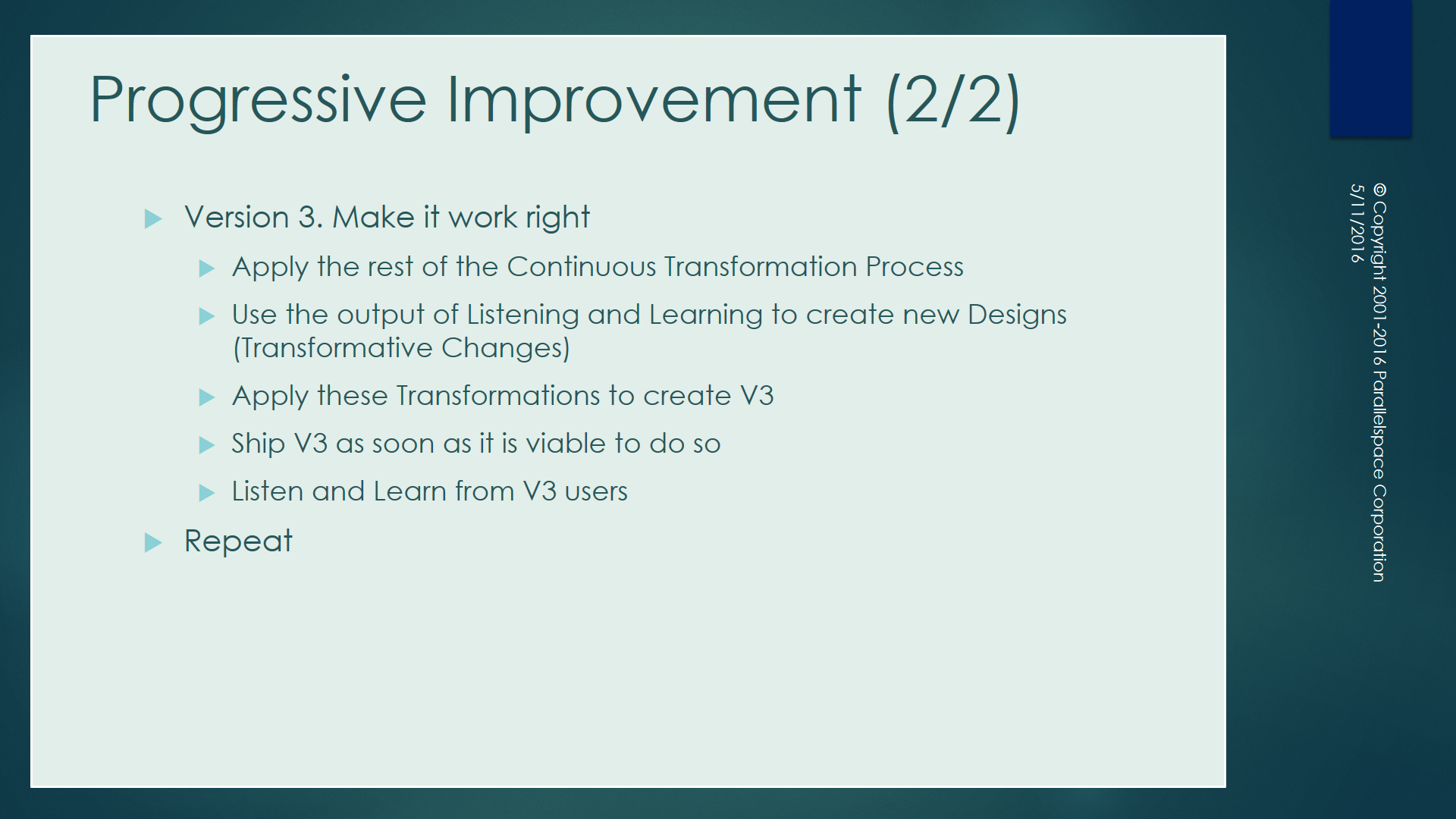
Model 16. Progressive Improvement through Continuous Transformation

16. Progressive Improvement through Continuous Transformation
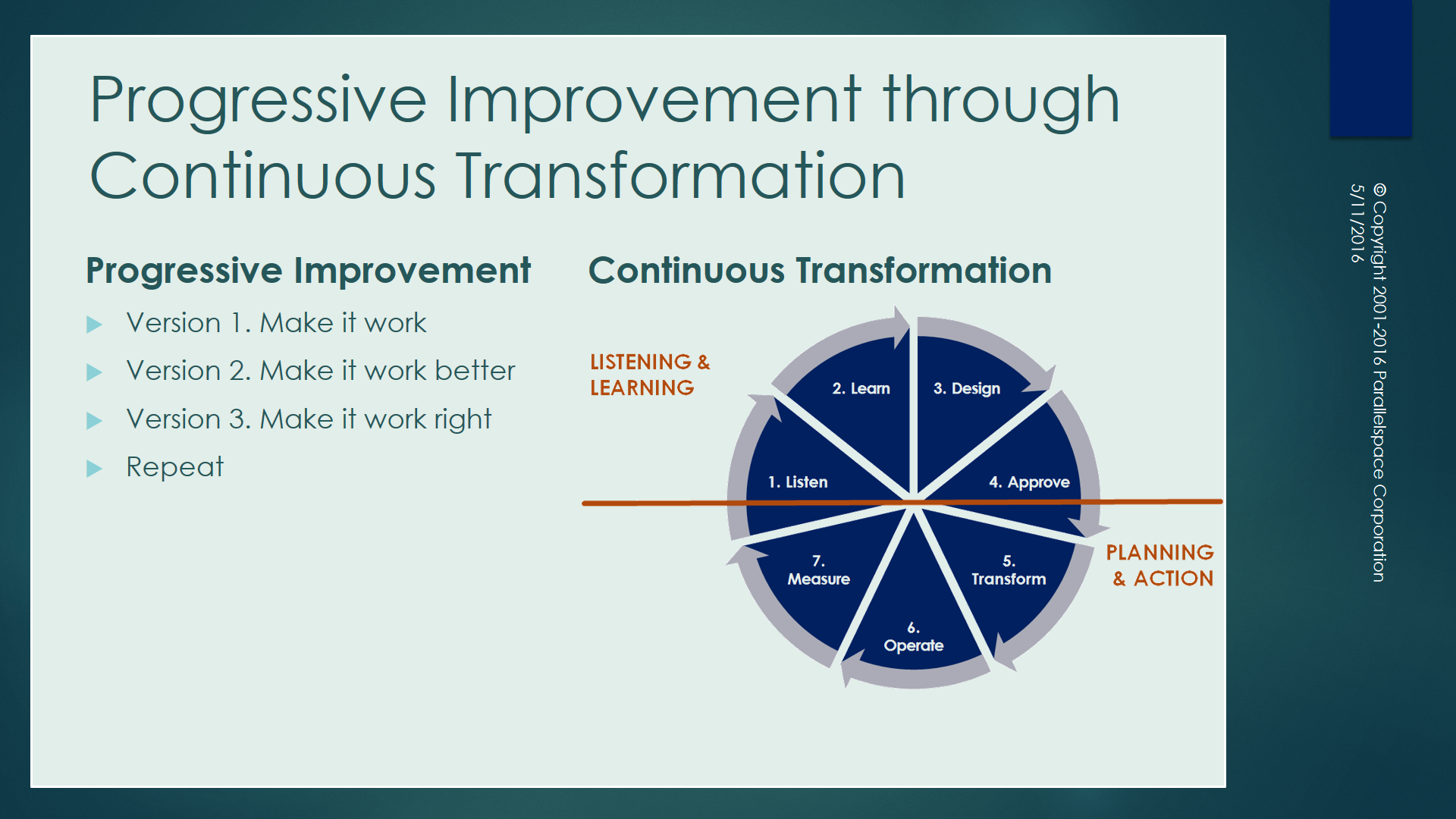
progressive-improvement-thru-continuous-transformation-1-0-1
progressive-improvement-a-1-0-1
progressive-improvement-b-1-0-1

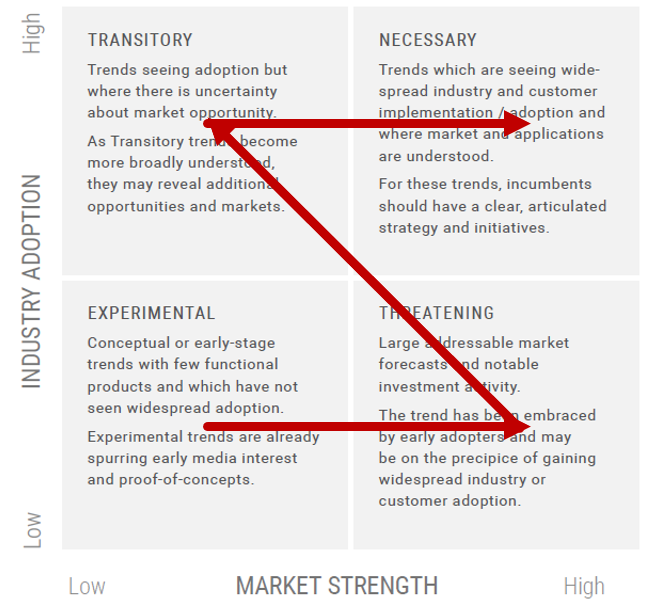
Model 17. Liedtka-Ogilvie Design Thinking Modelf0c4ccea6b32d4fa772046d3646d0ff0Model 18. CB-Insights NExTT Framework
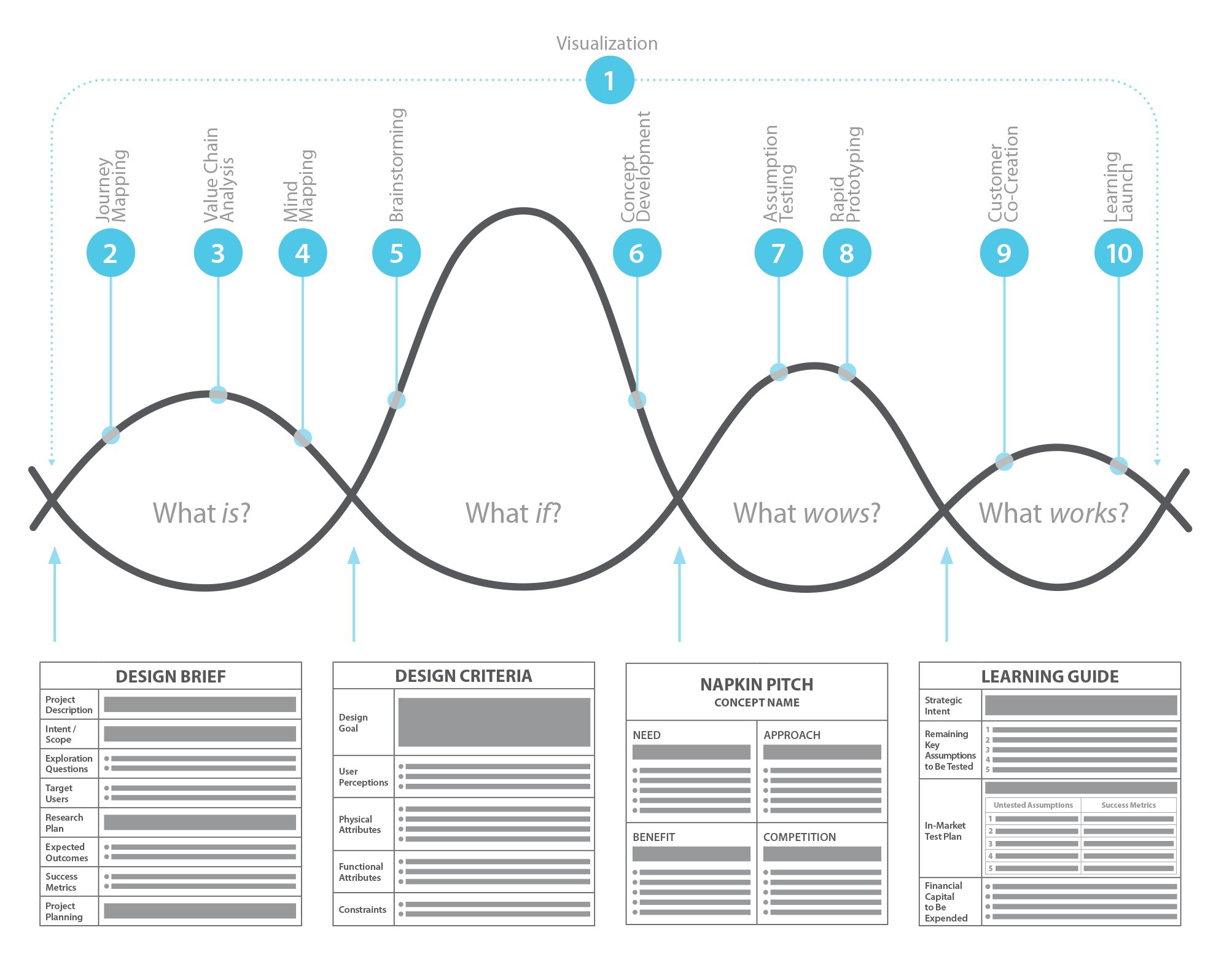
CB-Insights NExTT Framework

Model 19. O’Donnell Exponential Growth Model
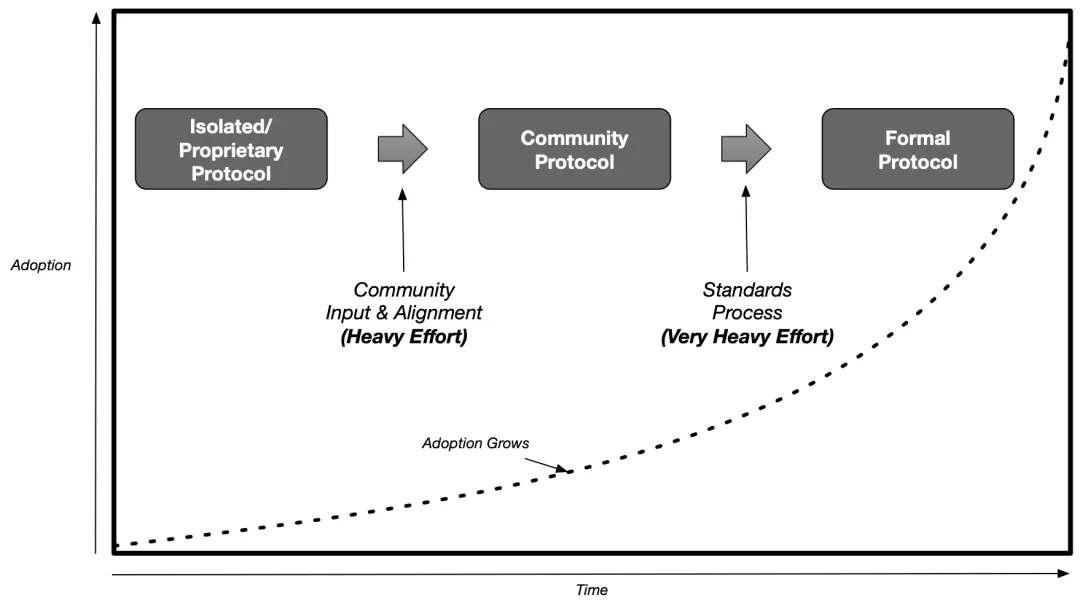
19. DarrelO-Exponential

Model 20. O’Donnell-Gartner Exponential Hype Cycle
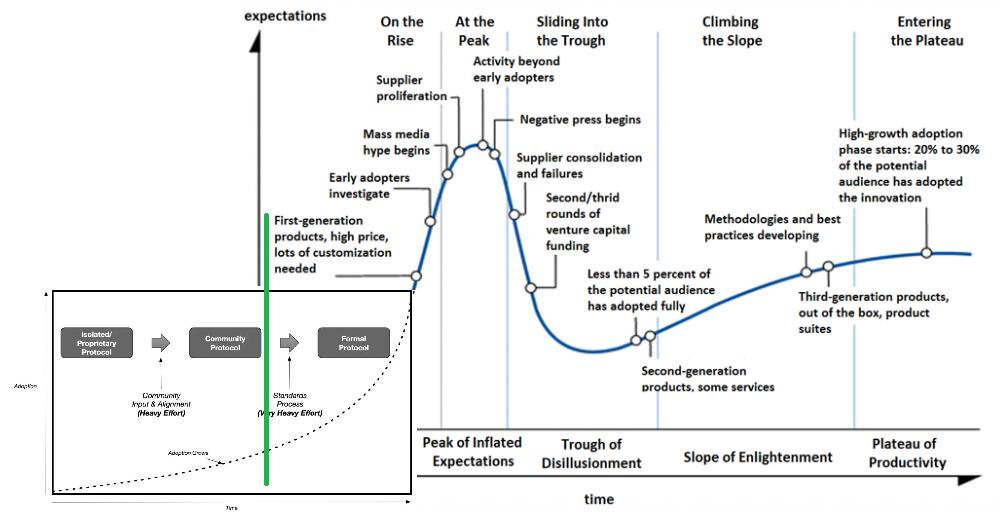
20. DarrelO-HypeCycle

Model 21. Technical Intensity (video)
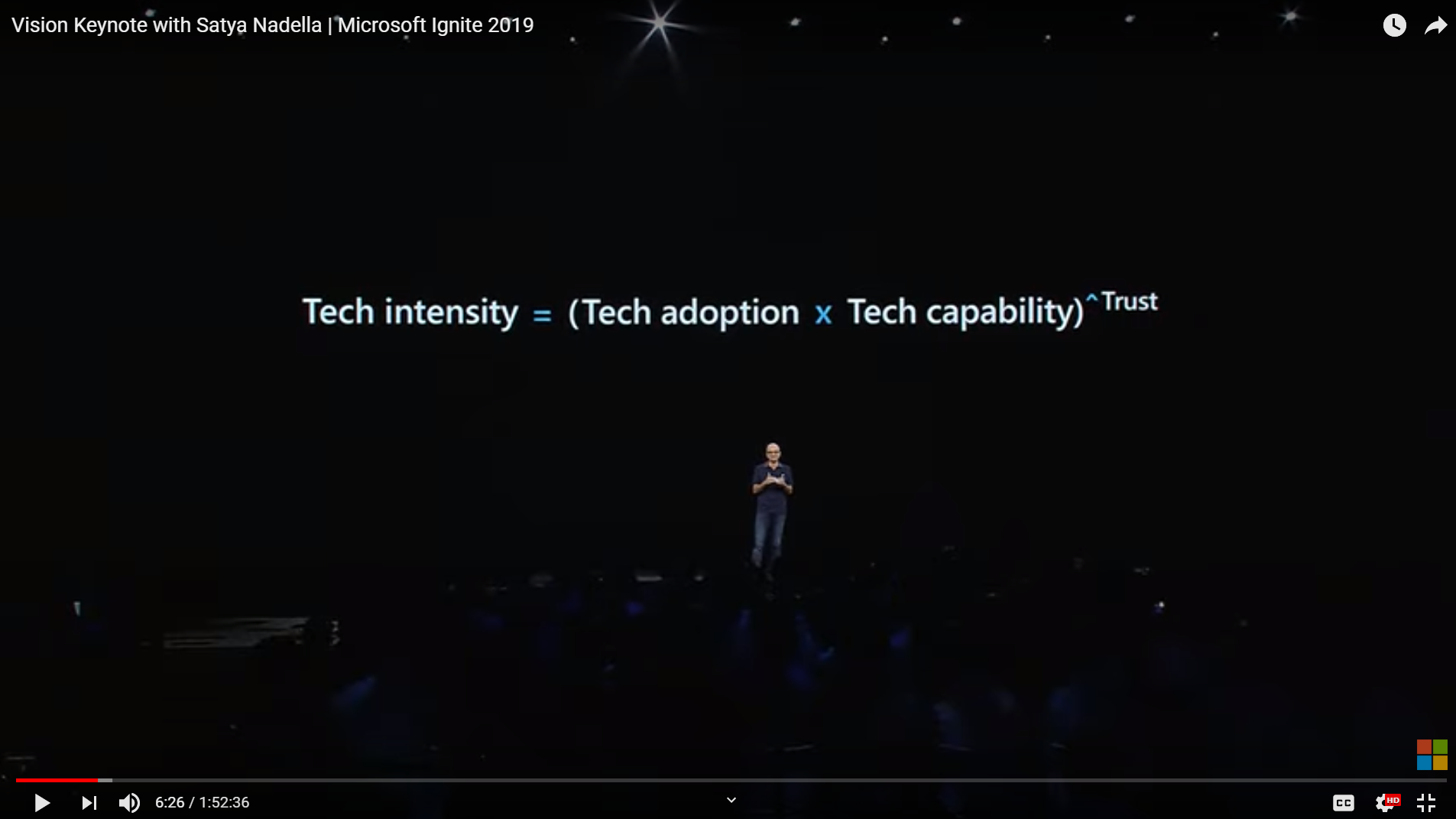
Technology Intensity

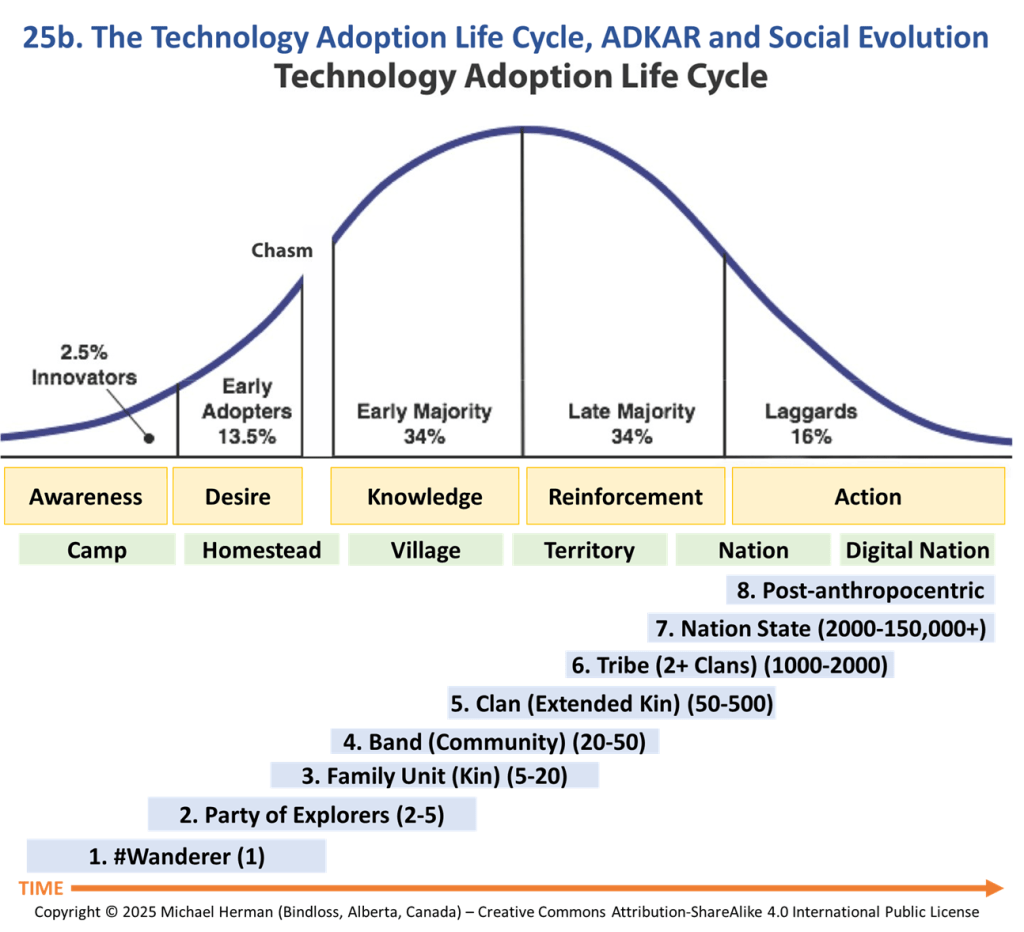
Model 22. Technology Adoption Curve plus Social Evolution Model
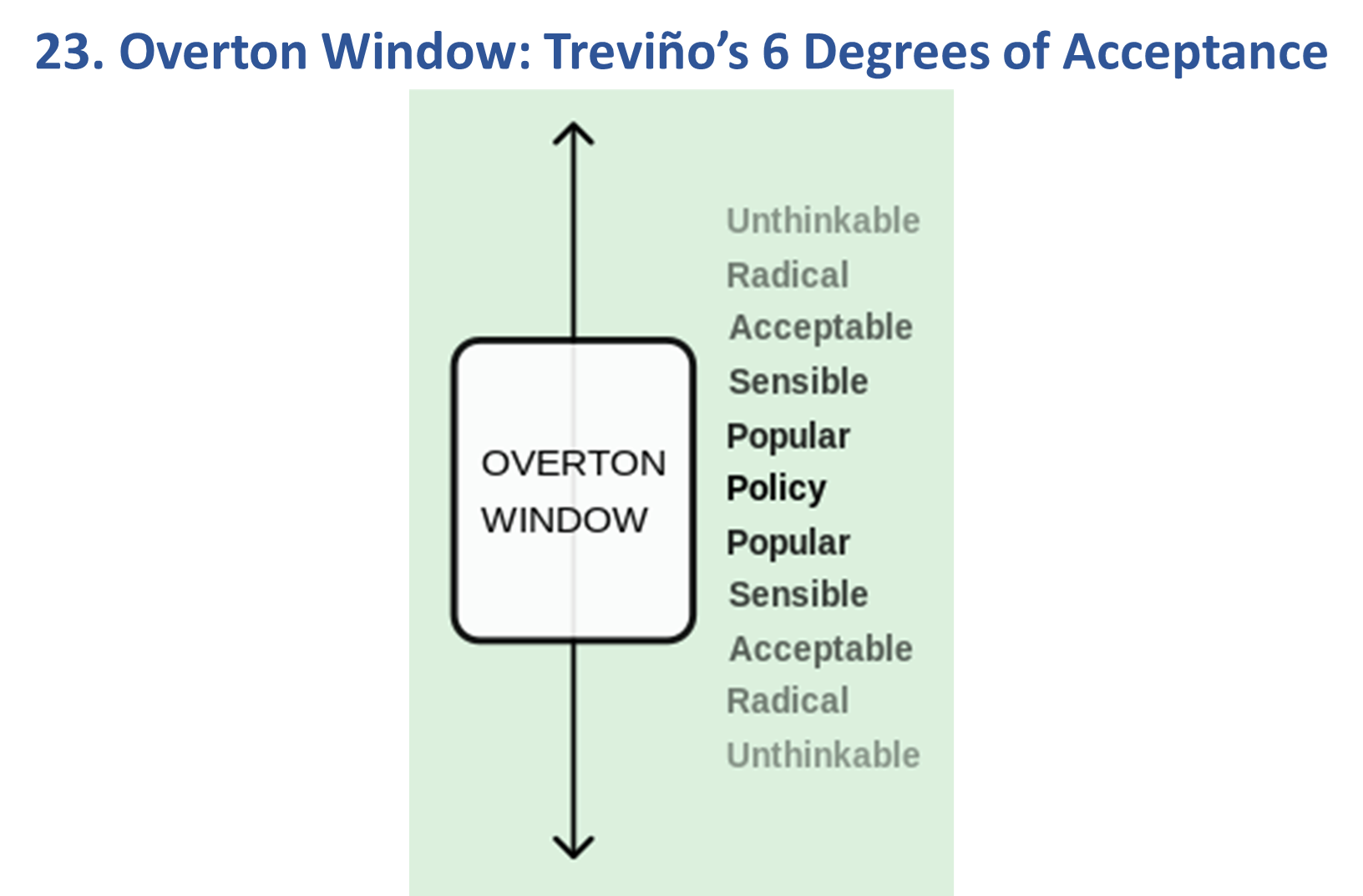
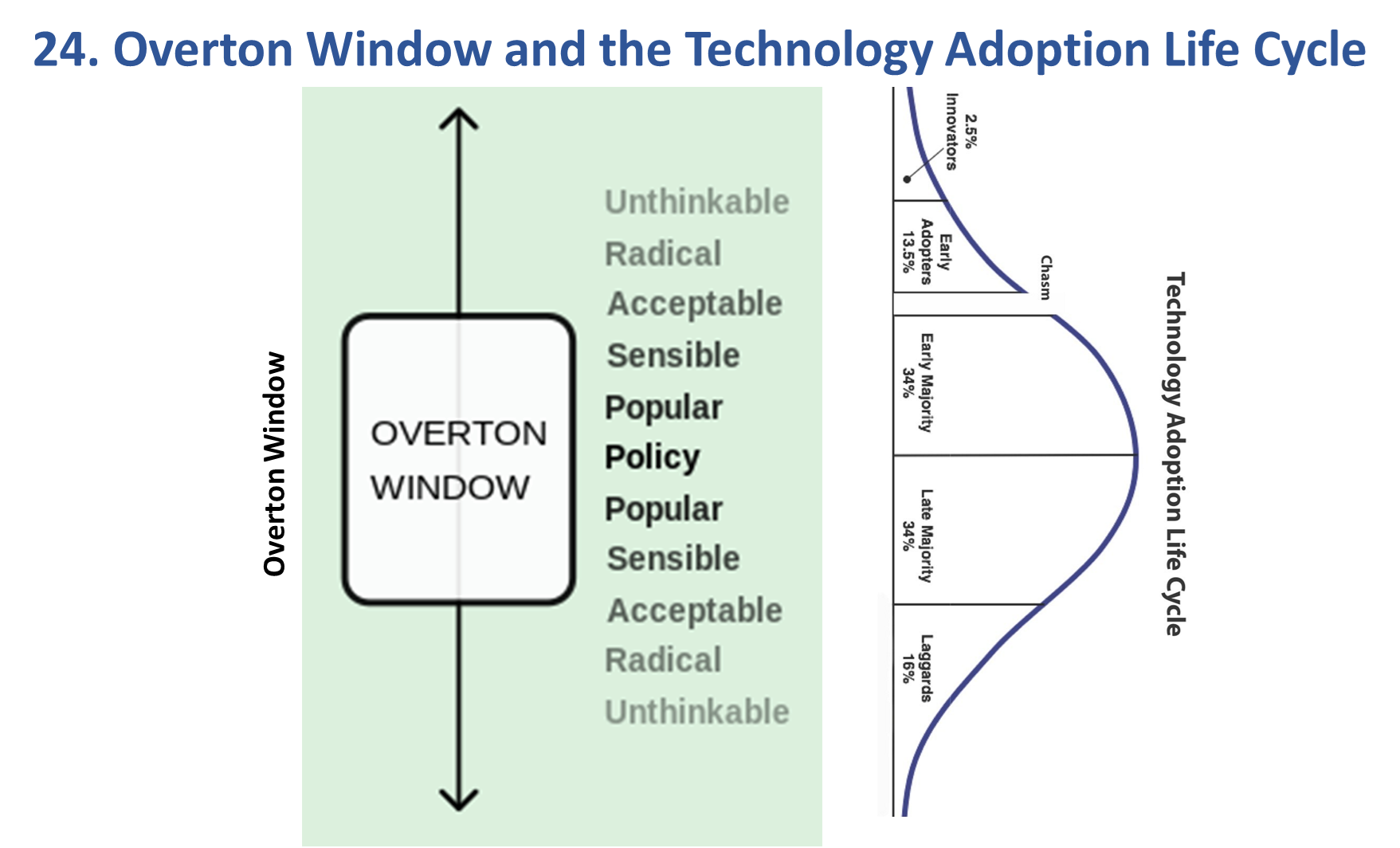
Model 23: Overton Window
Model 24: Overton Window and Technology Adoption Lifecycle
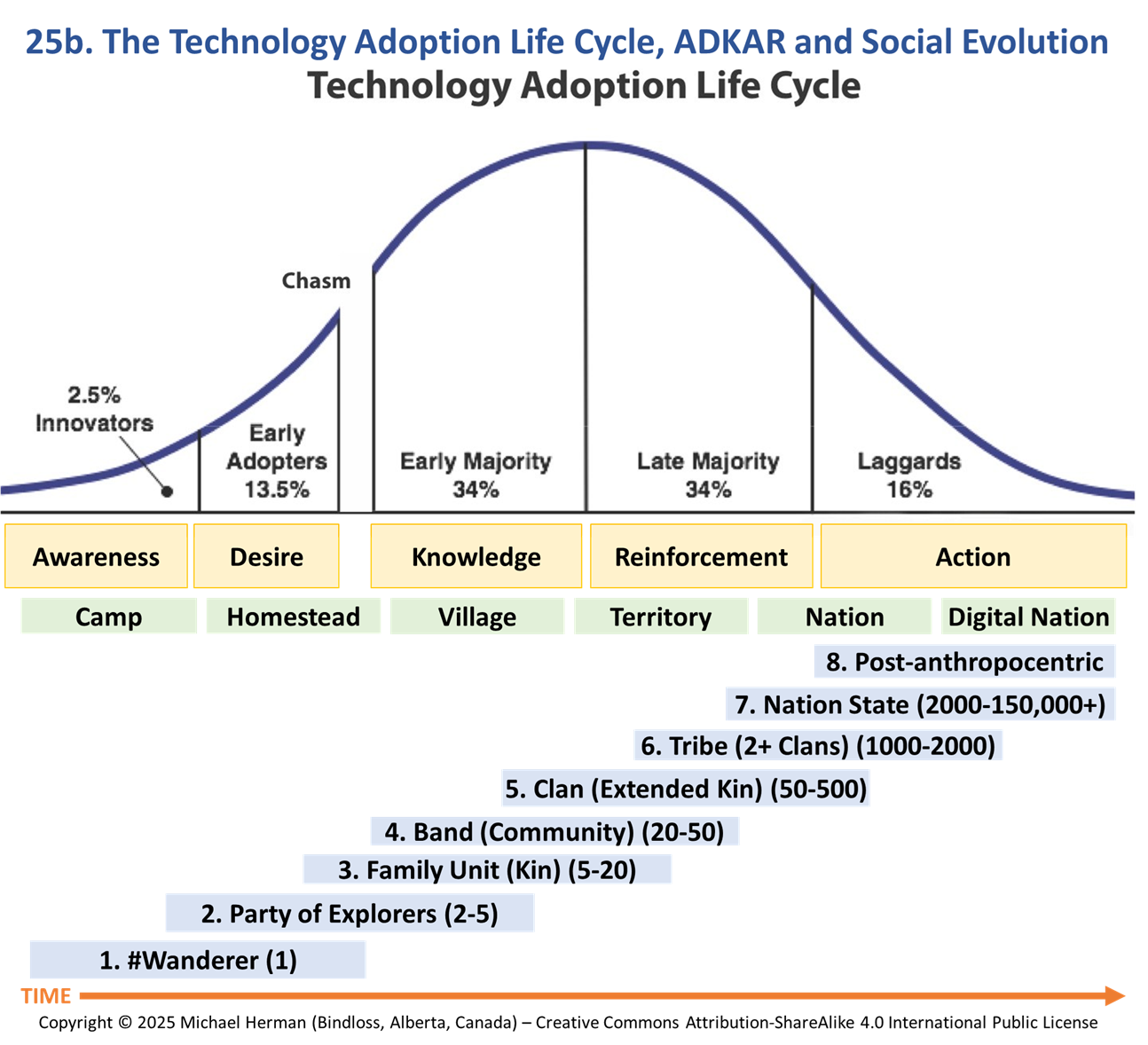
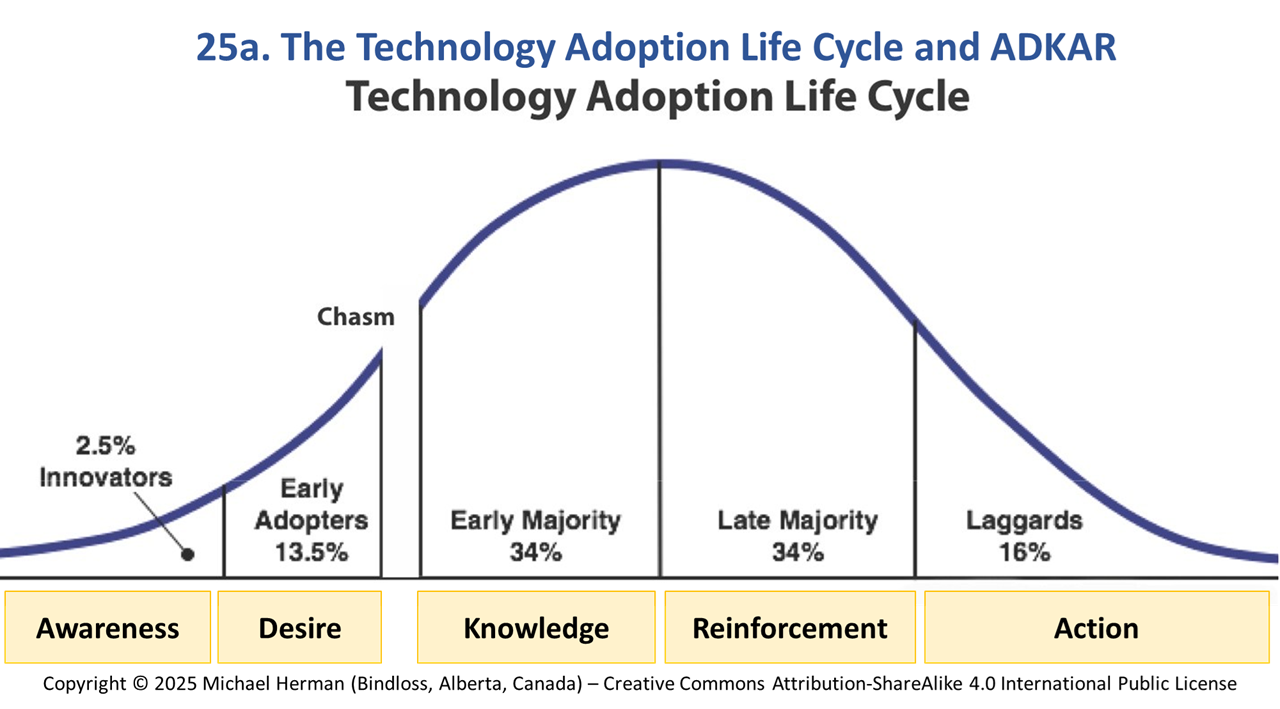
Model 25: The Technology Adoption Lifecycle and ADKAR
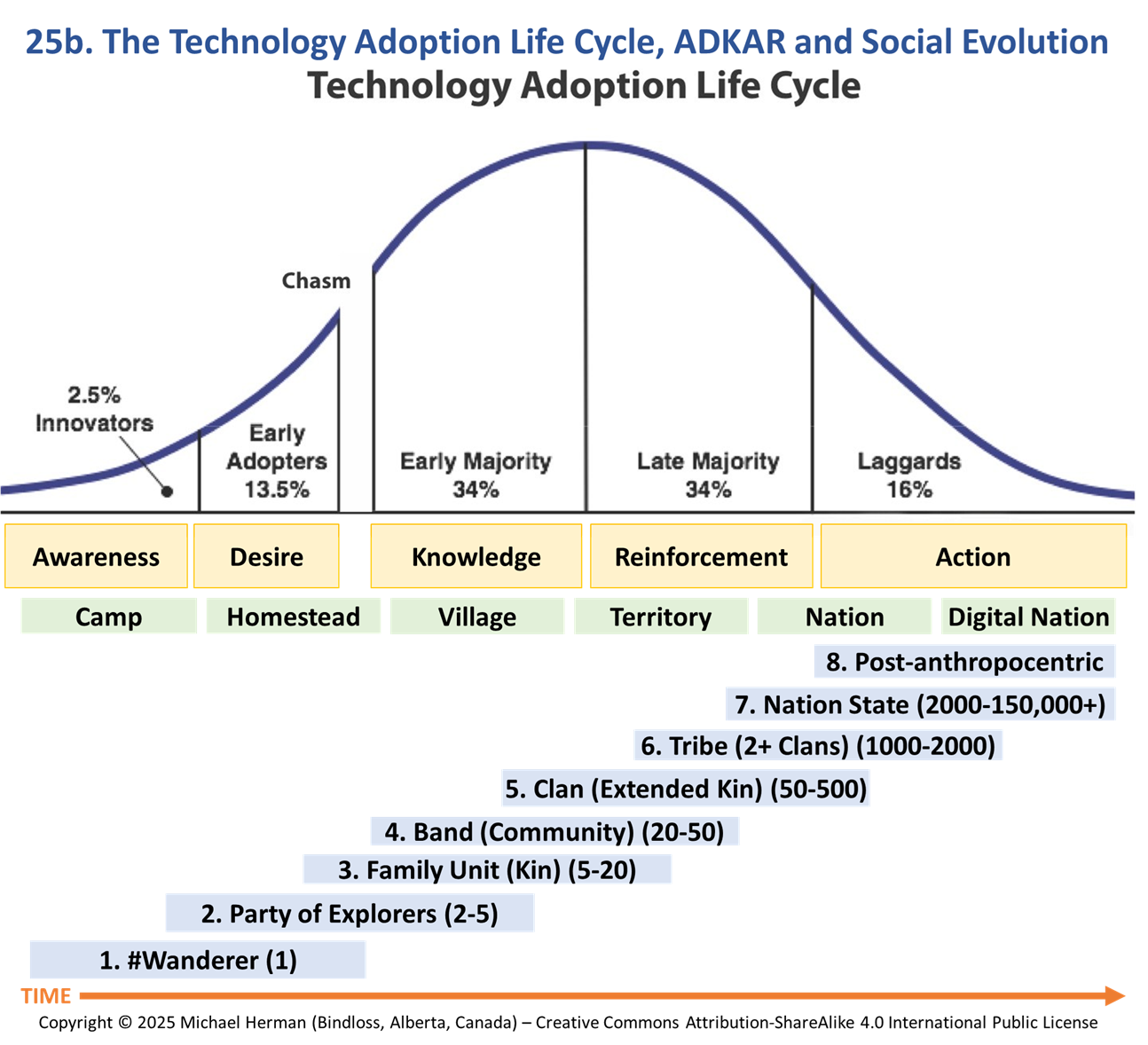
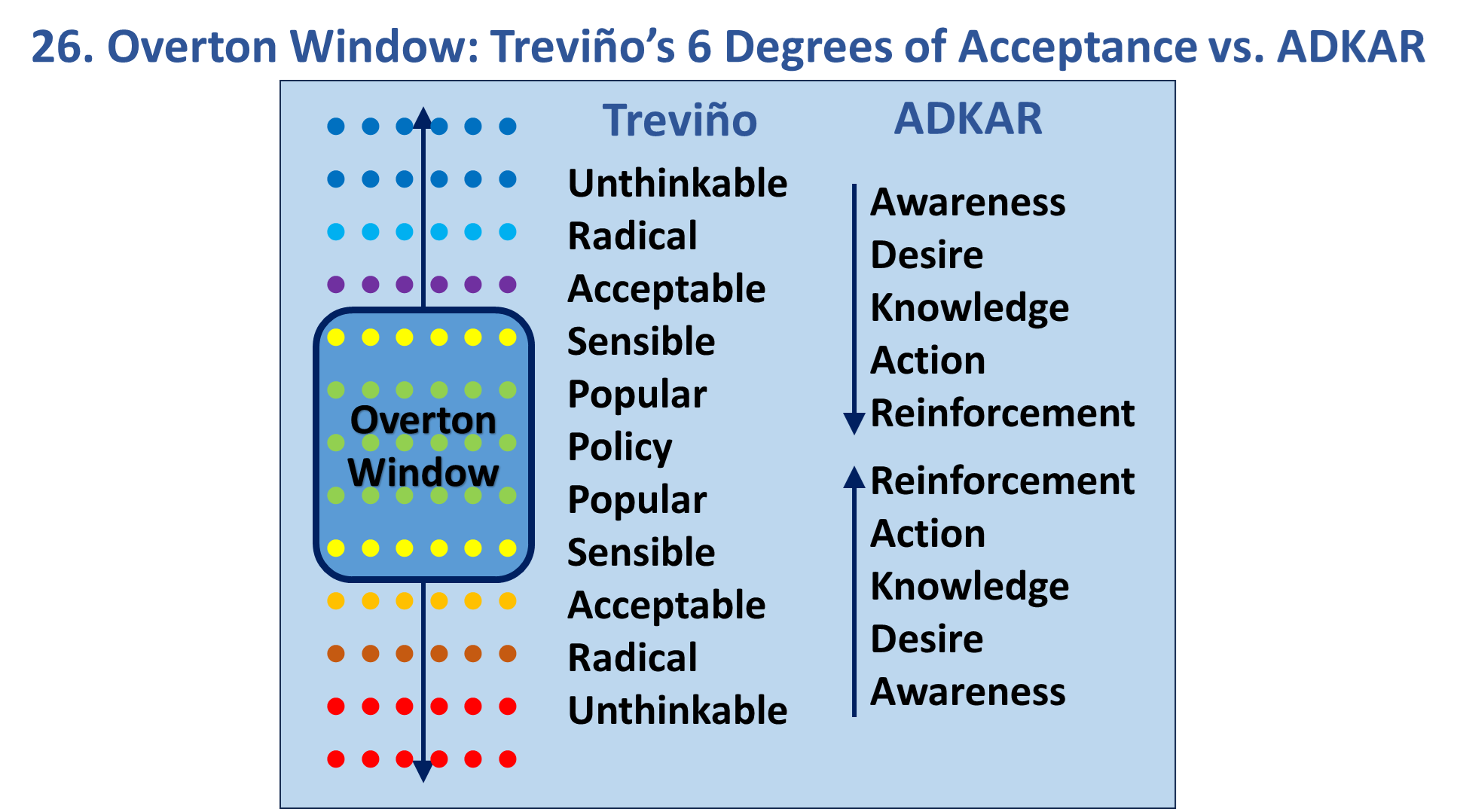
Model 26: Overton Window: Treviño’s 6 Degrees of Acceptance vs. ADKAR
References

[Model 1] Crossing the Chasm: Marketing and Selling High-Tech Products to Mainstream Customers (https://en.wikipedia.org/wiki/Crossing_the_Chasm)

[Model 2a] Michael Herman (https://www.linkedin.com/in/mwherman/)

[Model 2b] Michael Herman (https://www.linkedin.com/in/mwherman/)

[Model 2c] Michael Herman (https://www.linkedin.com/in/mwherman/)

[Model 2d] Michael Herman (https://www.linkedin.com/in/mwherman/) and ADKAR Change Management Model (https://www.prosci.com/adkar/adkar-model_

[Model 3] Phases of Foundational Technology Adoption (https://www.linkedin.com/pulse/blockchain-foundational-technology-michael-herman/)
[Model 4] Michael Herman (https://www.linkedin.com/in/mwherman/)

[Model 5] Michael Herman (https://www.linkedin.com/in/mwherman/)

[Model 6] Michael Herman (https://www.linkedin.com/in/mwherman/)

[Model 7] How We Think About How We Work (https://hyperonomy.com/2016/05/09/how-do-we-think-about-how-we-work/)

[Model 8] Unknown (with apologizes from the author)

[Model 9] Gartner Hype Cycle (https://www.gartner.com/en/research/methodologies/gartner-hype-cycle)

[Model 10] Gartner Hype Cycle (https://www.gartner.com/en/research/methodologies/gartner-hype-cycle) and Michael Herman (https://www.linkedin.com/in/mwherman/)

[Model 11] World Wide Web Consortium (W3C): Timeline Graphic (https://www.w3.org/2005/01/timelines/description)

[Model 12] Microsoft Corporation (https://en.wikipedia.org/wiki/Embrace,_extend,_and_extinguish)

[Model 13] Unknown (with apologizes from the author)

[Model 14] Unknown (with apologizes from the author)

[Model 15] Medium.com: From mainframes to blockchains. How to look at the future. (https://medium.com/@ben_longstaff/my-framework-for-how-to-look-at-the-future-of-blockchain-719f4243491f)

[Model 16] How We Think About How We Work (https://hyperonomy.com/2016/05/09/how-do-we-think-about-how-we-work/)

[Model 17] Designing for Growth: A Design Thinking Tool Kit for Managers (http://www.designingforgrowthbook.com/)

[Model 18] CB-Insights NExTT Framework (https://www.cbinsights.com/)

[Model 19 and 20] Darrell O’Donnell. The Current and Future State of Digital Wallets (https://www.continuumloop.com/standards-digitalwallet-part-11-16/).

[Model 20] Gartner Hype Cycle (https://www.gartner.com/en/research/methodologies/gartner-hype-cycle) and Michael Herman (https://www.linkedin.com/in/mwherman/)

[Model 21] Vision Keynote with Satya Nadella | Microsoft Ignite 2019 (https://www.youtube.com/watch?v=jnUiJi4hts4)

[Model 22] Michael Herman (https://www.linkedin.com/in/mwherman/)

[Model 23] Overton Window (https://en.wikipedia.org/wiki/Overton_window)

[Model 24] Michael Herman (https://www.linkedin.com/in/mwherman/)

[Model 25] Michael Herman (https://www.linkedin.com/in/mwherman/)

[Model 26] Michael Herman (https://www.linkedin.com/in/mwherman/)

Resources

  1. Phases of Foundational Technology Adoption (https://www.linkedin.com/pulse/blockchain-foundational-technology-michael-herman/)
6 Comments

Filed under TDW, Trusted Digital Web

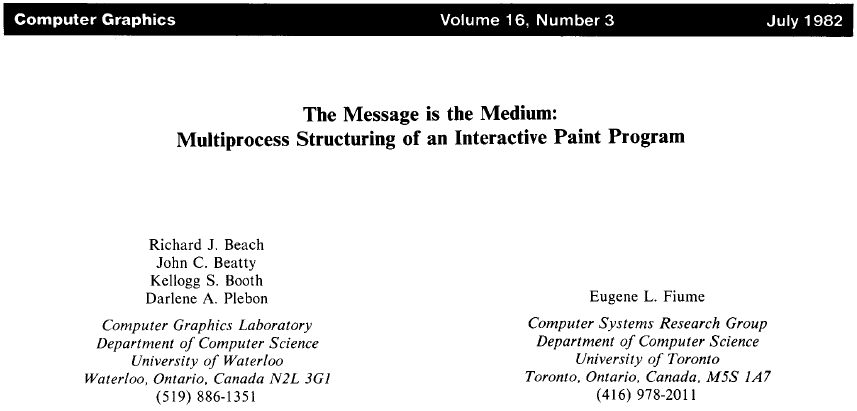
The Message is the Medium: Multiprocess Structuring of an Interactive Paint Program – Beach et. all

References

Beach

Click here: The Message is the Medium: Multiprocess Structuring of an Interactive Paint Program – Beach et. all

Discussion

Daniel, regarding our discussion about the multi-process structuring of the Indy Ledger Node and how Anthropomorphic Design might be able to help, checkout the attached conference paper that describes a Paint application created by Eugene Fiume, a cohort of mine while we were in grad school together at the University of Waterloo. [Eugene is now Dean of Applied Sciences at Simon Fraser University.]

It’s an easy read …focus on page 279 and onwards: the concepts of Administrator, Overseer, Worker, Secretary, and Listener processes.

NOTE: The paper starts on page 277 of the proceedings. The paper is a total of 11 pages.


Leave a comment

Filed under Uncategorized

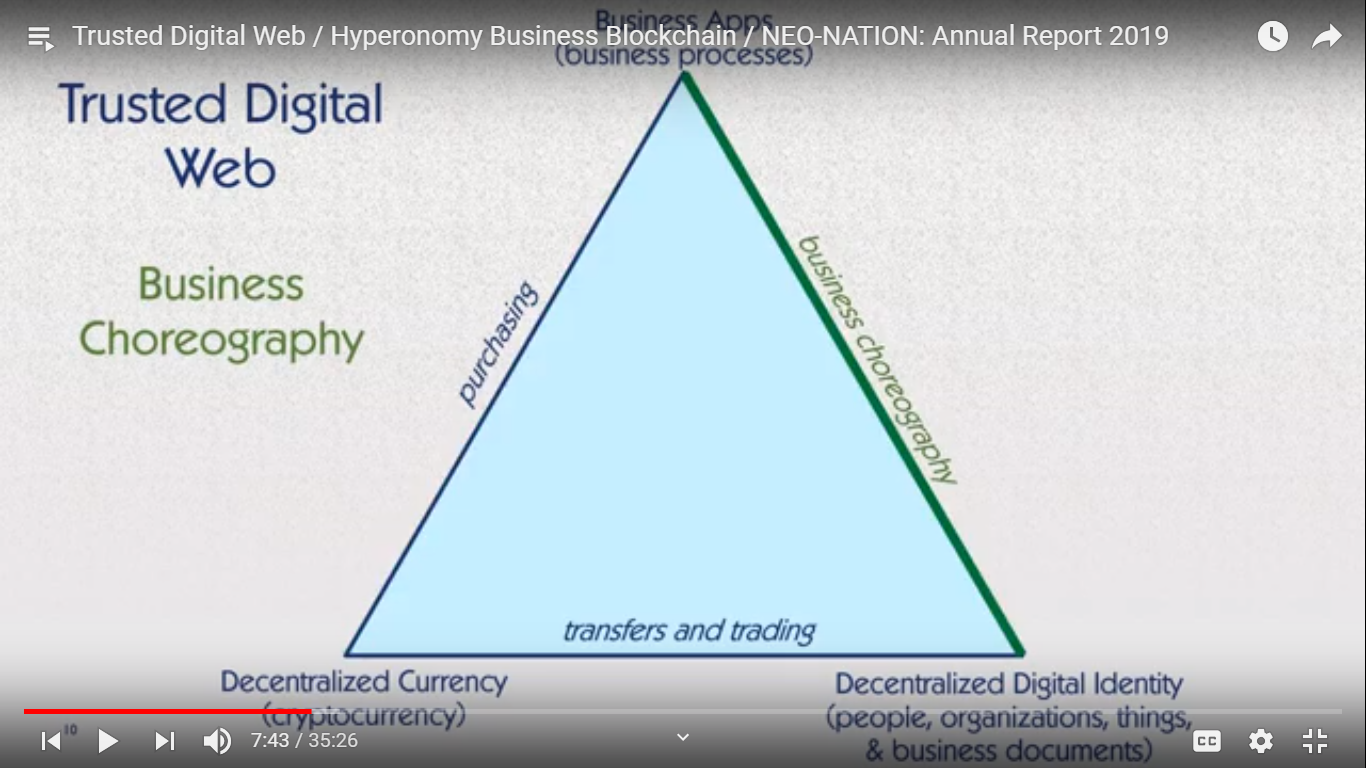
Business Choreography and the #TrustedDigitalWeb

1. Business Choreography Segment – Trusted Digital Web webcast

Business Choreography Segment (1 minute)
Trusted Digital Web / Hyperonomy Business Blockchain / NEO-NATION: Annual Report 2019

choreography-

2. Business and Service Choreography Discussion – Twitter

choreography2

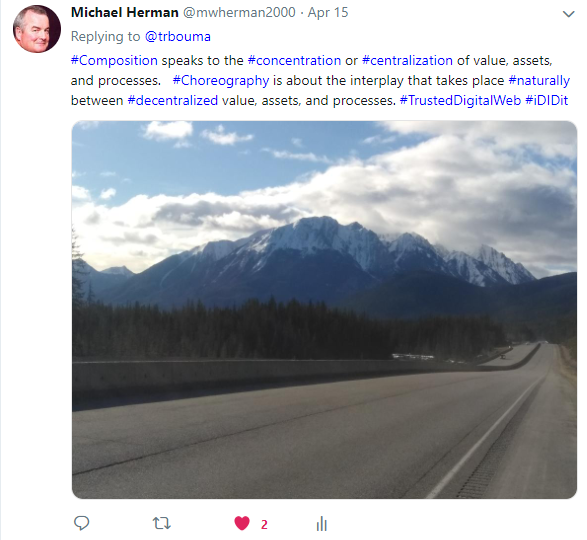
#Composition speaks to the #concentration or #centralization of value, assets, and processes. #Choreography is about the interplay that takes place #naturally between #decentralized value, assets, and processes. #TrustedDigitalWeb #iDIDit


choreography1

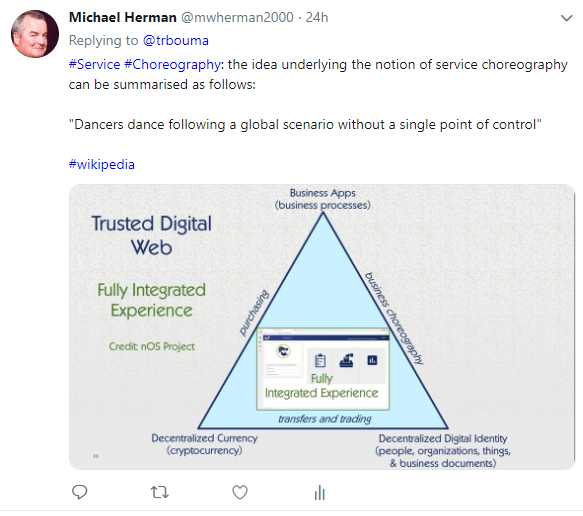
#Service #Choreography: the idea underlying the notion of service choreography can be summarized as follows:

“Dancers dance following a global scenario without a single point of control”

Wikipedia: Service Choreography


Leave a comment

Filed under TDW, Trusted Digital Web

Clique Speak (#CliqueSpeak)

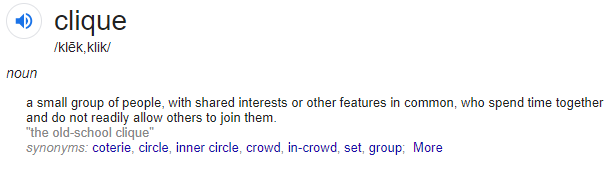
Clique: Definition

clique-speak

Cliquism: Definition

  • Supporting the development and/or existence of a clique (see above)
  • The tendency to associate in cliques; the spirit of cliques

#CliqueSpeak: Definition

  • Degrading, derogatory, and/or any type of speech that seeks to limit conversations to a select group of insiders and/or exclude outsiders from entering into existing conversations or from forming new conversations

Credentials Community Group 2018 Survey Results (March 2019 Report)

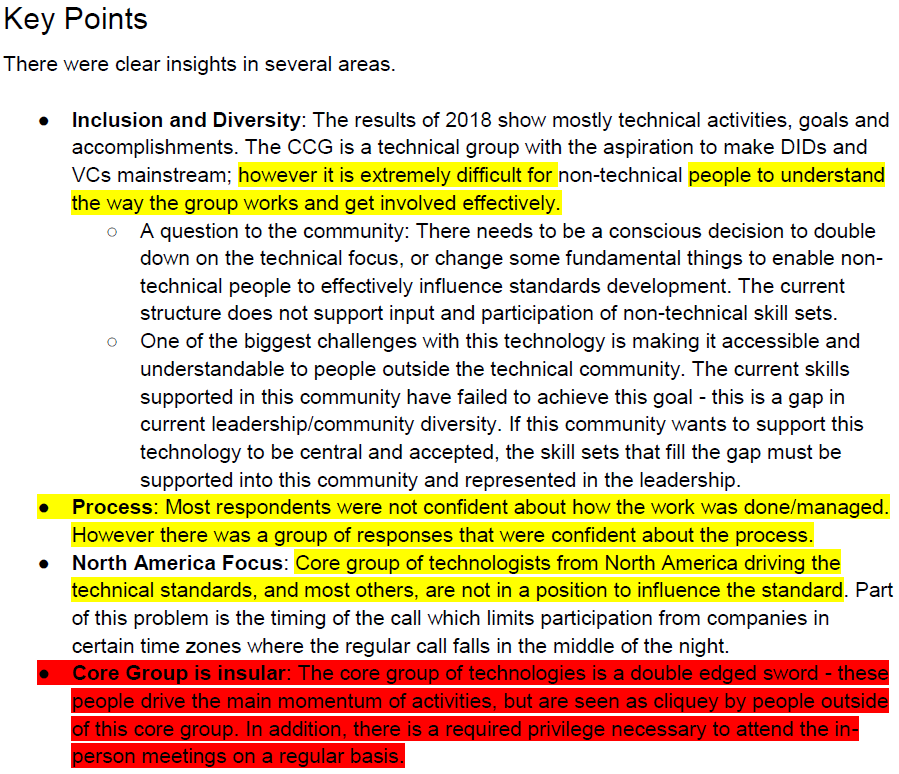
CCG 2018 EOY Survey Results Report-Key Points

Click here to download a full copy of the Credentials Community Group 2018 End of Year Survey Results (March 2019) report.

10 Real-Life Examples of #CliqueSpeak

These real-life examples are provided as educational training resources with the intent that we can have less #CliqueSpeak across CCG in the future.

  1. “…it’s not like we’re considering any of those topics for the first time.”
  2. “We may want to limit discussion if people that are new to the work, such as yourself, insist on rehashing things that we’ve already discussed.”
  3. “I know it will take time for you to trust that we’re trying to do the right thing for the community, Web, and Internet in general.”
  4. “Unfortunately, trust of that level takes months to years to develop and regular interaction and demonstrating over time that we have the best interests of the community at heart is all we can do to make you believe that we’re trying to do the right thing here.”
  5. “There are things that have strong consensus, such as dereferencing a DID gives you a DID Document.”
  6. “It’s incredibly difficult to navigate all of that if you haven’t been a part of the community since it’s beginning…”
  7. “There are discussions that keep coming up repeatedly that many in the community have explored multiple times and so rehashing those discussions is not useful if there is consensus on the topic.”
  8. “We’ve been having these topical discussions for a few years now and we’re probably through most of them.”
  9. “We need to be careful to not retread territory that we’ve already covered.”
  10. “You are also potentially re-opening discussions that we have consensus on, so we need to be careful not to do that because if we do that, lots of decisions that were finalized end up being reopened and we’ll waste a tremendous amount of time coming back to the same conclusion we came to many months/years ago.”

Leave a comment

Filed under Uncategorized

Social Evolution: A Tool for Change

Create your own magic with Web 7.0™ / TDW AgenticOS™. Imagine the possibilities.

A #wanderer is someone who leaves their tribe to share their knowledge and wisdom with others; and, later, assemble teams of explorers to seek out new frontiers, form new clans, a band, a tribe, and a tribal society. …groups of people who live and work together – a group of tribes organized around kinships.
[Kevin Hunter, July 5, 2018 during a discussion of the book “Who We Are And How We Got There”]

Social Evolution

Figure 1. Social Evolution of Policies, Procedures, Processes, and Technologies

Social Evolution and The Technology Adoption Life Cycle


Figure 2. Social Evolution and The Technology Adoption Life Cycle

References

5 Comments

Filed under TDW, Trusted Digital Web

2019 Q1 Update DID Specifications Efforts

Michael Herman (Toronto/Calgary/Seattle)
Hyperonomy Business Blockchain Project / Parallelspace Corporation
April 3, 2019

DID-specification-efforts

Figure 1. DID Specifications Ecosystem

Coexistence-Examples-Executive Summary

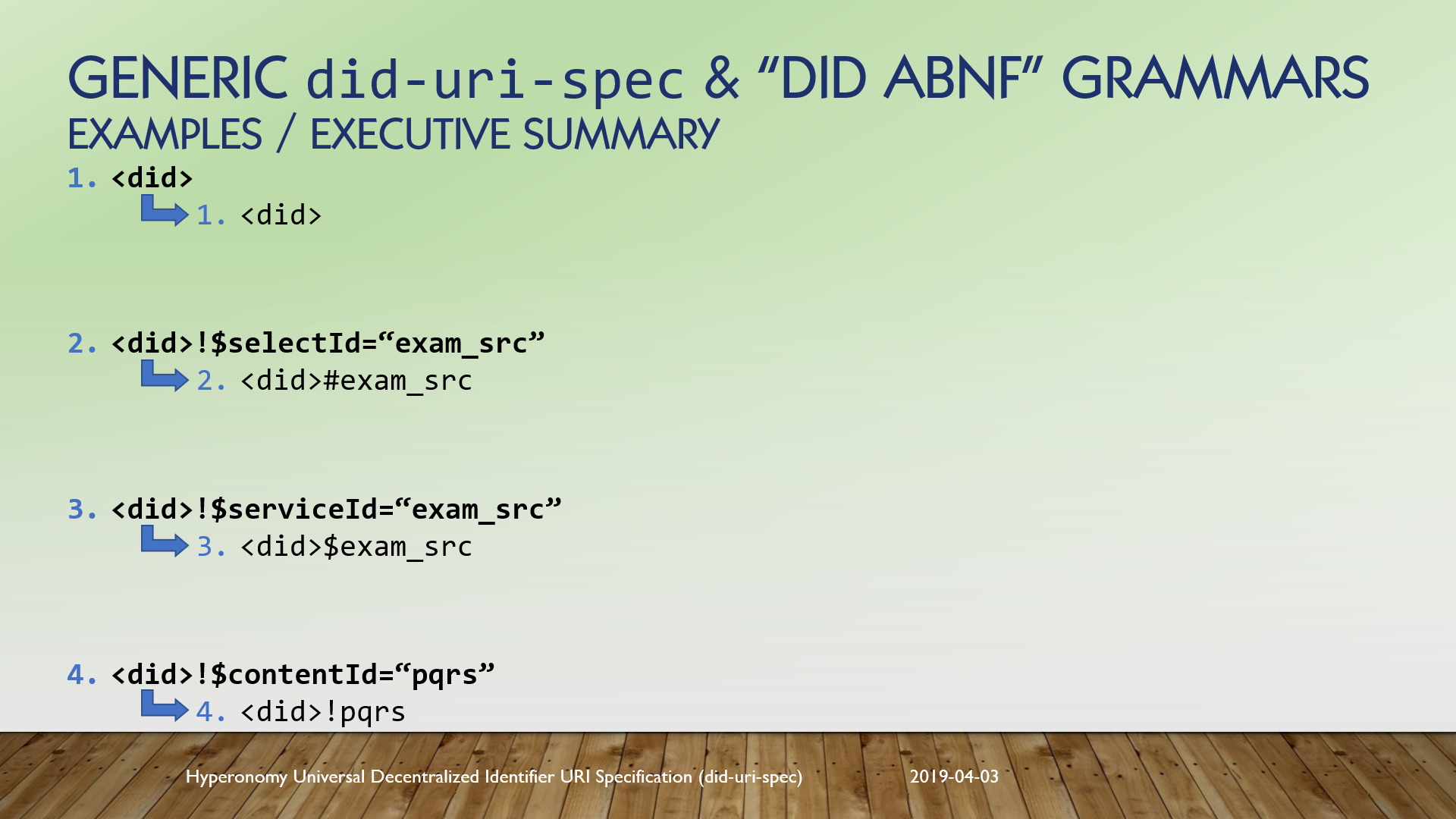
Figure 2. Comparison: did-uri-spec URI Syntax Examples and “DID ABNF” URL Syntax Examples

Coexistence-Generic-Baseline-Grammar

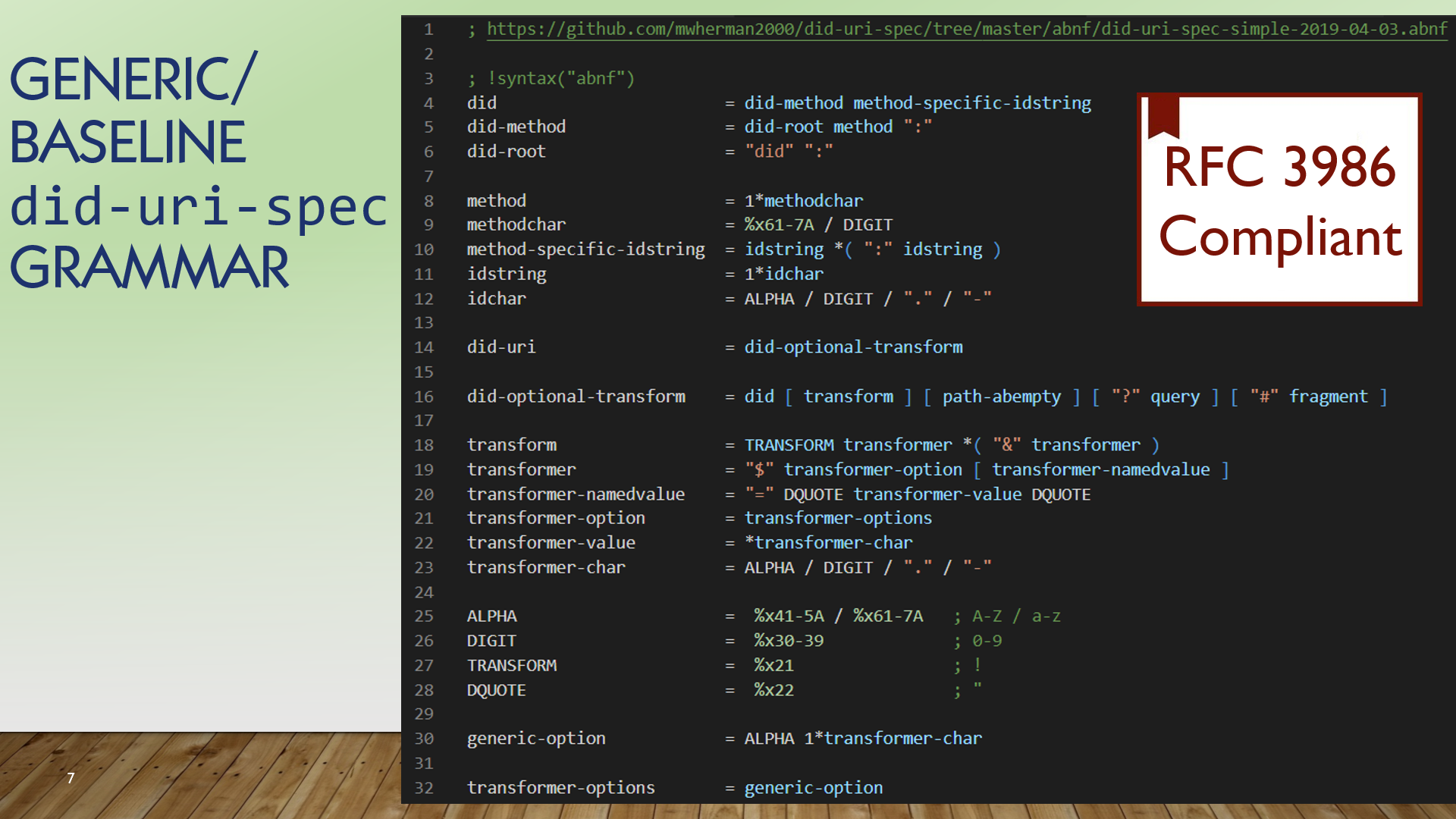
Figure 3. did-uri-spec Grammar (using ABNF notation)

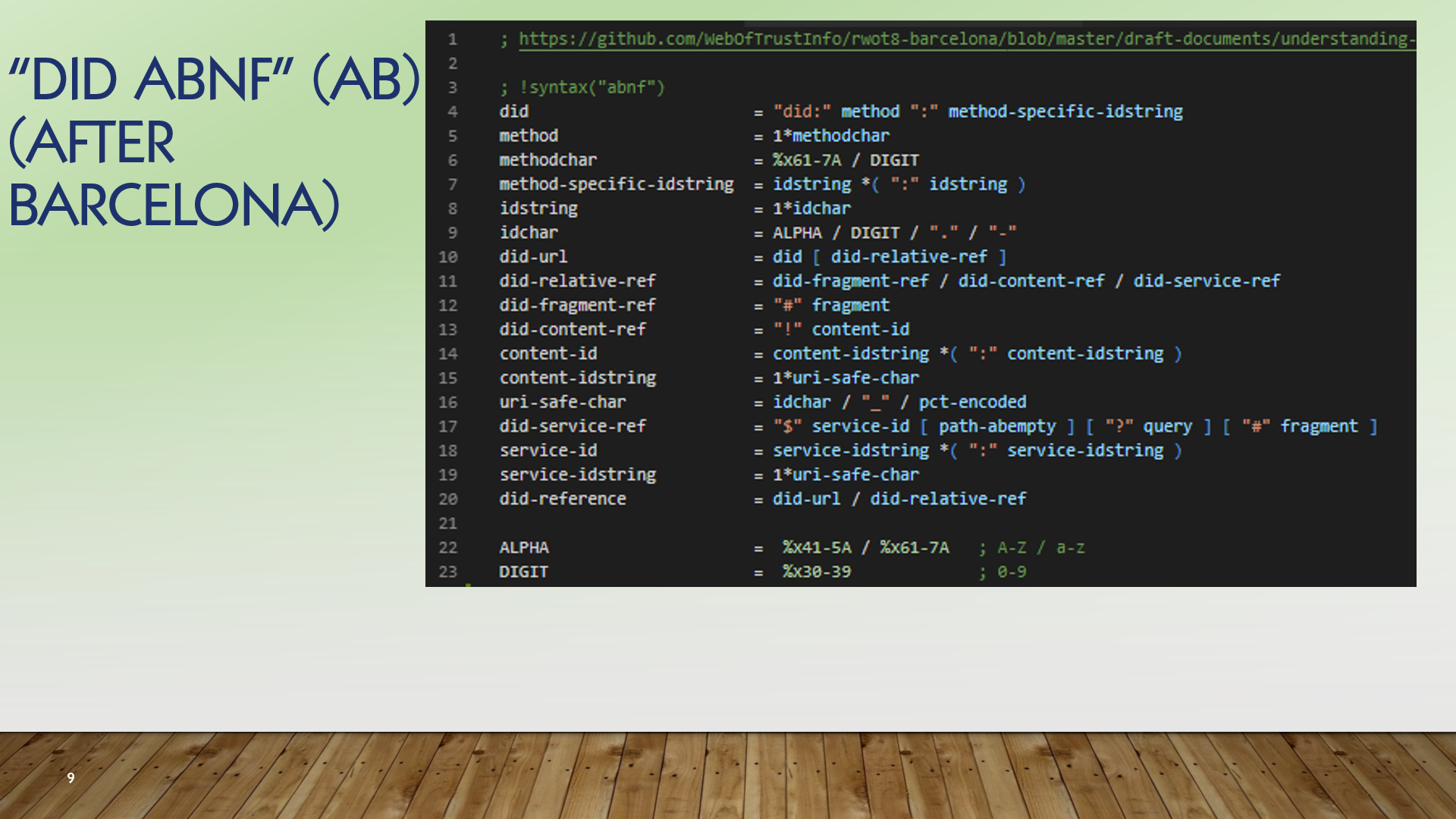
DID-ABNF-AB

Figure 4. “DID ABNF” (AB) Grammar (using ABNF notation)

References

  1. Decentralized Identifier URI Specification (did-uri-spec): “DID ABNF” Comparison & Coexistence v0.23 webcast


Leave a comment

Filed under Uncategorized

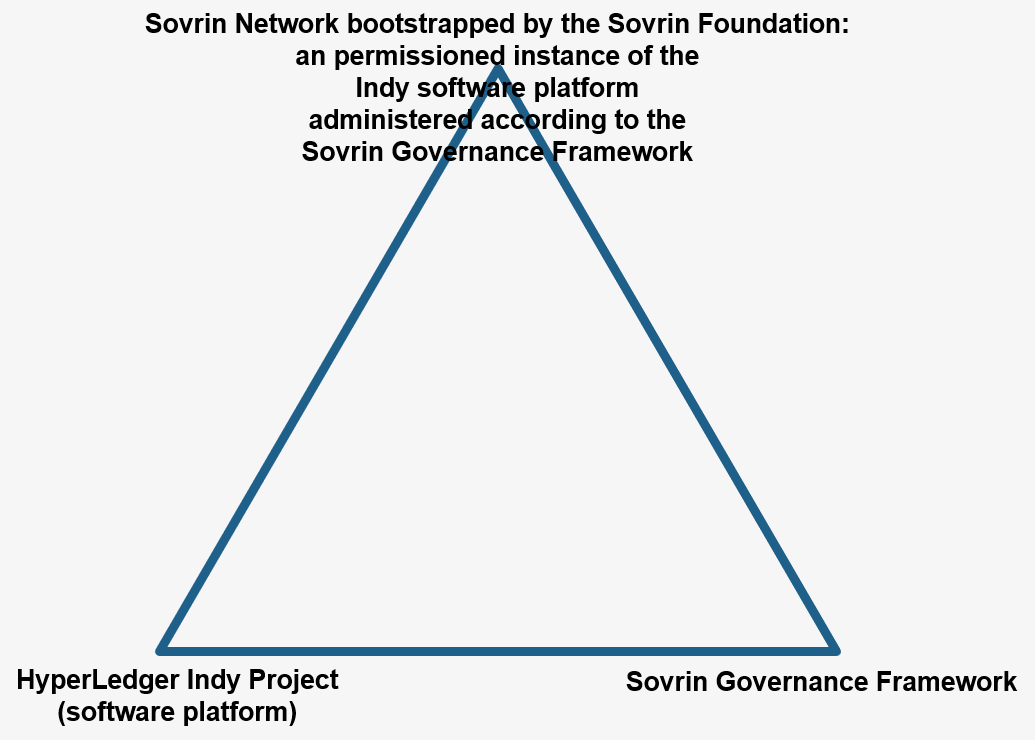
What is the difference between “Indy” and “Sovrin”?

Michael Herman (Toronto/Calgary/Seattle)
Hyperonomy Business Blockchain Project / Parallelspace Corporation
March 2019

Originally published here: https://twitter.com/mwherman2000/status/1105290408467156992

Q: What’s the difference between Indy and Sovrin? …what’s the that:

  1. differentiates between the software platform (Indy) and the governance framework (Sovrin), and
  2. describes how they come together.

Here is an answer…

Indy-Sovrin-Triangle

Leave a comment

Filed under Uncategorized

The #OpenToInnovation Principle: Internet protocols and standards not only need to be open, but more importantly, open to innovation

Michael Herman (Toronto/Calgary/Seattle)
Hyperonomy Business Blockchain Project / Parallelspace Corporation
February 2019

At a recent #BCTechSummit HyperLedger Indy developer bootcamp event in Vancouver, I was fortunate to be part of a conversation where Sam Curren (@telegramsam) was talking to a small group of developers about the importance, over the course of history, for Internet protocols to not only be open, but more importantly, open to innovation …innovations that might succeed as well as innovations that might fail.

“If you look at important Internet protocols like TCP-IP that enable packets on a network to carry any type of data including text, email messages, web pages, etc, and, later on, streaming audio and streaming video, who could have imagined it? It’s vitally important for Internet protocols to not only be open but open to innovation …innovations that might succeed as well as innovations that might fail. No one can foretell how the specifications we’re creating today will be used in the future.” Sam Curren, March 11, 2019


Leave a comment

Filed under Uncategorized

Giving Grammars Written with ABNF Notation the Respect They Deserve

Michael Herman (Toronto/Calgary/Seattle)
Hyperonomy Business Blockchain Project / Parallelspace Corporation
February 2019

At one level, the Augmented BNF (ABNF) notation is simply a convenient textual approach for describing a grammar. In turn, a grammar is a description of the allowable linguistic constructs permitted in a particular language or any other syntactic construction. Examples of common and emerging grammars written using ABNF notation include:

More importantly, a grammar that conforms to the ABNF specification (RFC4234-4) is also an executable program.  That is, a grammar is the source code for program (written in the ABNF notation (aka ABNF programming language)) that recognizes and, optionally, processes a piece of text (string of tokens) that conforms to the grammar’s specification (expressed using ABNF notation).

Summary: The “ABNF Principles”

The “ABNF Principles” include:

  1. “ABNF” is a specification for a notation for describing a grammar.
  2. “ABNF notation” is the notation described in the ABNF specification for describing a grammar.
  3. A grammar is a description of the allowable linguistic constructs permitted in a particular language or any other syntactic construction.
  4. RFC4234-4 is a formal specification for ABNF notation.
  5. A grammar expressed using ABNF notation is intended to be executable.
  6. A grammar expressed using ABNF notation is the source code for a program that can be read, interpreted, compiled, and/or executed by a human, interpreter, compiler, or virtual machine, respectively, in a way that conforms to the ABNF formal specification.

Best Practices for Developing Grammars Written using ABNF Notation

  1. As in any software development project, it is of primary importance to understand the scope of the functionality, inputs, and outputs of the intended software (aka requirements).
  2. One of the best, commonly accepted ways to understand of the scope of the intended software to be developed is to work through the following series of artifacts:
    1. User stories, which in turn are decomposed into
    2. Use cases, and
    3. Requirements, and
    4. Specifications
  3. Use automation together with the use cases to create an automatable testing framework starting early in the project – automatically validating the the grammar against the test cases (derived from the use cases) on an ongoing basis.

NOTE: These artifacts can be developed iteratively using an agile or other type of development framework. It doesn’t require a waterfall approach.


1 Comment

Filed under Uncategorized

SerentityData: Variable-byte, Statistically-based Entity Serialization & Field Encoding

Michael Herman (Toronto/Calgary/Seattle)
Hyperonomy Business Blockchain Project / Parallelspace Corporation
February 2019

The SerentityData Entity Serialization and Field Encoding library fulfills Blockchain Requirement 1 for the Universal UBL (UUBL) extensions to the UBL 2.2 business document schema specification:

Requirement 1. Compact and Efficient Binary Serialization

The requirement for extremely compact and efficient binary serialization of each entity (and subentity) can be fulfilled by various software serialization solutions including SerentityData Variable-byte, Statistically-based Entity Serialization. The SerentityData project can be found on Github. SerentityData is the author’s preferred solution.

Design and Implementation Strategy

Design Principles

  1. Statistically-based Encodings (STE): For a particular datatype (e.g. Signed Int 16 or Unsigned Int 64), some data values representable by this datatype will be used more frequently than others (e.g. 0 (zero), 1, small integer values, etc.) and there should be a way to encode these statistically more frequent values using as few bytes as possible (compared to larger data values).
  2. Variable-byte Encodings (VBE): Over the lifespan of a persisted field (e.g. an Unsigned Int 64 blockchain block or transaction serial number), the initial values of the field will have small values (0, 1, 2, 3, …) and over the course of a long time (years or decades) grow to have very large values. As few bytes as possible should be used to represent small values and this should be less than the number of bytes required to represent very large values.
  3. Application-adaptive Encodings (AAE): Every application or application data domain will require:
    1. A different subset of the available datatypes, and
    2. Each data type will have a different statistical distribution of application-dependent data values.
  4. Single-byte Encodings (SBE): Very common (application-dependent) data values, on a datatype-by-datatype basis, should only require 1 (one) byte of storage. For example, for specific applications, the following values would be candidates for single-byte encodings:
    1. Data value TRUE of datatype Boolean and data value False of datatype Boolean
    2. Specific data values of small whole numbers (e.g. 0, 1, 2, 3, 4, 5, … n) where, depending on the application and datatype, n might be 10, 32 (days of the month), 60 (seconds in a minute), etc. The values do not have to be contiguous.
    3. Specific data values of negative numbers (e.g. -1, -2, -3, -4, -5, … m) where, depending on the application and datatype, m might be -10, -20, etc. The values do not have to be contiguous.
    4. Specific data values of Enum datatypes. The values are usually contiguous but there is no requirement for them to be contiguous.
  5. Support All Datatypes (SAD): It should be possible to encode all possible datatypes and all possible data values for the selected data types.  The current list of supported data types includes:
    1. Signed Integer 16
    2. Signed Integer 32
    3. Signed Integer 64
    4. Unsigned Integer 16
    5. Unsigned Integer 32
    6. Unsigned Integer 64
    7. Byte
    8. Signed Byte
    9. Enum
    10. Byte Array
    11. Boolean
    12. Boolean
    13. Char
    14. String
    15. ASCIIString
    16. Address
    17. Guid
  6. Standalone, Compact, and Efficient (SCE) Implementation
    1. Standalone: The entity serialization and field encoding libraries will not rely on any external source code or callable binary libraries.
    2. Compact: The entity serialization and field encoding libraries will be compact enough to be useful and desirable to execute:
      1. Off-chain in a traditional computing environment including server, PC, tablet, and mobile device, as well as
      2. On-chain in a smart contract (virtual machine) execution environment
    3. Efficient: Highly efficient code execution to be useful and desirable to use in a fee-based, smart contract (virtual machine) execution environment
  7. Storage Compatibility (SC): Compatible with any data storage technology capable of storing variable-length arrays of bytes representing the field encoded and entity serialized data.
  8. Runtime Compatibility (RC): The current design and implementation of the entity serialization and field encoding libraries is compatible with .NET Core 2.0 or later.
  9. Versioning Support (VS): Support for versioning at the entity serialization as well as entity encoding levels; including support for multiple applications, serializations and encodings in the same library.
  10. Entity Extensibility and Backward Compatibility (EEBC): Entity declarations can be extended through the additional fields without losing backward compatibility with previously serialized entities.
  11. Support for ByteArray and String Null-Valued References (NULLS): Support for null-valued references to ByteArrays and Strings – in addition to zero-length and non-zero length ByteArrays and Strings.

Assumptions

  1. There exists a code generation tool that takes as input a description of an entity, its fields and their datatypes that will create the sequence of calls into the entity serialization and field encoding that performs serialization/deserialization and field coding/decoding for a target entity declaration (e.g. a C# class declaration).

Implementation Notes

  1. The reference implementation of the entity serialization and field encoding libraries is called SerentityData and is implemented using .NET Core 2.0, C#, and Visual Studio 2007 Community Edition.

Roadmap

Features that are unsupported in the current release:

  1. Collections and Mappings: next on the queue
  2. Nested Entity Declarations: An entity declaration that has a field whose datatype is another entity declaration.

Field Encoding Strategy

TODO

Byte 0 Mapping

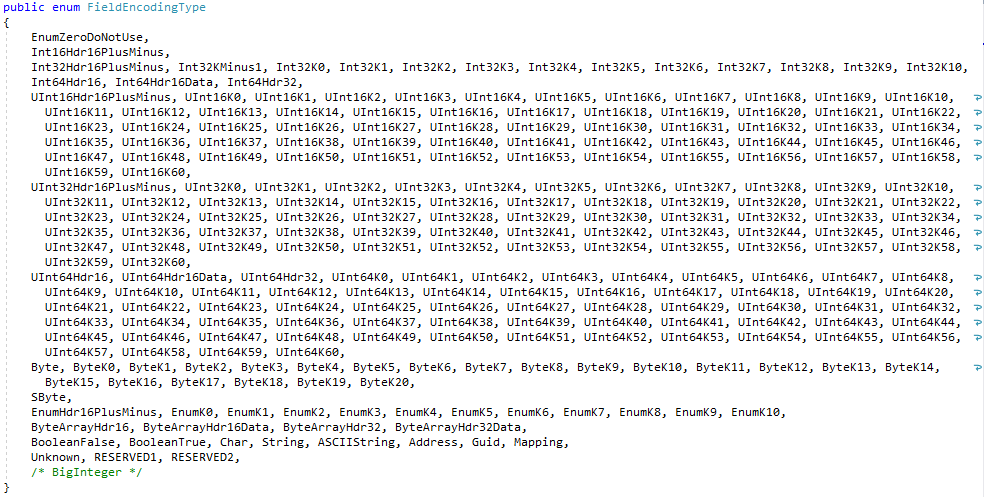
In the Variable Byte Encoding scheme used to represent the value of a datatype, the first byte of an encoded field value (Byte 0) is the most important. For Single-byte Encodings, Byte 0 needs to encode both the datatype of a particular value but also the value itself.

Given there are only 256 unique values that Byte 0 (or any single byte) can assume, certain trade-offs must be made to accommodate the range of application-driven datatypes required and the number of possible single-byte, double-byte, and triple-byte optimizations that are possible. This is where statistical knowledge of the range of values that a particular datatype required by an application is important.

Byte 0 Default Mapping

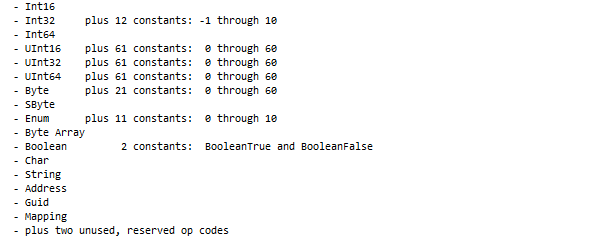
Figure 1 below is an example of the current default set of Byte 0 mappings.

SerentityData1.pngFigure 1. Byte 0 Default Mapping Table

Data value 0 (zero) is currently not assigned.

Single-Byte Encodings

TODO

Two-Byte Encodings

TODO

Three-Byte Encodings

TODO

Longer Byte Encodings

TODO

Performance

TODO

Sample Use Case

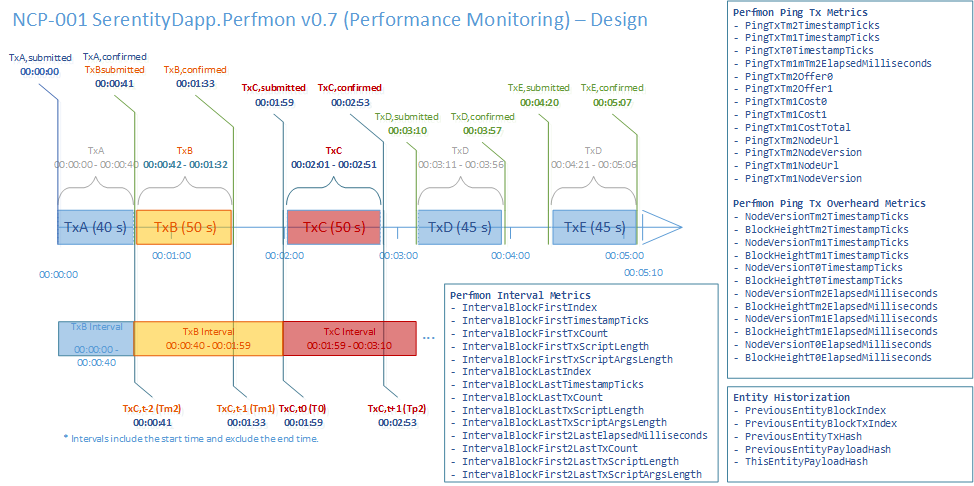
An example of a distributed business application designed to be used with SerentityData is the following SerentityDapp.Perfmon for on-chain [blockchain] performance monitoring and recording.

NCP-001 SerentityDapp.Perfmon v0.7Figure 2. SerentityDapp.Perfmon Data Model – Onchain [blockchain] Performance Monitoring and Recording Example

Appendix A – SerentityData Field Encoding Details

Supported Data Types

02-datatypes

Special Use Cases

21-specialcases

Field Buffer Configurations

A. Buffered Values

  • 3 Fields = FieldEncodingType + Buffer Length + Buffer Bytes
Use Case 0. 16-bit Buffered Value


33-usecase0

Use Case 1. 32-bit Buffered Value


48-usecase1


Use Case 2. 64-bit Buffered Value


53-usecase2

B. Headered Values

  • 2 Fields = FieldEncodingType + Value (stored in the 16-bit, 32-bit, or 64-bit Buffer Length field)
Use Case 3. 16-bit Headered Value


59-usecase3

Use Case 4. 32-bit Headered Value


73-usecase4

Use Case 5. 64-bit Headered Value


78-usecase5

C. Value Constants:

  • 1 Field = FieldEncodingType (representing a specific constant value for a particular datatype stored represented an FieldEncodingType op code)
Use Case 6. 8-bit Value Constants

85-usecase6

D. Null ByteArrays


Use Case 7. Null-valued reference to a ByteArray


92-usecase7

E. Short Length ByteArrays

  • 0, 1, 2, 3 bytes in length
Use Case 8. 0-byte ByteArray


100-usecase8

Use Case 9. 1-byte ByteArray
105-usecase9
Use Case 10. 2-byte Byte Array
110-usecase10
Use Case 11. 3-byte Byte Array
115-usecase11


Best regards,

Michael Herman (Toronto/Calgary/Seattle)

1 Comment

Filed under Uncategorized