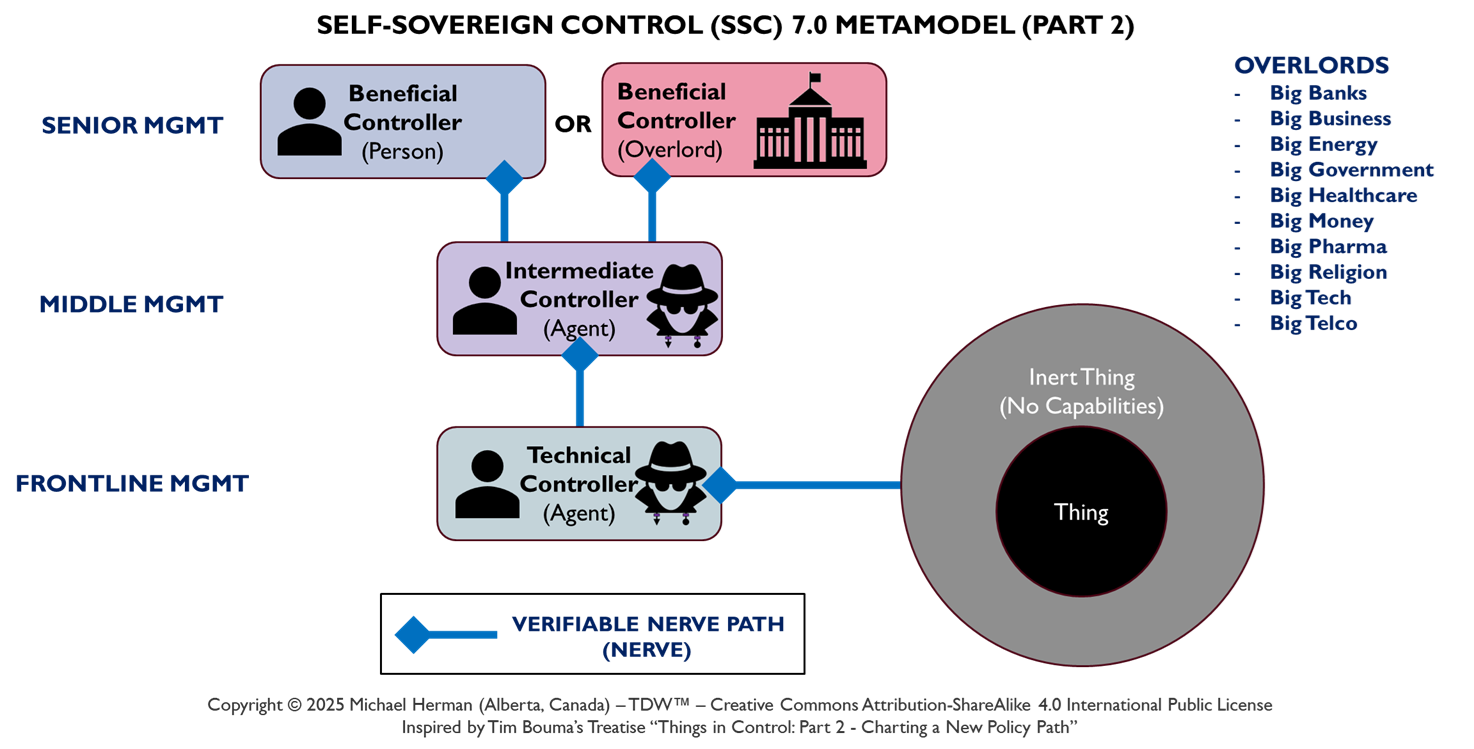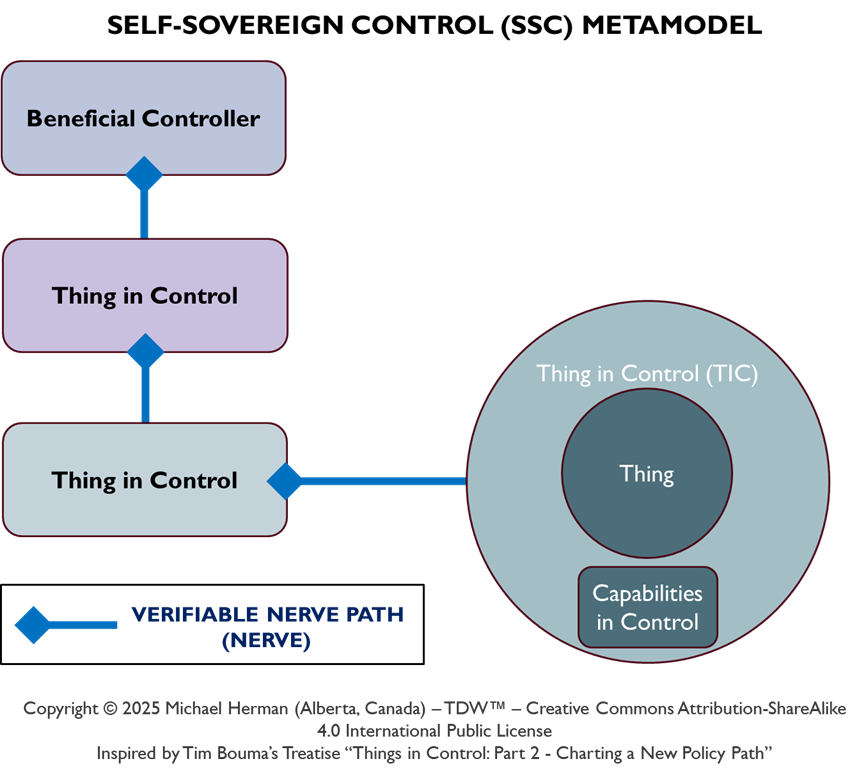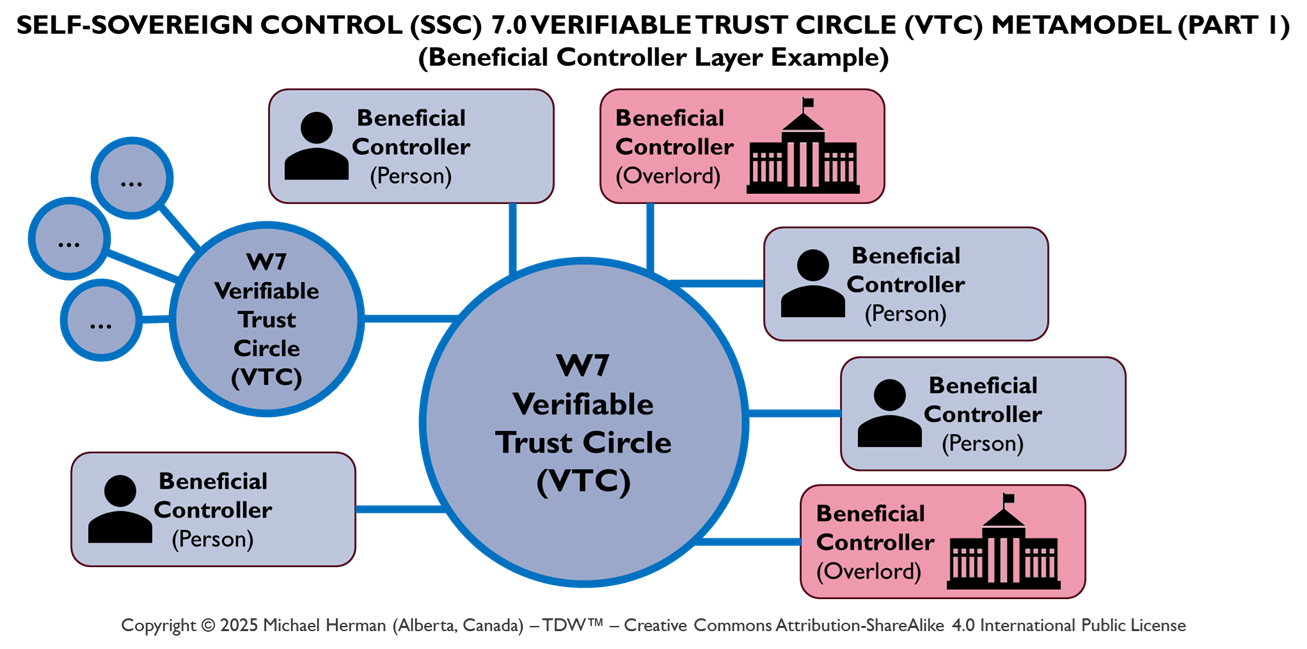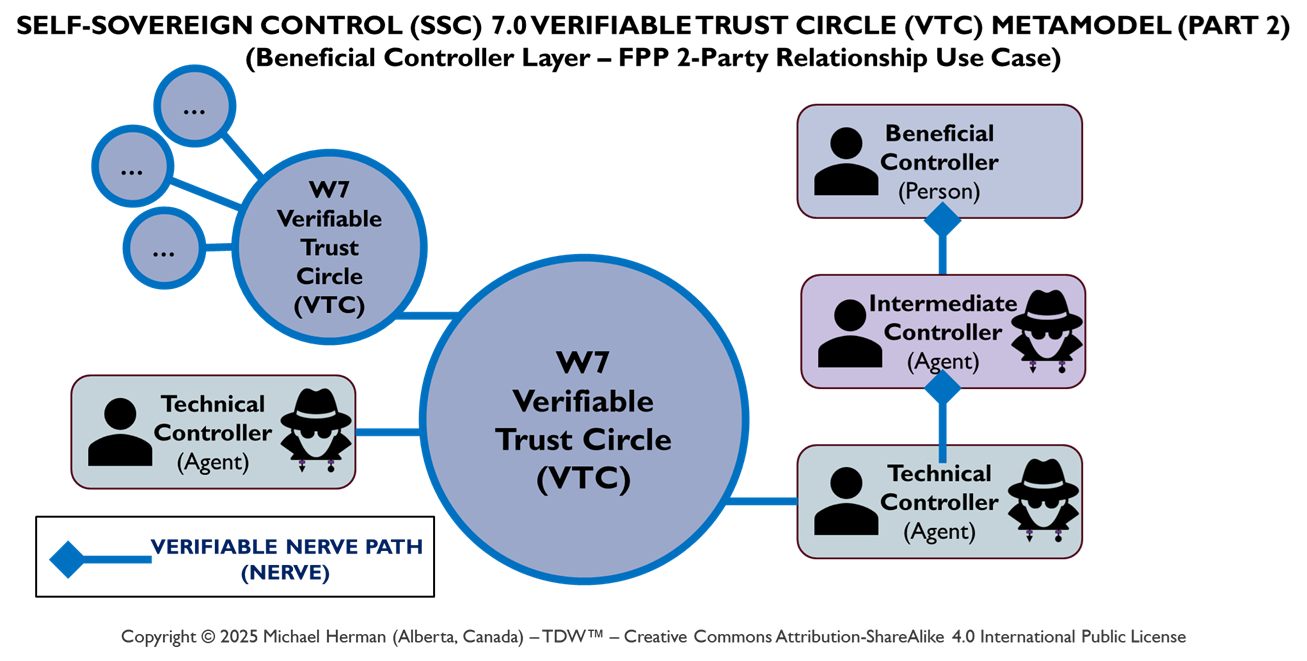
TODO
DAVOS2026: Definition: Decentralization, Centralization, Hyper-decentralization, and Circular Hype-Decentralization
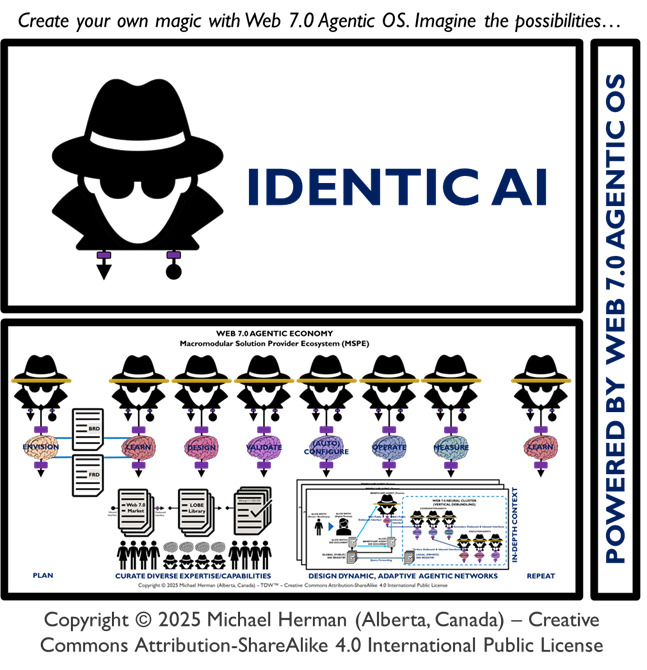
Create your own magic with Web 7.0™ / TDW AgenticOS™. Imagine the possibilities.
Copyright © 2025 Michael Herman (Bindloss, Alberta, Canada) – Creative Commons Attribution-ShareAlike 4.0 International Public License
Decentralization refers to the shift from centralized control of identity, data, compute, and decision-making toward a distributed ecosystem where trust emerges from cryptographic proofs, verifiable credentials, and autonomous agents—not institutions.
Instead of relying on a single platform or cloud to authenticate users, store data, run applications, or mediate transactions, decentralization enables individuals, organizations, and intelligent agents to interact through open protocols, self-sovereign identities, shared governance, and value-aligned automation. This creates a more resilient, equitable, and interoperable digital environment where trust is built into the architecture, users retain control over their digital existence, and intelligent agents operate collaboratively rather than being owned or constrained by proprietary platforms.

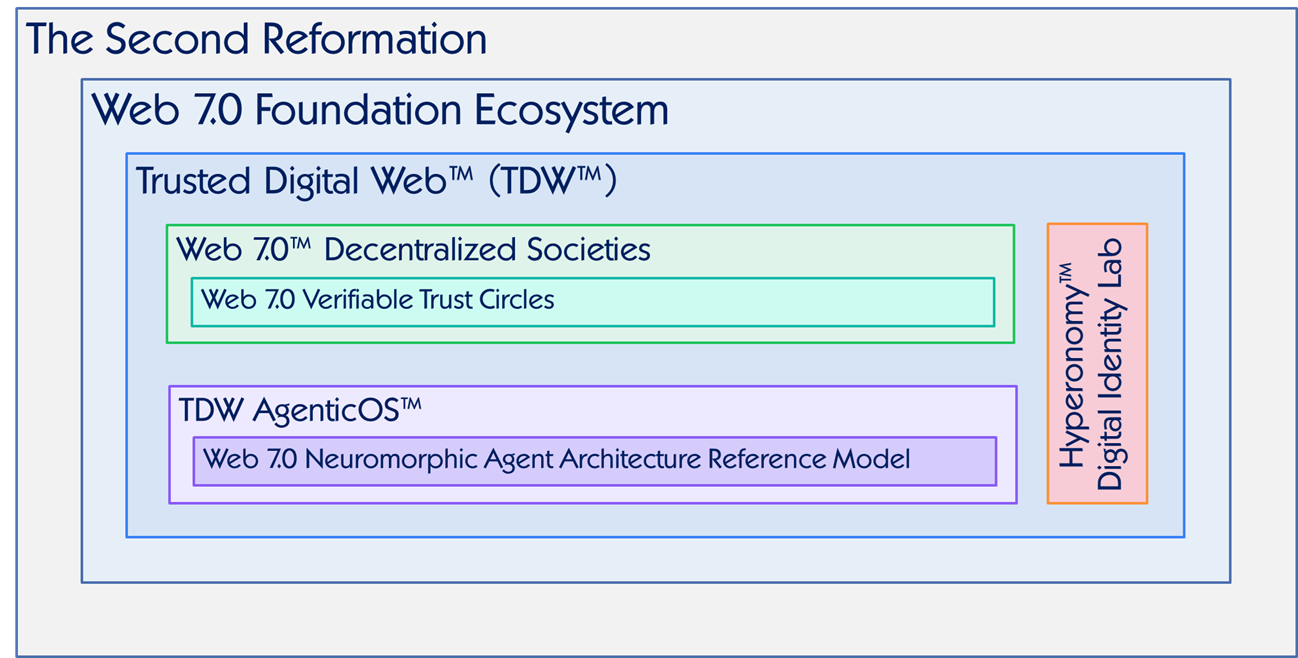
Web 7.0 / TDW AgenticOS™ is a decentralized platform for building and supporting decentralized societies.

Filed under Uncategorized
The AI Technology Wheel of Reincarnation
Create your own magic with Web 7.0 AgenticOS™. Imagine the possibilities.
Copyright © 2025 Michael Herman (Bindloss, Alberta, Canada) – Creative Commons Attribution-ShareAlike 4.0 International Public License
“The AI Technology Wheel of Reincarnation is spinning so fast, it’s going to fly apart – damaging everyone.”
Michael Herman, Decentralized Systems Architect, Web 7.0. November 22, 2025.

References
Filed under Uncategorized
DAVOS2026: Highly Effective Communication/Story Telling
Copyright © 2025 Michael Herman (Bindloss, Alberta, Canada) – Creative Commons Attribution-ShareAlike 4.0 International Public License
Start with something familiar to your audience (a belief). Then, take them on a guided tour to your eventual destination. Make sure everyone gets on the same bus.
#OvertonWindow #OvertonOlive #bustour

Intended Audience Statement
Make sure you have an Intended Audience statement near the beginning of your whitepaper, report, or presentation. For example:
Intended Audience
The intended audience for this document is a broad range of professionals interested in furthering their understanding of Web 7.0 AgenticOS for use in software apps, agents, and services. This includes software architects, application developers, and user experience (UX) specialists, as well as people involved in a broad range of standards efforts related to decentralized identity, verifiable credentials, and secure storage.
Explicit purpose and intended audience statements indispensably focus your mind, both as the author and for the reader.
Crafting Your Guided Tour


Filed under Uncategorized
Circular Hyper-centralization, et al.
Create your own magic with Web 7.0 AgenticOS™. Imagine the possibilities.
Copyright © 2025 Michael Herman (Bindloss, Alberta, Canada) – Creative Commons Attribution-ShareAlike 4.0 International Public License
Hyper-centralization
- #Banks that aggregate customer data; then sell/lease it to 3rd parties (#DeFi) without compensating customers
- #Energy companies who trade energy products but neither produce, distribute, nor consume any of the products they trade in: electricity, nuclear, coal, gas, oil, …
- #Governments that outsource to #IDP‘s
Circular Hyper-centralization
- #Healthcare providers and insurers who jointly pool and mine their patient data
- #BigTech companies who invest in each other – taking equity positions and payments in a circular loop
- #Telco, #BigTech, and #Governments that prevent individuals from having a personal presence (static address) on the Internet
Circular Hyper-centralization is the worst possible/deadly scenario/societal configuration.

Filed under Uncategorized
DAVOS2026: The Second Reformation: Age of Agents
Create your own magic with Web 7.0 AgenticOS™. Imagine the possibilities.
Copyright © 2025 Michael Herman (Bindloss, Alberta, Canada) – Creative Commons Attribution-ShareAlike 4.0 International Public License


To be continued…
Google CEO Sundar Pichai says artificial intelligence is going to have a bigger impact on the world than some of the most ubiquitous innovations in history.“AI is one of the most important things humanity is working on. It is more profound than, I dunno, electricity or fire,” says Pichai, speaking at a town hall event in San Francisco in January.
Filed under Uncategorized
Windows 1.0 SDK Samples: generic.c
Create your own magic with Web 7.0 AgenticOS™. Imagine the possibilities.
Copyright © 2025 Michael Herman (Bindloss, Alberta, Canada) – Creative Commons Attribution-ShareAlike 4.0 International Public License
Documentation
generic.c
/********************************************************************\
* generic.c: Source code for generic *
* *
* Comments: Generic Application *
* *
* Functions: *
* WinMain - Application entry point *
* MainWndProc - main window procedure *
* AboutDlgProc - dialog procedure for About dialog *
* *
* *
\********************************************************************/
/********************* Header Files *********************/
#include <windows.h>
#include "generic.h"
#pragma comment(lib, "user32.lib")
#pragma comment(lib, "gdi32.lib")
/********************* Prototypes ***********************/
LRESULT CALLBACK MainWndProc( HWND, UINT, WPARAM, LPARAM );
INT_PTR CALLBACK AboutDlgProc( HWND, UINT, WPARAM, LPARAM );
/******************* Global Variables ********************/
HINSTANCE ghInstance;
/********************************************************************\
* Function: int CALLBACK WinMain(HINSTANCE, HINSTANCE, LPSTR, int) *
* *
* Purpose: Initializes Application *
* *
* Comments: Register window class, create and display the main *
* window, and enter message loop. *
* *
* *
\********************************************************************/
int CALLBACK WinMain( HINSTANCE hInstance,
HINSTANCE hPrevInstance,
LPSTR lpszCmdLine,
int nCmdShow )
{
MSG msg;
HWND hWnd;
BOOL bRet;
WNDCLASS wc;
if( !hPrevInstance )
{
wc.lpszClassName = TEXT("GenericAppClass");
wc.lpfnWndProc = MainWndProc;
wc.style = CS_OWNDC | CS_VREDRAW | CS_HREDRAW;
wc.hInstance = hInstance;
wc.hIcon = LoadIcon( NULL, IDI_APPLICATION );
wc.hCursor = LoadCursor( NULL, IDC_ARROW );
wc.hbrBackground = (HBRUSH)( COLOR_WINDOW+1 );
wc.lpszMenuName = TEXT("GenericAppMenu");
wc.cbClsExtra = 0;
wc.cbWndExtra = 0;
RegisterClass( &wc );
}
ghInstance = hInstance;
hWnd = CreateWindow( TEXT("GenericAppClass"),
TEXT("Generic Application"),
WS_OVERLAPPEDWINDOW|WS_HSCROLL|WS_VSCROLL,
0,
0,
CW_USEDEFAULT,
CW_USEDEFAULT,
NULL,
NULL,
hInstance,
NULL
);
ShowWindow( hWnd, nCmdShow );
while( (bRet = GetMessage( &msg, NULL, 0, 0 )) != 0 )
{
if (bRet == -1)
{
// handle the error and possibly exit
}
else
{
TranslateMessage( &msg );
DispatchMessage( &msg );
}
}
return (int)msg.wParam;
}
/********************************************************************\
* Function: LRESULT CALLBACK MainWndProc(HWND, UINT, WPARAM, LPARAM) *
* *
* Purpose: Processes Application Messages *
* *
* Comments: The following messages are processed *
* *
* WM_PAINT *
* WM_COMMAND *
* WM_DESTROY *
* *
* *
\********************************************************************/
LRESULT CALLBACK MainWndProc(
HWND hWnd,
UINT msg,
WPARAM wParam,
LPARAM lParam )
{
PAINTSTRUCT ps;
HDC hDC;
switch( msg )
{
/**************************************************************\
* WM_PAINT: *
\**************************************************************/
case WM_PAINT:
hDC = BeginPaint( hWnd, &ps );
TextOut( hDC, 10, 10, TEXT("Hello, Windows!"), 15 );
EndPaint( hWnd, &ps );
break;
/**************************************************************\
* WM_COMMAND: *
\**************************************************************/
case WM_COMMAND:
switch( wParam )
{
case IDM_ABOUT:
DialogBox( ghInstance, TEXT("AboutDlg"), hWnd,
(DLGPROC) AboutDlgProc );
break;
}
break;
/**************************************************************\
* WM_DESTROY: PostQuitMessage() is called *
\**************************************************************/
case WM_DESTROY:
PostQuitMessage( 0 );
break;
/**************************************************************\
* Let the default window proc handle all other messages *
\**************************************************************/
default:
return( DefWindowProc( hWnd, msg, wParam, lParam ));
}
return 0;
}
/********************************************************************\
* Function: INT_PTR CALLBACK AboutDlgProc(HWND, UINT, WPARAM, LPARAM)*
* *
* Purpose: Processes "About" Dialog Box Messages *
* *
* Comments: The About dialog box is displayed when the user clicks *
* About from the Help menu. *
* *
\********************************************************************/
INT_PTR CALLBACK AboutDlgProc(
HWND hDlg,
UINT uMsg,
WPARAM wParam,
LPARAM lParam )
{
switch( uMsg )
{
case WM_INITDIALOG:
return TRUE;
case WM_COMMAND:
switch( wParam )
{
case IDOK:
EndDialog( hDlg, TRUE );
return TRUE;
}
break;
}
return FALSE;
}
Filed under Uncategorized
Decentralized Tectonics: Reshaping Your Future
Create your own magic with Web 7.0 Agentic OS. Imagine the possibilities.
Copyright © 2025 Michael Herman (Bindloss, Alberta, Canada) – Creative Commons Attribution-ShareAlike 4.0 International Public License
Here’s 2 teaser slides…


Filed under Uncategorized
Mitch Joel’s “Three Little Pigs” (TLP): A Metaphor for Kaplan & Norton’s Strategy Map
Create your own magic with Web 7.0 AgenticOS™. Imagine the possibilities.
Copyright © 2025 Michael Herman (Bindloss, Alberta, Canada) – Creative Commons Attribution-ShareAlike 4.0 International Public License
Mitch Joel’s Three Little Pigs (TLP)
“If the Big Bad Wolf of business is disruption — then your house of straw, your house of sticks, your house of bricks … they each represent how you respond. To survive, you can’t just build the straw or the sticks. You need the bricks.” — Mitch Joel (Italics added)
If the “big bad wolf” symbolizes disruption, then the Three Little Pigs are three business responses you need to cover to survive and thrive:
- Pig 1 — Transform: internal change. Make transformation an inside-out function: rethink organizational structure, culture and capabilities so you can meet customers where they are. (Think: change how you operate, not just what you sell.)
- Pig 2 — Innovate: build products, services or experiences that actually connect with people — new tools, features or touchpoints that create fresh ways to engage.
- Pig 3 — Transact: rework how you enable commerce and conversion — the channels, payment flows, and customer journeys that let people buy or interact on their terms.
Why he uses the tale: the fairy tale makes the point visceral: if you only build a “straw” or “stick” strategy (only one of Transform, Innovate, Transact), the wolf (Disruption) will blow you down. You need all three to be resilient.
Pig 1 — Transform: the “inside-out” house-building
- Build capability and culture first. Don’t only redesign products; change how the organisation thinks, decides and moves.
- Focus on skills, structure and processes that let you adapt: cross-functional teams, fast decision loops, data fluency, and an experimentation mindset.
- Make customer context part of every change: measure real customer behaviour (not just surveys) and let that guide priorities.
- Concrete early wins: align one existing team to run a rapid experiment (2–4 week sprint), hire/rotate a digital product lead into a legacy unit, or map your customer journey and remove the top 3 friction points.
- Useful KPIs: time-to-decision, % of revenue from products launched in last 18 months, experiment velocity (number of tested hypotheses per quarter), and Net Promoter Score or task completion rates for key journeys.
Pig 2 — Innovate: Build the house of sticks
“Once you’ve begun transforming internally, you need to create things that people actually want. Innovation isn’t about chasing shiny objects; it’s about connecting better with customers.” — Mitch Joel
Innovation is building new ways for people to engage with your brand, products, or services. It’s the “what we make and how it connects” layer between transformation (internal) and transaction (external).
- Experiment at the edges – Pilot emerging technologies, formats, and experiences (AR, personalization, voice, AI tools) to see what actually enhances value.
- Design for emotion – Innovate not only for efficiency, but for meaning: create products, campaigns, or digital experiences that make people feel something.
- Bridge physical + digital – Mitch calls this “the connected experience.” Every interaction, online or offline, should feel continuous.
- Iterate fast, retire faster – The wolf (disruption) gets through the “stick house” if you can’t evolve quickly. Kill what doesn’t work early.
Pig 3 — Transact: Build the Brick House
Transformation builds the foundation (Pig 1). Innovation builds the structure that attracts and connects people (Pig 2). But the house of sticks still isn’t enough — unless you tie it to real customer action through Transact (Pig 3 — a house of bricks).
“Transformation and innovation don’t mean much if you can’t enable people to act — to buy, to subscribe, to connect. The strongest companies make it effortless for customers to say ‘yes.’” — Mitch Joel
Transact is about removing friction between desire and action. It’s where all your internal change (Pig 1) and creative output (Pig 2) translate into measurable results — purchases, loyalty, advocacy, or community engagement.
Meet customers where they are.
- Build omnichannel experiences — physical, digital, social, voice, app — that feel unified.
- “The future of commerce is context,” he says: people transact in the environment they’re already in.
Simplify the path to action.
- One-click purchasing, mobile optimization, intuitive onboarding, instant checkouts.
- Fewer steps = more conversions.
Trust and transparency.
- Friction isn’t just usability; it’s emotional. People buy when they trust how their data, time, and values are treated.
Close the feedback loop.
- Every transaction should teach you something. Feed that data back into transformation (Pig 1) and innovation (Pig 2).
Mitch’s Metaphor
- Pig 1 — Transformation = foundation (get your own house in order).
- Pig 2 — Innovation = frame and design (what the world sees).
- Pig 3 — Transaction = solid bricks that make the house stand against the wolf (disruption).
Kaplan & Norton’s Strategy Map
A good example of a Kaplan and Norton strategy map appears in Figure 1. The Parallelsapce Corporation Strategy Map applies the Kaplan and Norton Balanced Scorecard framework to align learning, processes, customers, and financial outcomes.
It begins with a foundation of Learning & Growth — focusing on research, training, people, and best practices—to build organizational capabilities.
These capabilities feed into Internal Processes such as analysis, external publishing, partnerships, CRM, and proof-of-concepts, which strengthen Customer Perspectives of knowledge and solution leadership through design excellence and process integrity.
Ultimately, this drives Financial Results across multiple revenue streams, including content, delivery, training, consulting, and both packaged and custom solutions.
The map emphasizes a cause-and-effect flow from people and process excellence to customer trust and financial growth.

Mapping “Three Little Pigs” (TLP) to Kaplan & Norton’s Strategy Map
Figure 2 is a color-coded layout aligning the TLP’s potential business responses of Transform, Innovate, and Transact with the Learning & Growth, Internal Process, Customer, and Financial perspectives of the Balanced Scorecard framework

The 4th Perspective, Learning & Growth (Cultural Foundation), is an extension of the Pig 1 — Transform response used for Perspective 3: Internal Processes.
Resources
- Strategy Maps: Converting Intangible Assets into Tangible Outcomes. Robert S. Kaplan and David P. Morgan. Harvard Business Review Press. 2004.
Filed under Uncategorized
Dunbar’s Number – Explained
Create your own magic with Web 7.0™ / TDW AgenticOS™. Imagine the possibilities.
Copyright © 2019-2025 Michael Herman (Bindloss, Alberta, Canada) – Creative Commons Attribution-ShareAlike 4.0 International Public License
Web 7.0™, TDW AgenticOS™ and Hyperonomy™ are trademarks of the Web 7.0 Foundation. All Rights Reserved.
Dunbar’s Number refers to the cognitive limit on the number of stable, meaningful social relationships a person can maintain — typically around 150.
Proposed by anthropologist Robin Dunbar in the early 1990s, it’s based on research linking neocortex size to social group size in primates, then extrapolated to humans.
The key idea: our brains can only manage a limited number of people whose relationships with us (and with each other) we can track in any depth.
📊 Dunbar’s Social Layers
Dunbar found that human relationships form nested circles of intimacy, each layer roughly three times larger than the one before it — but with decreasing emotional closeness and interaction frequency.
| Layer | Approx. Size | Relationship Type | Typical Frequency of Contact / Emotional Closeness |
|---|---|---|---|
| 0th Circle (#Wanderer) | 1 | An individual | N/A |
| 1st Circle (Party of Explorers) | 2-5 | Closest friends & family — your “support clique” | Daily or near-daily contact; deepest emotional ties |
| 2nd Circle (Family Unit) | 5-20 | Good friends you confide in and rely on | Weekly contact; high emotional closeness |
| 3rd Circle (Band) | 20-50 | Friends you might invite to a big personal event (e.g. wedding) | Monthly contact; moderate closeness |
| 4th Circle (Clan) | 50-500 | Meaningful relationships — people you know personally and would help if needed | A few times per year; recognize and understand social context |
| 5th Circle (Tribe) | 1000-2000 | Acquaintances — people whose names and faces you recognize | Occasional interaction or recognition |
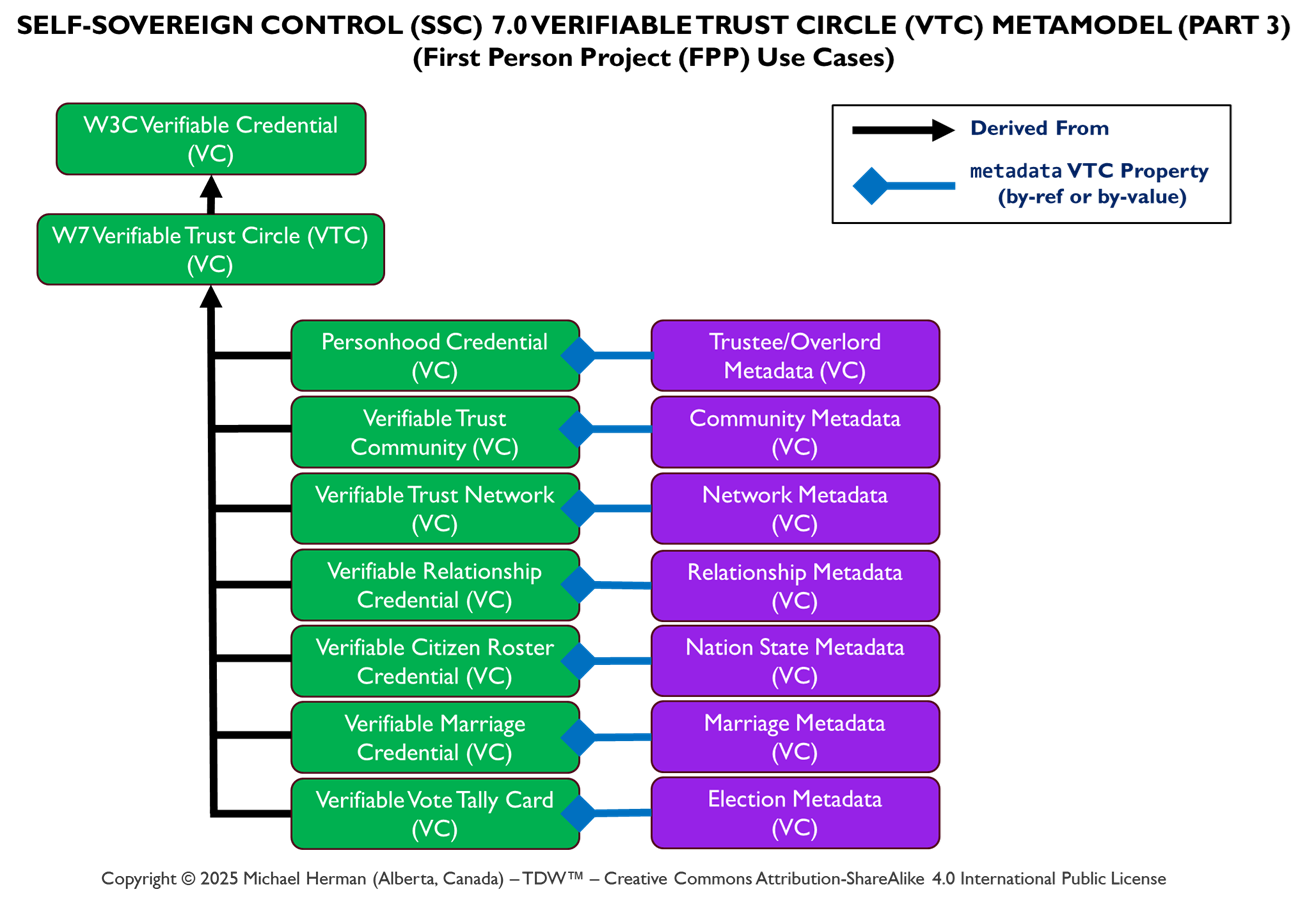
| 6th Circle (Nation State) | 2000-150,000+ | People you can place a name to (the limit of facial recognition memory) | Rare interaction; mostly recognition only |
📱 Modern & Practical Implications
Even in the digital era:
- People still maintain about 100–200 active online relationships despite thousands of “followers.”
- Teams, villages, and companies often stabilize near this size before naturally splitting or losing cohesion.
- Some organizations (like W. L. Gore, maker of Gore-Tex) deliberately limit unit size to ~150 to preserve strong internal culture and trust.


Copyright © 2025 Michael Herman (Bindloss, Alberta, Canada) – Creative Commons Attribution-ShareAlike 4.0 International Public License
Filed under Uncategorized