#Chickens, #Eggs, and #Roosters: A #NorthStar for the Global Decentralized Systems Community (#GDSC)
Byline: #meggDLs, #Seleggtive#Disclosure, #DEGGCOMM, and #Eggports
The entire digital identity ecosystem is missing out on the #BigOpportunity by not focusing on the right catalyst for the #massiveadoption of #digitalcredentials. Morphing the chicken and egg mental model: If Hens are the Issuers, Roosters the Verifiers, and Eggs are the digital credentials, the prime objective needs to be increasing the demand for and consumption of Eggs by Holders …creating hundreds of thousands of ways that drive more Holders to consume more Eggs. Think about it.
… are great examples of driving the demand for and consumption of more and more digital credentials [and DIDs] (eggs); and secondarily, the demand for hens and roosters (Issuers and Verifiers). The demand for eggs drives the production of hens; and in turn, the demand for roosters. Don’t mess with #MotherNature
Decentralized identifiers (DIDs) are a new type of identifier that enables verifiable, decentralized digital identity. A DID refers to any subject (e.g., a person, organization, thing, data model, abstract entity, etc.) as determined by the controller of the DID. In contrast to typical, federated identifiers, DIDs have been designed so that they may be decoupled from centralized registries, identity providers, and certificate authorities.
DID subject The entity identified by a DID and described by a DID document. Anything can be a DID subject: person, group, organization, physical thing, digital thing, logical thing, etc.
2. Use Cases and Requirements for Decentralized Identifiers Document
Web 7.0/TDW DID Method Clusters Model Taxonomy 0.1
A bold method is the model method or exemplar for the particular cluster (cell).
A method can be a exemplar for 1 or many clusters.
This list of DID method categories is just an example. A complete taxonomy will likely be a 2-3 level hierarchy. The parent categories for these examples might include: Live Things, Inanimate Things, Abstract Things, Digital Things, Business Things, etc. etc.
In Sociocracy terminology, a mini-WG is called a circle. Each category of DID methods (cluster of DID Methods) would be managed by its own independent circle. A circle member can belong to more than 1 circle. Circles are connected to a parent circle for administrative purposes. The parent circle would correspond to the DID Method WG (co-chaired by Markus).
Sociocracy combines consent decision-making, a decentralized system of authority and intentional processes to improve our decisions and processes over time into a governance system that supports effective and efficient process while increasing connection, listening and co-creation among members.
Sociocracy is used in businesses, communities, nonprofits, cooperatives, grassroots groups and in education.
13. Trusted Digital Web (TDW) Glossary/Taxonomy Model: Erin Buys a Car Neighborhood
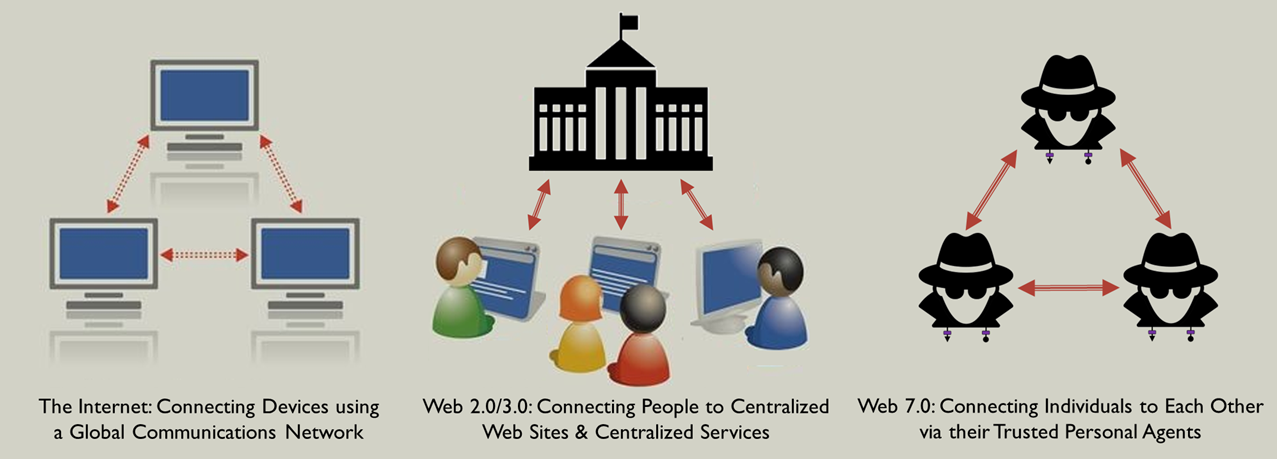
Web 7.0 is a universal, open-source solution for the Internet’s digital identity and trust problems. The Web 7.0 project is an offspring of the Trusted Digital Web (TDW) project.
The Internet was created 40 years ago. The World Wide Web application, running on top of the Internet, was created more than 30 years ago. Neither the Internet nor the WWW included built-in support for each person to have their own unique, universal digital identity and, hence, no built-in ability to support secure, authentic, and trusted communications. Every website and mobile app was left to develop, test, and manage its own digital identity solution.
Web 7.0 is a universal, open-source solution for the Internet’s digital identity and trust problems. Web 7.0 is a decentralized operating system for building resilient, secure, and trusted systems on top of the Internet using decentralized identity, trusted personal agents, and verifiable credentials.
Key use cases include:
Safe storage and transmission of medical records (lab results, disgnostic imaging, doctor’s notes, vaccinations)
Reliable, secure, and trusted end-to-end processing of business transactions (purchase orders, invoices, waybills, delivery confirmations)
Secure collaboration (instant messaging, presence, and file transfers)
Authenticated exchange of higher-education, professional and skills-based credentials
The goals of the Web 7.0 community are to support, promote, protect, and curate the Web 7.0 software and hardware ecosystem: Web 7.0 operating system software, standards, and specifications.
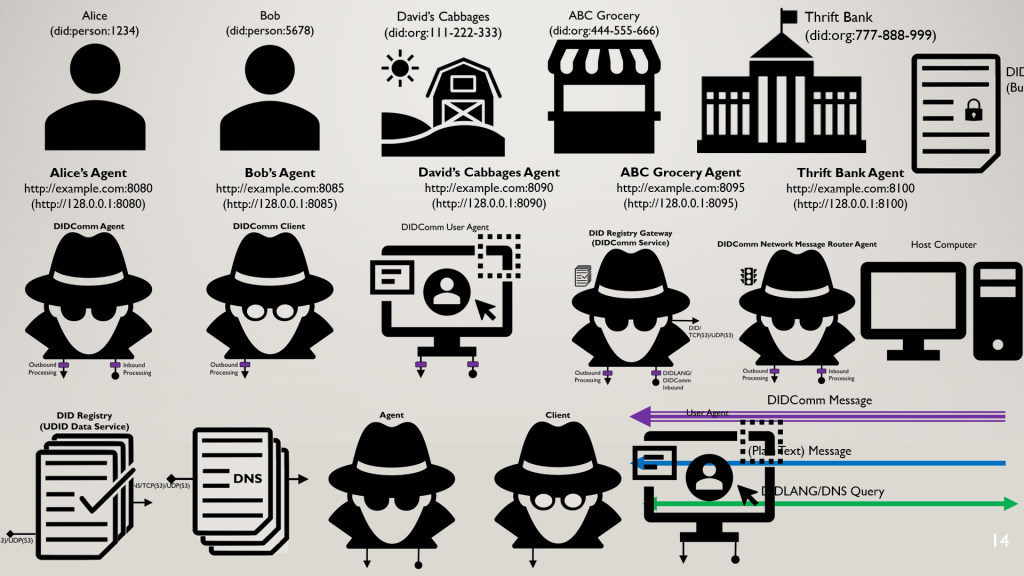
NOTE: DIDComm Notation elements are adaptations of the icons provided by Microsoft as part of the Microsoft Office suite. To quote from the Microsoft documentation:
You can insert icons into Microsoft 365 documents. You can rotate, color, and resize them with no loss of image quality. These icons are free to use and there’s no royalty or copyright to worry about.
You may sell a spreadsheet, database, or PowerPoint deck you made using Microsoft software. The spreadsheet, database, or PowerPoint deck must be created using legitimate, licensed Microsoft software.
What am I allowed to use premium creative content for? Excel for Microsoft 365 Word for Microsoft 365 Outlook for Microsoft 365 PowerPoint for Microsoft 365 PowerPoint for the web SharePoint in Microsoft 365
If you’re a Microsoft 365 subscriber you have access to thousands of royalty-free images, icons, and more that you can use in your documents, presentations, workbooks, and SharePoint in Microsoft 365. But you may have questions about what you’re legally allowed to do with that creative content. This article will try to answer that!
You can use the content for anything permitted by the applicable Microsoft 365 license so you should review your End-User License Agreement (EULA) to understand exactly what you can do with works created in Microsoft 365 and SharePoint.
Simply put… You can use the premium images and other creative content however you see fit, as long as it’s within an Microsoft 365 app or SharePoint site. For commercial customers, this includes selling PowerPoint slide decks, Excel workbooks, or Word documents that include this content, just as you would have sold these files in the past.
This includes exporting the Microsoft 365 file to another format. You can modify the picture, use it in the file forever, and use it anywhere in the world. Basically, do the same things that you would have done with Microsoft 365 documents in the past, but now you can include the stock images and other content from the Insert Pictures dialog.
Web 7.0 is a unified software and hardware ecosystem for building resilient, trusted, decentralized systems using decentralized identifiers, DIDComm agents, and verifiable credentials.
Take what you need; leave the rest.
Michael Herman, Trusted Digital Web Project, Hyperonomy Digital Identity Lab, Parallelspace Corporation. January 2023.
Web 7.0 is a unified software and hardware ecosystem for building resilient, trusted, decentralized systems using decentralized identifiers, DIDComm agents, and verifiable credentials.
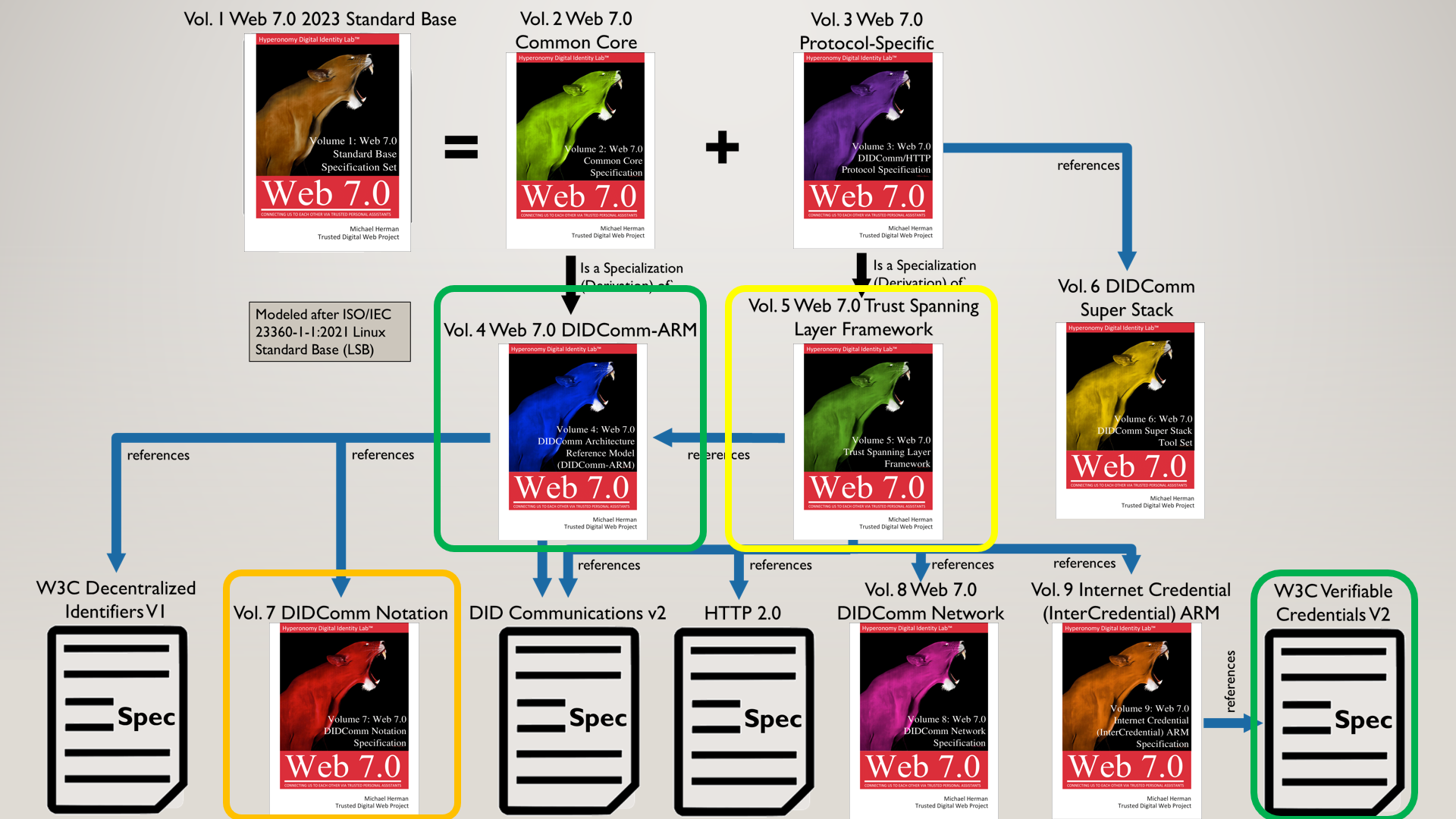
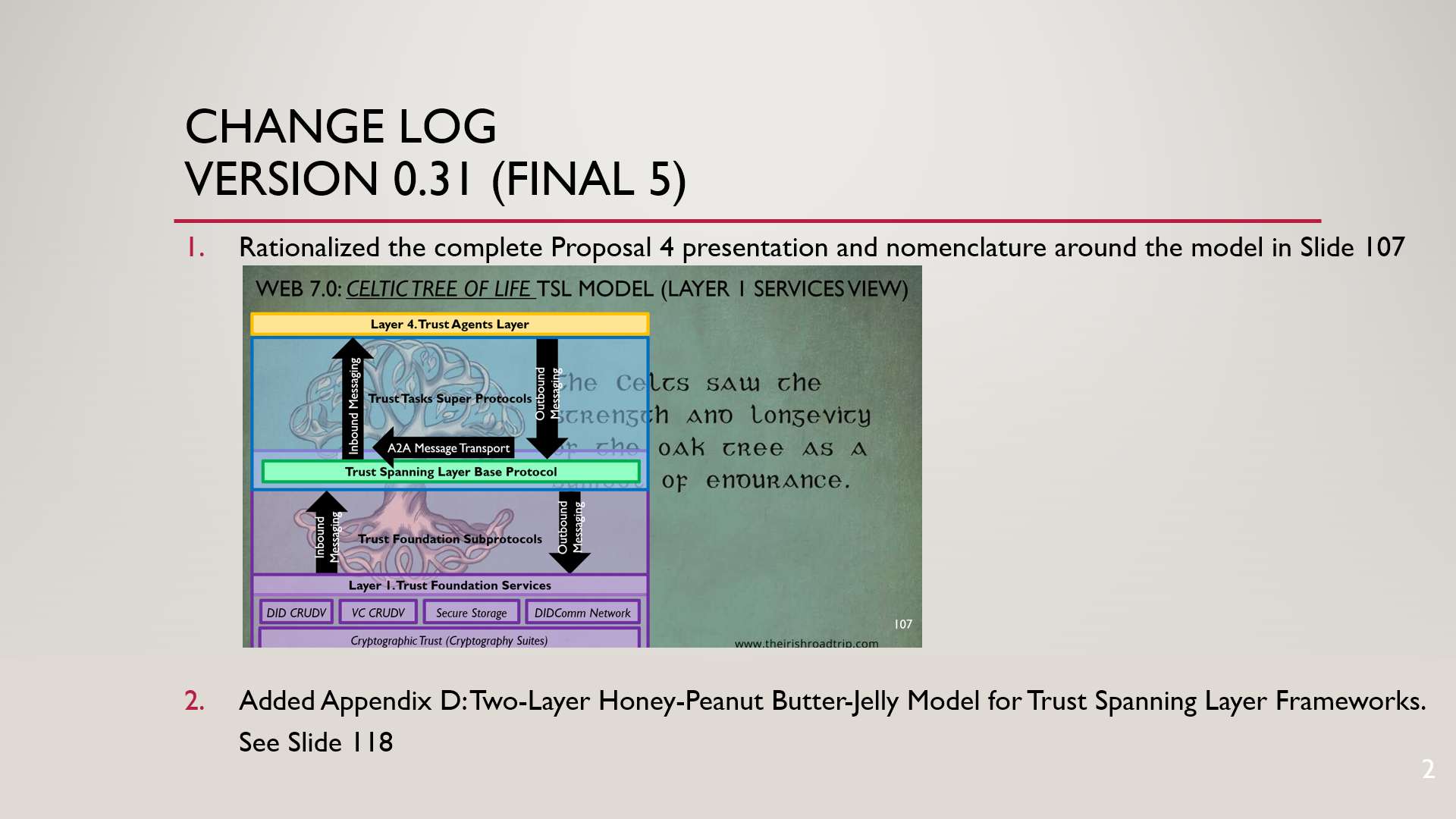
Version 0.31 of Proposal 4 presents a compelling story (with irrefutable evidence and examples) supporting the selection of the DID Communications (DIDComm) protocol as the Trust Spanning Layer Base Protocol for any and all decentralized system ecosystems:
Please enjoy the following downloadable presentation. I look forward to your comments and feedback. A downloadable version of the Web 7.0 DIDComm Notation Template is also listed below.
Web 7.0 is a unified software and hardware ecosystem for building resilient, trusted, decentralized systems using decentralized identifiers, DIDComm agents, and verifiable credentials.
Take what you need; leave the rest.
Michael Herman, Trusted Digital Web Project, Hyperonomy Digital Identity Lab, Parallelspace Corporation. January 2023.







 Web 7.0™ / TDW AgenticOS™ / TDW™ / Hyperonomy™ Digital Identity Lab