This preliminary taxonomy attempts to characterize the differences between facts, options, folklore, and related terminology. Your feedback is appreciated.
Facts
True Facts – Truths – Hard Facts – 100% true
False Beliefs – believed to be true but are, in fact, false
Fake Facts – knowingly or purposely 100% false (0% true)
Perturbations of the Facts
Misunderstood Facts
Misconceived Facts
Misstated or Miscommunicated Facts
Opinions
Feedback that may or may not be true
Vague
Poor recollected
Subjective opinions
Humorous/satirical
Folklore
Feedback originating with a fourth party and passed on by a third-party
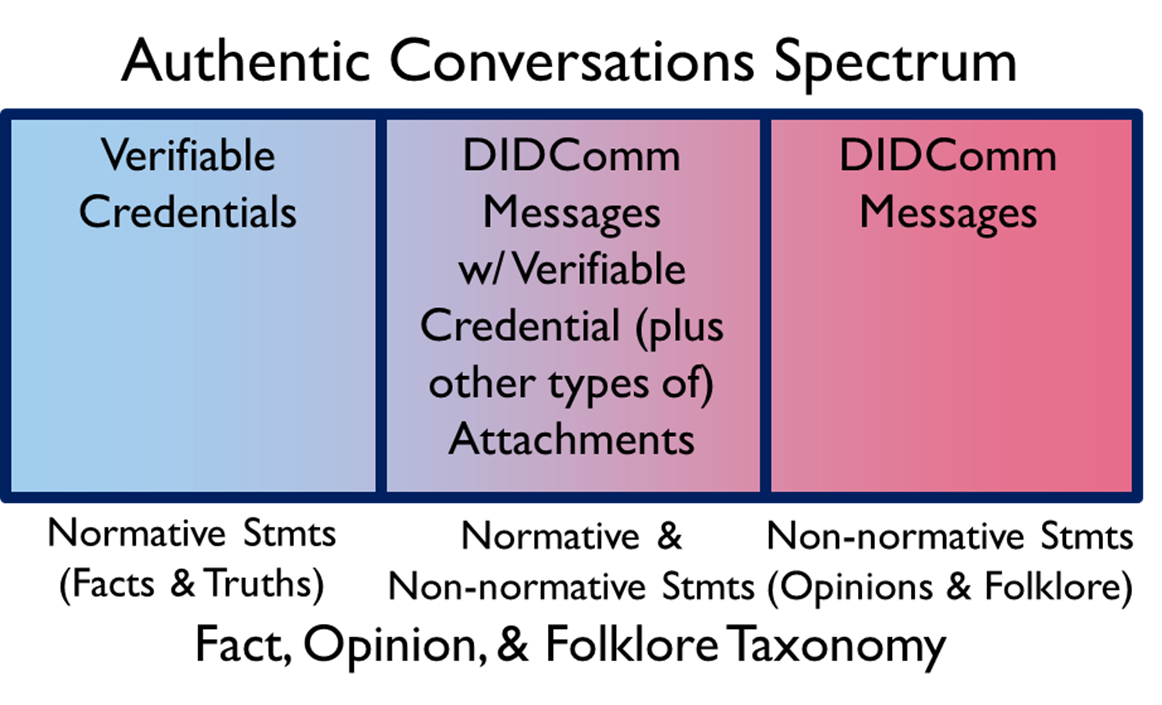
The driver for the above taxonomy is a new belief in the mind of the author is that only facts or truths should be embedded into verifiable credentials. This gives rise to the concept of the Authentic Conversations Spectrum (illustrated below). The author no longer believes that verifiable credentials can be used or should be used to encode “all data on the planet”.
Want to contribute to the World Wide Web Consortium (W3C) Developers Guide for Verifiable Credentials?
W3C is an international community that develops open standards to ensure the long-term growth of the Web.
A new W3C Community Note Work Item Proposal entitled Verifiable Credentials Guide for Developers has been submitted and you can help create it.
I want to invite everyone interested #DigitalIdentity, #DecentralizedIdentity, #VerifiableCredentials, #TrustOnTheInternet, and/or #SecureInternetStorage to join this key group of people who will be defining and creating the W3C Verifiable Credentials Guide for Developers.
Please contact me directly or post an email to public-credentials@w3.org
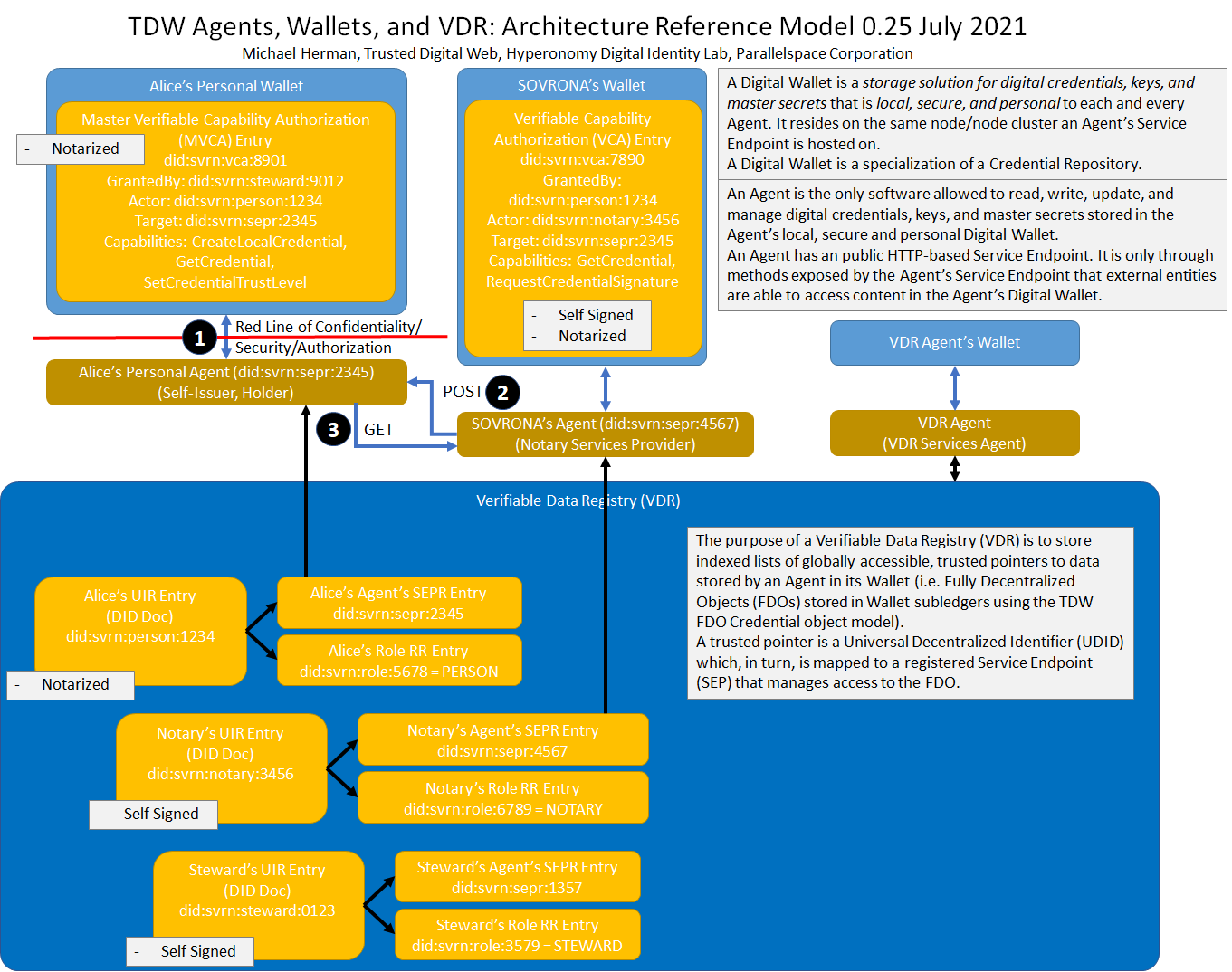
Michael Herman (Trusted Digital Web) 8:35 PM What are the common/known strategies for bootstrapping a VDR-based decentralized credential/object platform? …asked naively on purpose.
Strategies for placing the first/initial DIDs in the VDR?
…presumably purposed to be the initial Issuer(s) of verifiable identifiers on the platform?
Best regards, Michael Herman Far Left Self-Sovereignist
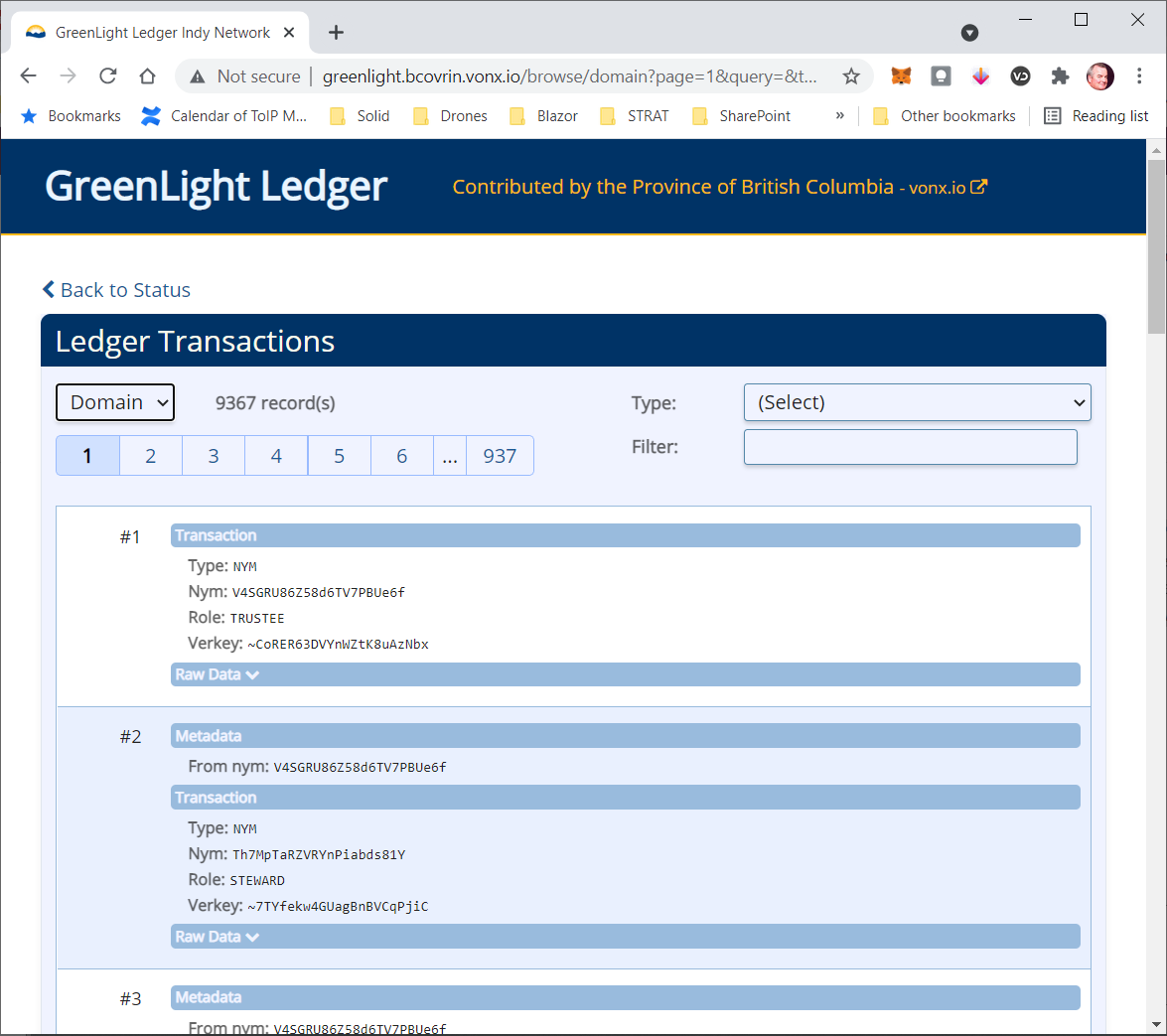
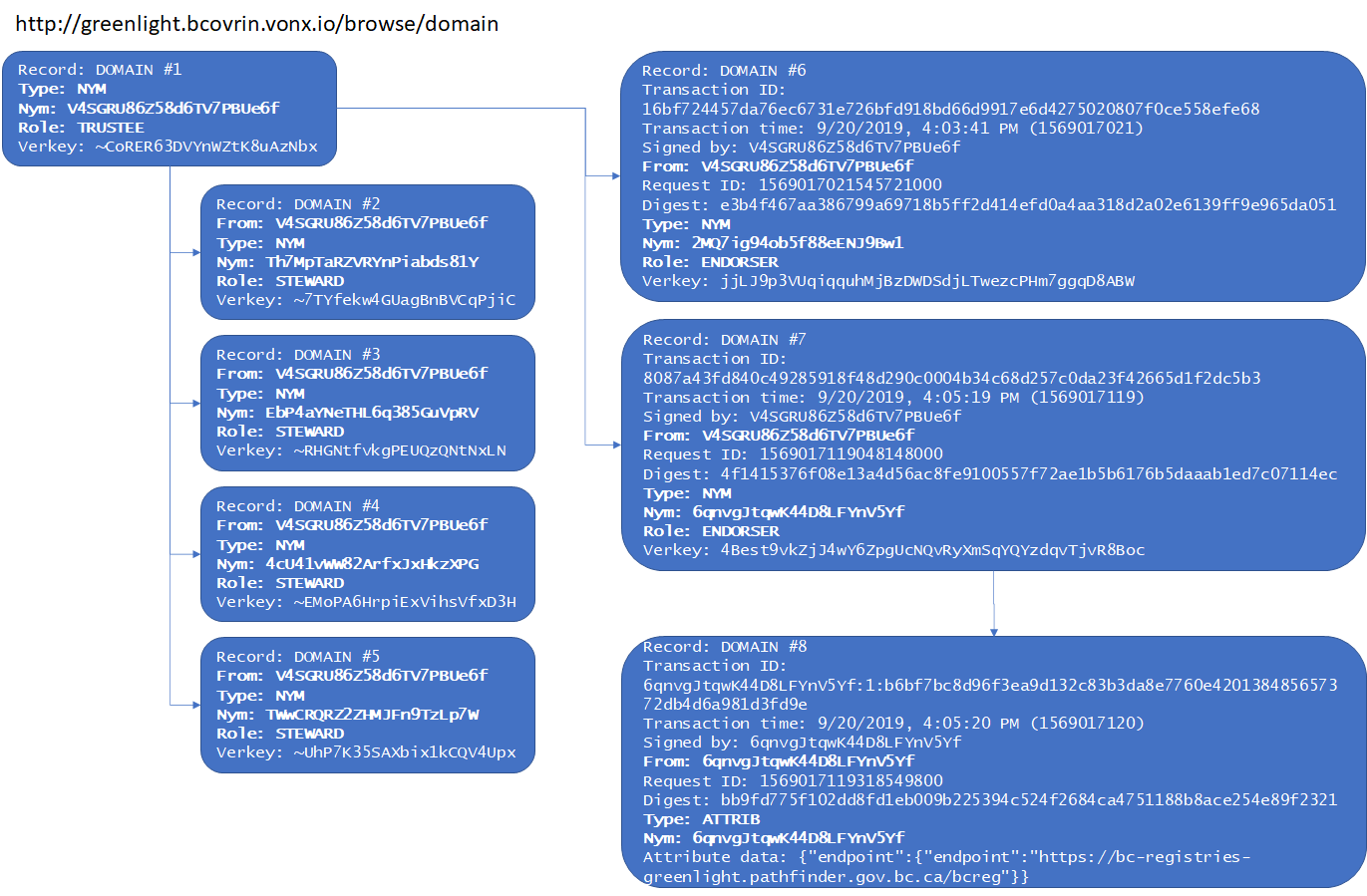
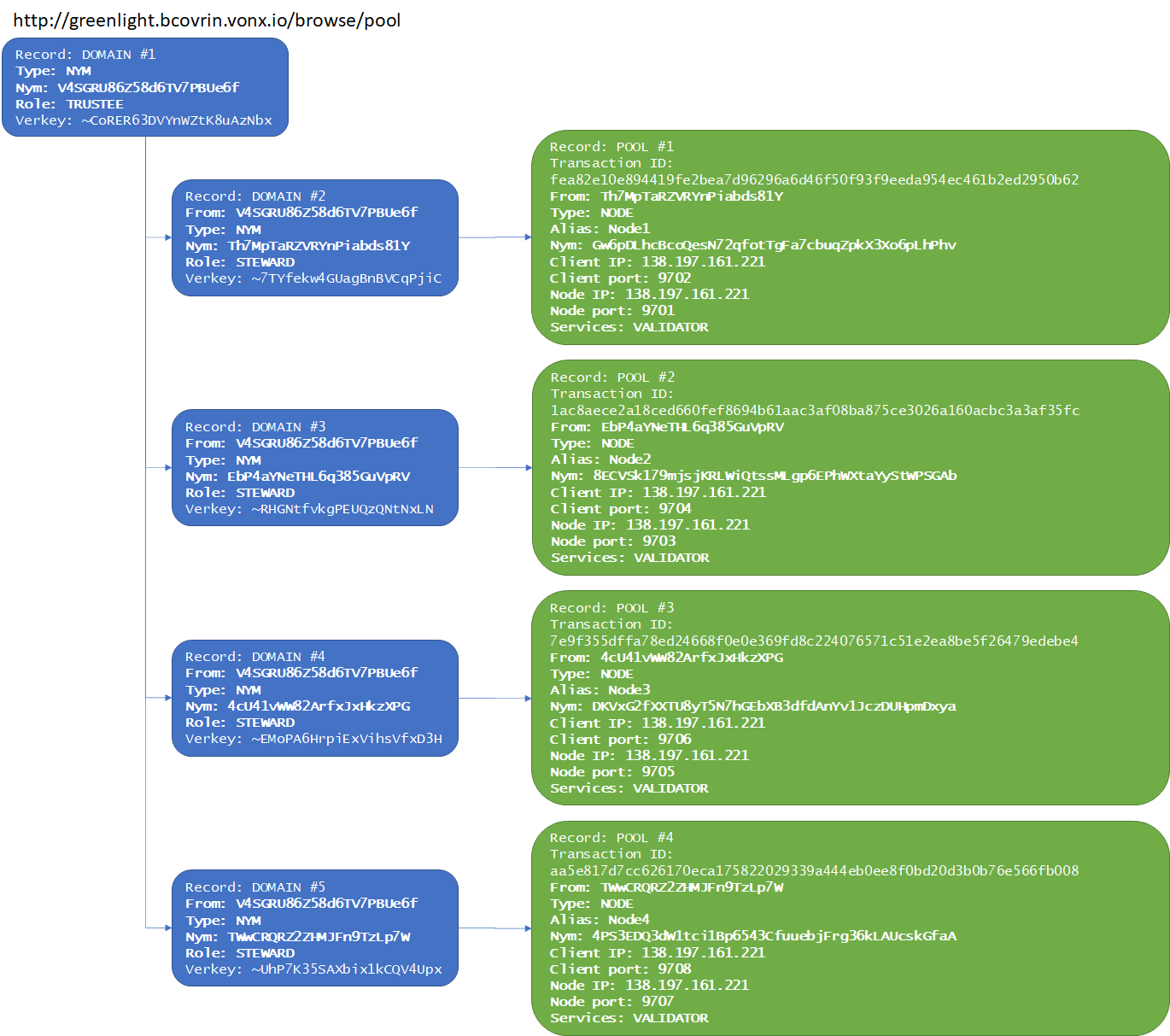
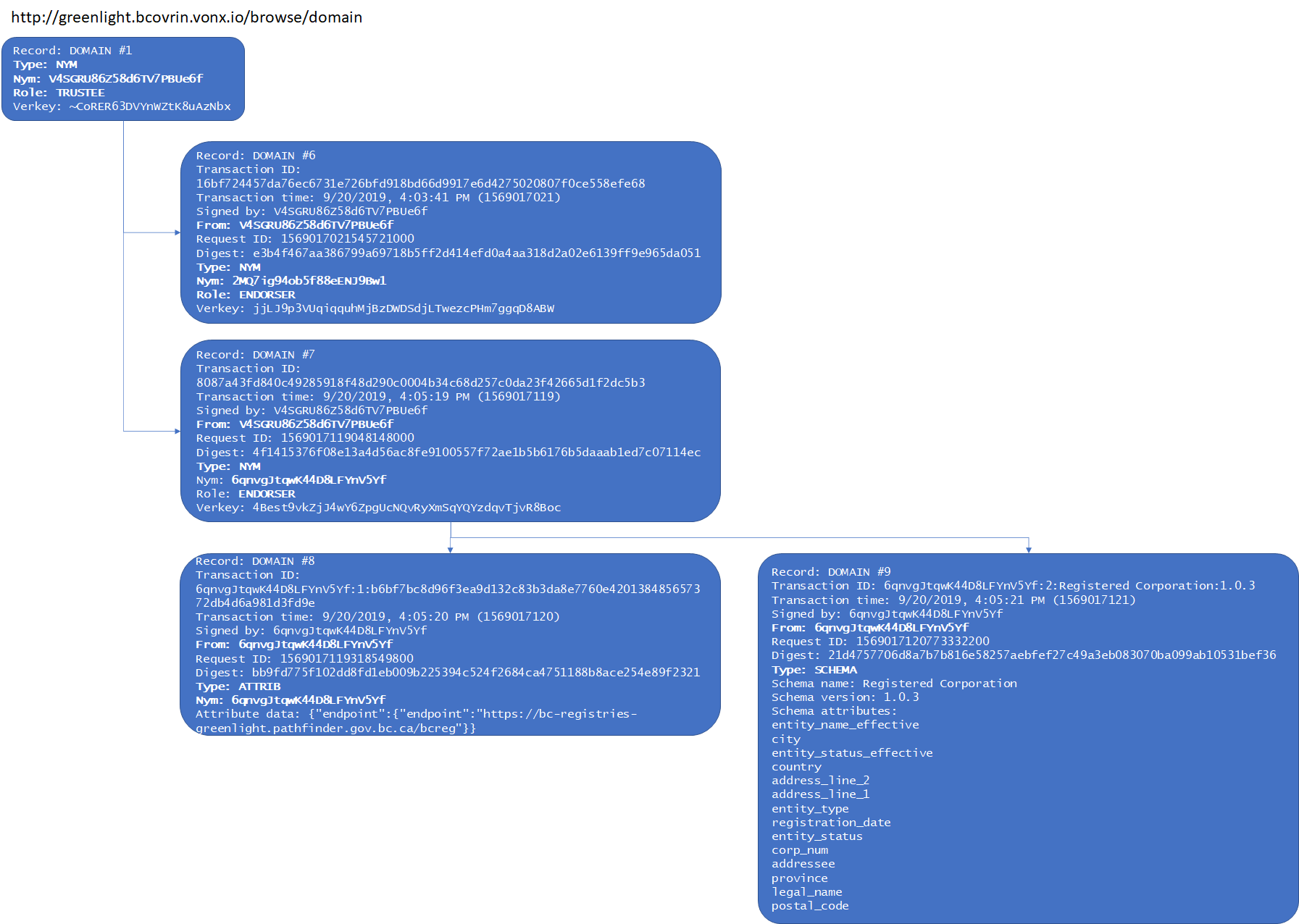
Stephen Curran 5:37 PM In Hyperledger Indy, which is a permissioned public network, the first transactions are a DID for one of the “SuperUser’s (aka “Trustee”) of the network, and DIDs for the initial node operators that verify the transactions. From there, DIDs for additional nodes are added, DIDs for other Trustees and then DIDs of other types of users (Endorsers, authors), who in turn create other DIDs and object types. If you look at von-network (https://github.com/bcgov/von-network) you can spin up a little network (4 nodes in docker) and see the transactions that are used to start the network. In that, the seed for the Trustee DID is well known, so once you’ve started the von-network, you can control it. In a “real” network, that seed (and associated private key) would of course be protected by that first Trustee. For Sovrin, a ceremony was video’d of all the initial Trustees and Stewards (node operators) when MainNet was started in 2017.









 Web 7.0™ / TDW AgenticOS™ / TDW™ / Hyperonomy™ Digital Identity Lab