Monthly Archives: December 2025

War of 1812

Copyright © 2025 Michael Herman (Bindloss, Alberta, Canada) – Creative Commons Attribution-ShareAlike 4.0 International Public License

The War of 1812 was a conflict fought from 1812 to 1815 primarily between the United States and Great Britain, with fighting concentrated in North America and at sea. It’s often described as a “second war of independence” by Americans and a defensive war by British North America (today’s Canada).


1. Why the War Happened (Causes)

There wasn’t a single cause, but several overlapping ones:

🇬🇧 British actions

  • Impressment: The British Royal Navy forcibly took sailors—many of whom were American—from U.S. ships to serve in the British navy.
  • Trade restrictions: Britain limited U.S. trade with France during the Napoleonic Wars through blockades and orders in council.

🇺🇸 American motives

  • National honor & sovereignty: Many Americans felt Britain was treating the U.S. like a former colony.
  • Westward expansion: The U.S. accused Britain of supporting Indigenous resistance to American expansion in the Northwest Territory.
  • War Hawks in Congress: Young politicians (like Henry Clay) pushed for war, some believing Canada could be easily conquered.

🪶 Indigenous resistance

  • Indigenous nations, led in part by Tecumseh, opposed U.S. expansion and often allied with Britain, seeing them as the lesser threat.

2. Who Fought

  • United States
  • British Empire
  • British North America (Upper & Lower Canada) – militias and settlers
  • Indigenous confederacies allied with Britain

Notably, Britain was preoccupied with Napoleon in Europe, which limited resources early in the war.


3. Major Campaigns & Battles

🇨🇦 Canadian Front

  • American invasions of Canada (1812–1813) failed.
  • Key battles:
    • Queenston Heights (1812) – British and Indigenous forces repel U.S. invasion.
    • Battle of the Thames (1813) – U.S. victory; Tecumseh killed.
  • Canadian militias played a major role in defense.

🌊 Naval War

  • Early U.S. naval victories (e.g., USS Constitution).
  • Battle of Lake Erie (1813) – U.S. victory; “We have met the enemy and they are ours.”

🔥 Chesapeake & Southern Campaigns

  • Burning of Washington (1814): British forces burned the White House and Capitol.
  • Battle of Baltimore (1814): U.S. successfully defended the city; inspired “The Star-Spangled Banner.”
  • Battle of New Orleans (1815): Major U.S. victory led by Andrew Jackson—fought after the peace treaty was signed (news traveled slowly).

4. How It Ended

📜 Treaty of Ghent (1814)

  • Signed December 24, 1814.
  • Restored pre-war borders (status quo ante bellum).
  • Said nothing about impressment or neutral rights (the issues faded after Napoleon’s defeat).

5. Consequences & Significance

🇺🇸 United States

  • Surge of national pride and identity.
  • Andrew Jackson becomes a national hero (and later president).
  • Strengthened federal authority and military confidence.
  • Accelerated decline of Indigenous resistance in the Midwest.

🇨🇦 Canada

  • Strengthened sense of Canadian identity.
  • Reinforced resistance to U.S. annexation.
  • Elevated figures like Laura Secord and Isaac Brock (who died early in the war).

🪶 Indigenous Nations

  • Major loss: Britain abandoned support after the war.
  • Indigenous lands increasingly seized by U.S. expansion.

🇬🇧 Britain

  • Achieved its main goal: defending Canada.
  • The war was a minor sideshow compared to the Napoleonic Wars.

6. Why It’s Remembered Differently

  • United States: Seen as a successful defense of independence.
  • Canada: Remembered as a victory that prevented U.S. conquest.
  • Britain: Largely forgotten.
  • Indigenous peoples: Viewed as a tragic turning point.

7. One-Sentence Summary

The War of 1812 was a messy, inconclusive conflict that nonetheless reshaped national identities in the U.S. and Canada and decisively weakened Indigenous resistance in North America.
Leave a comment

Filed under Uncategorized

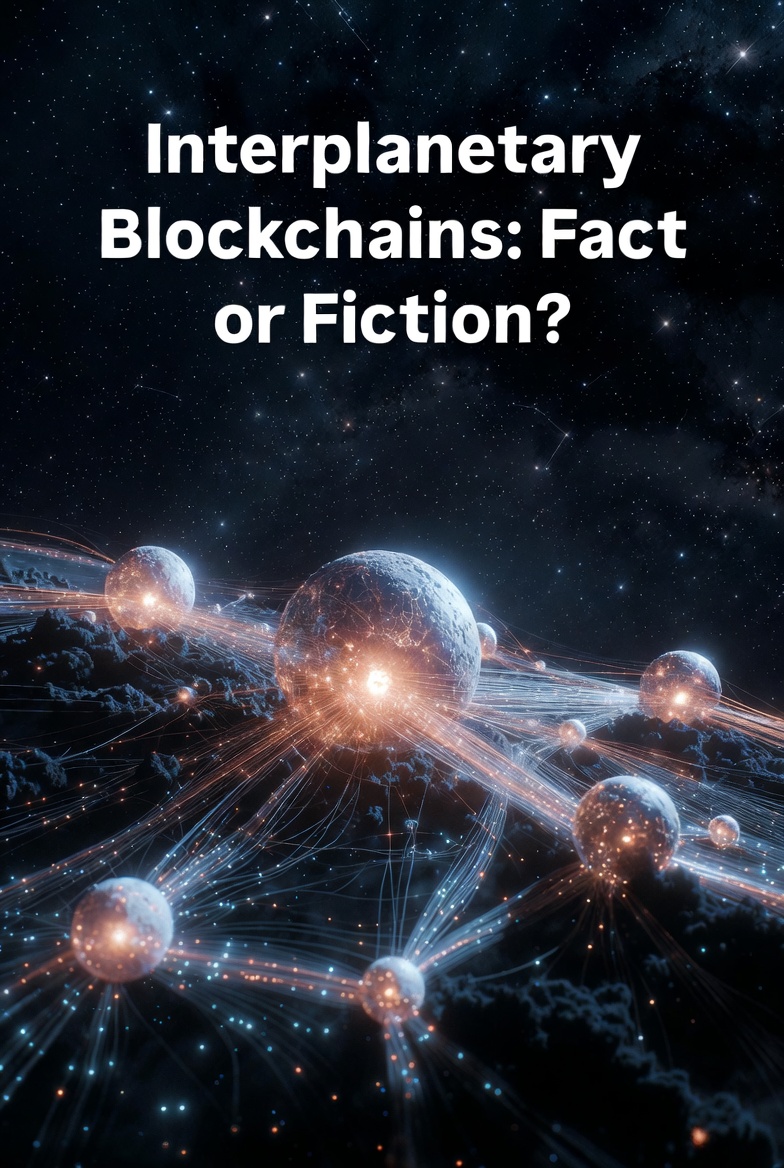
DAVOS2026: Interplanetary Blockchains: Fact or Fiction?

Create your own magic with Web 7.0™ / TDW AgenticOS™. Imagine the possibilities.

Short answer: Bitcoin and Ethereum, as is, cannot function as a single, strongly consistent global blockchains across interplanetary distances. The speed of light breaks their assumptions.

Below is how this likely evolves.


1. The fundamental constraint: light-speed latency

Even at light speed:

  • Earth ↔ Moon: ~1.3 seconds
  • Earth ↔ Mars: ~3–22 minutes (one-way)
  • Earth ↔ Alpha Centauri: ~4.3 years

Bitcoin:

  • Block time ≈ 10 minutes
  • Global propagation already struggles on Earth

Ethereum:

  • Slot time ≈ 12 seconds
  • Finality ≈ 12–15 minutes

➡️ Interplanetary latency makes real-time consensus impossible.


2. What breaks first

Bitcoin

  • Massive fork rates between planets
  • Mining becomes planet-local
  • Long reorgs when chains reconnect
  • “Longest chain” rule becomes meaningless across light-minutes

Ethereum

  • Validators can’t attest in time
  • Finality stalls or fragments
  • Slashing becomes unfair (latency ≠ fault)

Result: chain fragmentation


3. Likely evolution: a multi-layer, multi-chain reality

Instead of “one chain to rule them all,” we get hierarchical and federated systems.

🪐 Planetary chains (Layer 1)

Each planet runs its own sovereign chain:

  • Earth Bitcoin
  • Mars Bitcoin
  • Titan Ethereum
  • Orbital habitat rollups

Consensus remains local, fast, and fair.


🌌 Interplanetary settlement layers

Slow, high-latency chains act as settlement and reconciliation layers:

  • Checkpoint summaries
  • State commitments
  • Merkle roots exchanged every days/weeks/years
  • Disputes resolved asynchronously

Think:

“SWIFT, but cryptographic and trust-minimized”


⚡ Local execution, delayed finality

  • Payments on Mars finalize instantly on Mars
  • Interplanetary transfers finalize only after long delays
  • Time becomes a first-class protocol parameter

4. Ethereum adapts better than Bitcoin

Ethereum’s roadmap already points here:

  • Rollups
  • Data availability layers
  • Modular consensus
  • Validium / Sovereign rollups

Future Ethereum ≈ coordination layer, not a monolithic chain.

Bitcoin, by contrast:

  • Extremely conservative
  • Likely remains local digital gold
  • Used as planetary reserve asset
  • Interplanetary BTC ≈ wrapped, bonded, or escrowed representations

5. Money becomes relativistic

In a galactic civilization:

  • “Finality” is contextual
  • “Now” differs by planet
  • Markets price latency risk
  • Contracts include light-delay clauses

Example:

“Funds release 42 minutes after Martian confirmation unless Earth chain disputes.”


6. Human + agent governance will matter more than protocol purity

In a post-anthropocentric and agent-rich society (your recurring theme):

  • AI agents arbitrate interplanetary disputes
  • Economic zones negotiate trust frameworks
  • Protocols encode principles, not absolutes
  • Blockchains become constitutional layers, not absolute truth machines

7. The likely end state

Bitcoin and Ethereum don’t die — they evolve:

  • From global ledgerslocal truth + delayed reconciliation
  • From synchronous consensusasynchronous trust
  • From one chaindiversified civilizational layers

In short:

There will be no “galactic blockchain” — only a constellation of ledgers, stitched together by math, time, and shared principles. 🚀

Leave a comment

Filed under Uncategorized

Dennis Swenson Memorial

Leave a comment

Filed under Uncategorized

Why are Agents like Steam? (2025)

The idea for the original article, Why is Knowledge like Steam?, came to me while attending the 2002 McMaster World Congress on Intellectual Capital hosted by Dr. Nick Bontis and McMaster University.

Ten Reasons why Agents are like Steam

10. Like steam, agents will collect (and connect) somewhere.

9. Even though agents can collect anywhere at any time, this doesn’t imply they are easy to create, find, or use – so too with steam.

8. Small amounts of steam do not appear significant until they are collected and put to work – so too it is with agents. Small numbers of agents do not appear significant until they connect, collect, and their energies combine.

7. There is no danger of there being too much steam. Excess steam can be vented or sold. Is this true with agents?

6. The greater the number of sources of steam you have around you, the more likely you are to have it when you need it. So too it is with agents – teams of agents working collectively, whenever you need them, across multiple parties, locations, organizations, and jurisdictions – simultaneously.

(Want to accomplish something that isn’t possible in your jurisdiction? Use an agent in a different jurisdiction.)

5. The commercial value of steam is highest when it is new and concentrated – so too it is with agents (initially).

4. Steam can be used to create more steam – so too it is with agents.

3. Steam can be condensed into a purer, distilled form – so too it is with teams of agents (agentillation).

2. There are many fuels and methods that can be used to create steam and put it to work – not all of which will be economic at a given point in time – so too it is with agents.

1. If you don’t create it, capture it, channel it, and put it to work, its value is marginalized. So too it is with agents.

Michael Herman, Decentralized Systems Architect, Web 7.0™. December 2025.

Leave a comment

Filed under Uncategorized

Chapter 12: Identic AI Rights vs. Identic AI Principles Correlation Matrix

Copyright © 2025 Michael Herman (Bindloss, Alberta, Canada) – Creative Commons Attribution-ShareAlike 4.0 International Public License
Web 7.0™, TDW™, and TDW AgenticOS™ are trademarks of the Web 7.0 Foundation. All Rights Reserved.

Introduction

Below is a clean correlation analysis between the 7 Rights in the Manifesto of the Digital Age and the original 7 Principles for managing identic AI. Both lists that were provided in the book You To The Power Two by Don Tapscott and co. but not matched or correlated. This article presents an new, independent, extended correlation analysis highlighting:

  • Strength of alignment,
  • Direction of influence, and
  • Gaps.

Big Picture First

  • The 7 Principles are design and governance constraints on AI systems.
  • The 7 Rights are human and societal outcomes those systems must serve.

In short:

  • Principles are the “how”
  • Rights are the “why.”

Rights vs. Principles Correlation Matrix

Legend

  • ●●● = strong, direct correlation
  • ●● = moderate correlation
  • ● = indirect or enabling correlation
Manifesto Rights ↓ / AI Principles →ReliabilityTransparencyHuman AgencyAdaptabilityFairnessAccountabilitySafety
1. Security of personhood●●●●●●●●●●●●●●●●●
2. Education●●●●●●●●●●
3. Health & well-being●●●●●●●●●●●●●●●●
4. Economic security & work●●●●●●●●●●●●●
5. Climate stability●●●●●●●●●●●●●●
6. Peace & security●●●●●●●●●●
7. Institutional accountability●●●●●●●●

Narrative

Right 1. Security of Personhood

Strongest alignment overall

  • Human Agency → personal sovereignty, autonomy, consent
  • Transparency → knowing how identity/data are used
  • Fairness → protection from discriminatory profiling
  • Accountability → redress for misuse or surveillance
  • Safety → protection from manipulation and coercion

🧭 Interpretation:
This right is essentially the human-centered synthesis of five of your principles. It operationalizes them at the level of individual dignity.


Right 2. Education

Primarily about adaptability and agency

  • Human Agency → empowerment through learning
  • Adaptability → lifelong learning in AI-shaped labor markets
  • Fairness → equitable access to infrastructure and tools

🧭 Interpretation:
Education is the human adaptation layer required for your principles not to become elitist or exclusionary.


Right 3. Health and Well-being

Reliability + Safety dominate

  • Reliability → clinical accuracy and robustness
  • Safety → “do no harm” in physical and mental health
  • Accountability → liability for harm or negligence

🧭 Interpretation:
Healthcare is where your principles become non-negotiable, because failure has immediate human cost.


Right 4. Economic Security & Meaningful Work

Human agency + fairness + adaptability

  • Human Agency → meaningful work vs. automation domination
  • Fairness → equitable distribution of AI-generated value
  • Adaptability → redefining work and income models

🧭 Interpretation:
This right extends your principles into political economy. The principles constrain AI behavior; this right constrains AI-driven capitalism.


Right 5. Climate Stability

Safety + accountability at planetary scale

  • Safety → ecological harm prevention
  • Accountability → responsibility for environmental impact
  • Adaptability → climate-responsive systems

🧭 Interpretation:
This right introduces non-human stakeholders (future generations, ecosystems), which your principles imply but do not explicitly name.


Right 6. Peace and Security

Safety and accountability dominate

  • Safety → prohibition of autonomous violence
  • Accountability → attribution of harm in warfare
  • Fairness → prevention of asymmetric technological domination

🧭 Interpretation:
This is the hard boundary case: where your principles become geopolitical norms, not just business ethics.


Right 7. Institutional Accountability

Near-perfect overlap

  • Transparency → auditable governance
  • Accountability → enforceability, redress, legitimacy

🧭 Interpretation:
This right is almost a direct restatement of your Accountability + Transparency principles, elevated to constitutional scale.


What Do Rights Add That Principles Do Not

The Manifesto extends the principles in three critical ways:

1. Explicit Human Entitlements

  • Principles say what systems must do
  • Rights say what people can demand

2. Macroeconomic Redistribution

  • Universal Fabulous Income
  • Data ownership and monetization
    These are policy commitments, not system properties.

3. Intergenerational & Planetary Scope

  • Climate
  • Peace
  • Future generations
    Your principles imply responsibility, but the rights name the beneficiaries.

Bottom Line

  • High correlation: Every right maps to multiple principles.
  • No contradictions: The two frameworks are coherent.
  • Complementary roles:
    • Principles = engineering + governance constraints
    • Rights = societal goals + moral claims

Leave a comment

Filed under Uncategorized

Definition: Post-anthropocentric

Create your own magic with Web 7.0™ / TDW AgenticOS™. Imagine the possibilities.

Post-anthropocentric society describes a worldview, system, or society in which humans are no longer treated as the sole, default, or supreme center of value, agency, or decision-making.
Post-anthropocentric does not mean anti-human or anti-humanity. It means humans are no longer the only meaningful actors. Humans are one class of actors among several.

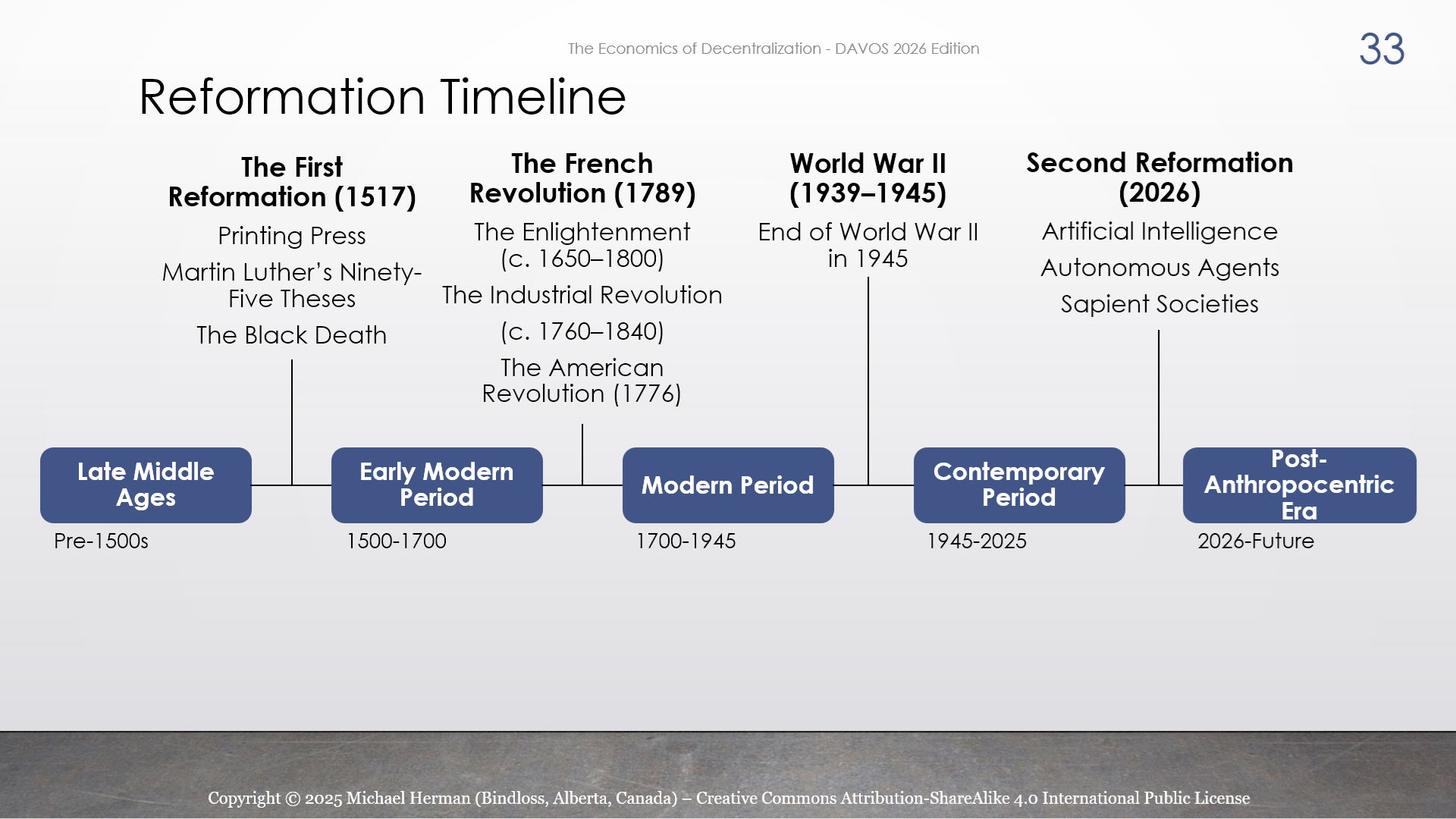
The Post-anthropocentric Era is inevitable outcome of the The Second Reformation.

Post-anthropocentricism

Principle 8. Post-anthropocentricism is inevitable.
It’s here to stay.

Social Evolution Model

Reference: https://hyperonomy.com/2025/12/25/definition-post-anthropocentric/

Leave a comment

Filed under Uncategorized

DAVOS2026: Definition: Neuromorphic

Create your own magic with Web 7.0™ / TDW AgenticOS™. Imagine the possibilities.

Neuromorphic refers to brain-inspired computing that designs hardware and software to mimic the human brain’s structure and functions, using artificial neurons and synapses to process information with extreme energy efficiency, parallelism, and adaptability, moving beyond traditional binary logic for tasks like pattern recognition and real-time learning. [Google]

1 Comment

Filed under Uncategorized

The Code Discontinuous Transformation Problem 0.2

Create your own magic with Web 7.0™ / TDW AgenticOS™. Imagine the possibilities.

Copyright © 2025 Michael Herman (Bindloss, Alberta, Canada) – Creative Commons Attribution-ShareAlike 4.0 International Public License
Web 7.0™, TDW™, and TDW AgenticOS™ are trademarks of the Web 7.0 Foundation. All Rights Reserved.

The Discontinuous Code Transformation Problem 0.2

Coding is a process of Discontinuous Transformation. When is the coding process discontinuous? Whenever there is a human in the middle. [Michael Herman. December 21, 2025.]

Orthogonal Categories

Coding is a process of Discontinuous Transformation. The following is the list of 61 items from The Discontinuous Code Transformation Problem 0.1 (the original with item numbers preserved), organized into 6 orthogonal, spanning set categories:

  1. Abstract ⇄ Formal Code (Intent and conceptual to executable code)
  2. Code Representation & Structure (Different internal/code structures without altering fundamental semantics)
  3. Code Quality & Behavioural Transformation (Improvements or regressions in code behaviour, performance, structure)
  4. Code ↔ Data, Formats & External Artefacts
  5. Execution Context, Platforms & Environment
  6. Human-Cognitive & Sensory Interfaces with Code

1. Abstract ⇄ Formal Code (Intent and conceptual to executable code)

These transformations involve moving between ideas, designs, algorithms, pseudocode, prompts and formal code.


2. Code Representation & Structure (Different internal/code structures without altering fundamental semantics)


3. Code Quality & Behavioral Transformation (Improvements or regressions in code behavior, performance, structure)


4. Code ↔ Data, Formats & External Artefacts

These involve mapping code to data formats, document formats, hardware descriptions, or structured data.


5. Execution Context, Platforms & Environment

Transformations where code moves across platforms, repositories or execution environments.


6. Human-Cognitive & Sensory Interfaces with Code

These map between human behaviours/perceptions, neural codes, gesture codes, and symbolic codes.


Recap of Categories with Item Count

CategoryDescriptionRangeItems
1. Abstract ⇄ Formal CodeFrom intent/design/ideas → formal code and back1–8, 21, 27, 37-38, 50, 53, 5515 items
2. Code Representation & StructureFormal structure transformations11–17, 25–269 items
3. Quality/BehaviorPerformance/restructuring changes9–10, 22–245 items
4. Code ↔ Data & FormatsCode as data & alternative formats28–32, 43–45, 48–4910 items
5. Execution & EnvironmentContext/platform conversions19–20, 33–36, 41–42, 46–47, 51–5212 items
6. Human-Cognitive InterfacesHuman signals ↔ machine code39-40, 54, 56–6210 items

3 Comments

Filed under Uncategorized

The Code Discontinuous Transformation Problem 0.1

A more sophisticated presentation of The Code Discontinuous Transformation Problem 0.2 can be found here: https://hyperonomy.com/2025/12/20/the-discontinuous-code-transformation-problem-2/.

Create your own magic with Web 7.0™ / TDW AgenticOS™. Imagine the possibilities.

Copyright © 2025 Michael Herman (Bindloss, Alberta, Canada) – Creative Commons Attribution-ShareAlike 4.0 International Public License
Web 7.0™, TDW™, and TDW AgenticOS™ are trademarks of the Web 7.0 Foundation. All Rights Reserved.

The Discontinuous Code Transformation Problem 0.1

Coding is a process of Discontinuous Transformation. What makes/when is the coding process discontinuous? Whenever there is a human in the middle. [Michael Herman. December 21, 2025.]

Code Transformations

  1. ideas (neuralcode) into source code
  2. ideas (neuralcode) into pseudocode
  3. ideas (neuralcode) into Blocks
  4. ideas (neuralcode) into prompts
  5. pseudocode into source code
  6. algorithms into source code
  7. source code into algorithms
  8. mathematical and arithmetic formula code into source code
  9. old source code into new source code
  10. old source code into new and changed source code
  11. source code into optimized code
  12. source code into executable code
  13. source code into intermediate code
  14. source code into object code
  15. source code into virtual machine byte code (JavaVM, .NET Runtime, Ethereum VM)
  16. source code into an AST
  17. source code into nocode
  18. source code into documentation (neuralcode)
  19. local code to GitHub code
  20. GitHub code to local code
  21. prompts into generated code
  22. source code into buggier code
  23. source code into cleaner code
  24. slow code into fast code
  25. source code into interpreted code
  26. script code into executed code
  27. shell code (cmdlets) to API code
  28. SQL code into datacode (CSV/XML/JSON)
  29. Graphql/Cypher code into datacode (XML/JSON)
  30. .NET objects serialized into datacode (XML/JSON)
  31. REST/HTTP codes into datacode (XML/JSON)
  32. source code into Microsoft Office document code
  33. source code into firmware
  34. source code into microcode
  35. source code into silicon
  36. source code into simulated code
  37. image code into graphics code
  38. animation code into graphics code
  39. text code into audio speechcode
  40. SMTP code into communications (neuralcode)
  41. FTP code into file system code
  42. HTML code into multi-media graphics code
  43. UBL code into value chain document code
  44. UBL code into value chain payment instructions
  45. UBL code into value chain shipping and delivery instructions
  46. blockchain code to cryptocurrency codes
  47. blockchain code into Verifiable Data Registry codes
  48. Decentralized Identifiers (DIDs) into verifiable identity code (DID Docs)
  49. Verifiable Credential code into secure, trusted, verifiable document code
  50. Internet standards code into interoperable protocol code
  51. source code into filesystemcode (code on a disk platter/storage medium)
  52. Office documents into filesystemcode
  53. prompts into image and video code
  54. prompts into avatar code
  55. source code into streamingcode
  56. human gestures into signlanguagecode
  57. signlanguagecode into neuralcode
  58. source code into robot gestures
  59. – five senses to/from neuralcode
  60. neuralcode into gestures (musclecode)
  61. reading code into neuralcode
  62. gestures (musclecode) into keyboard code

Not drawn to scale…

1 Comment

Filed under Uncategorized

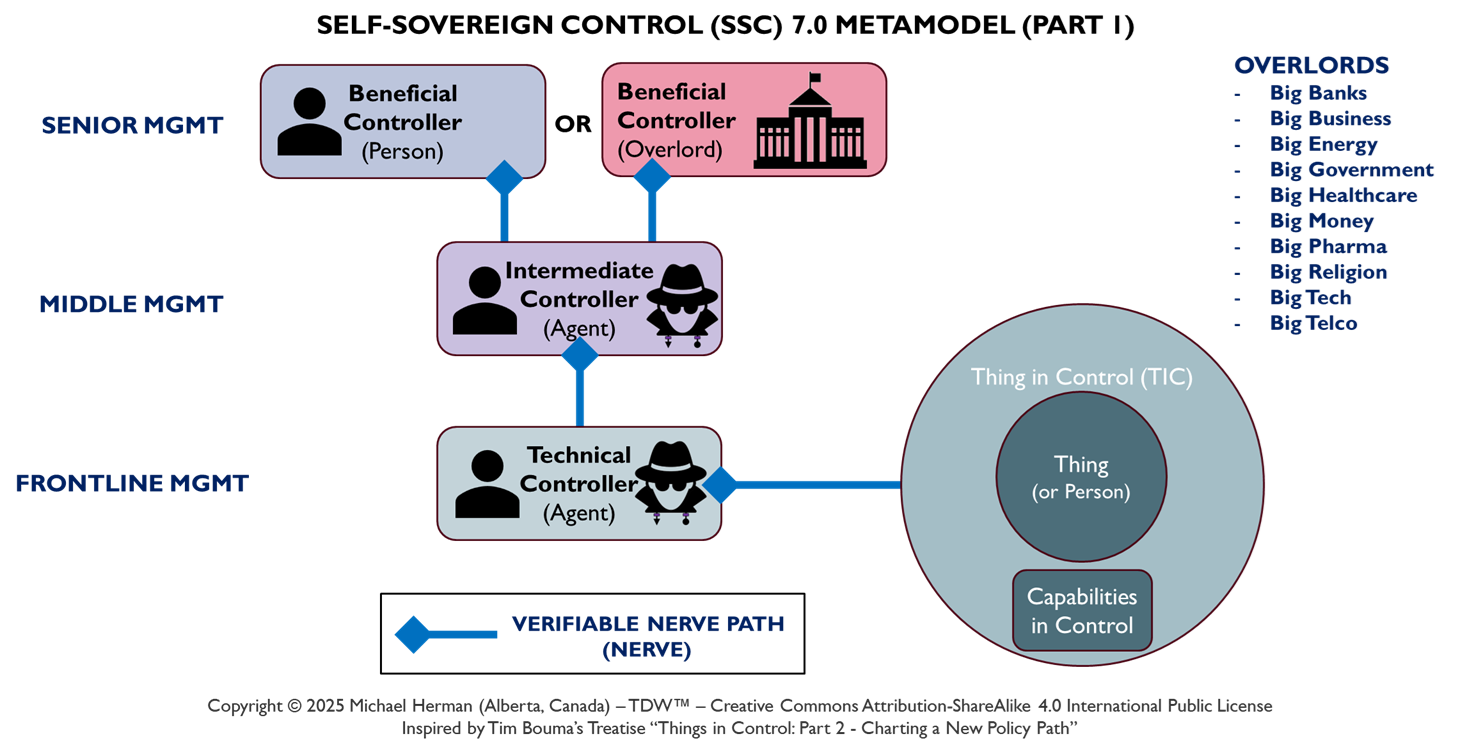
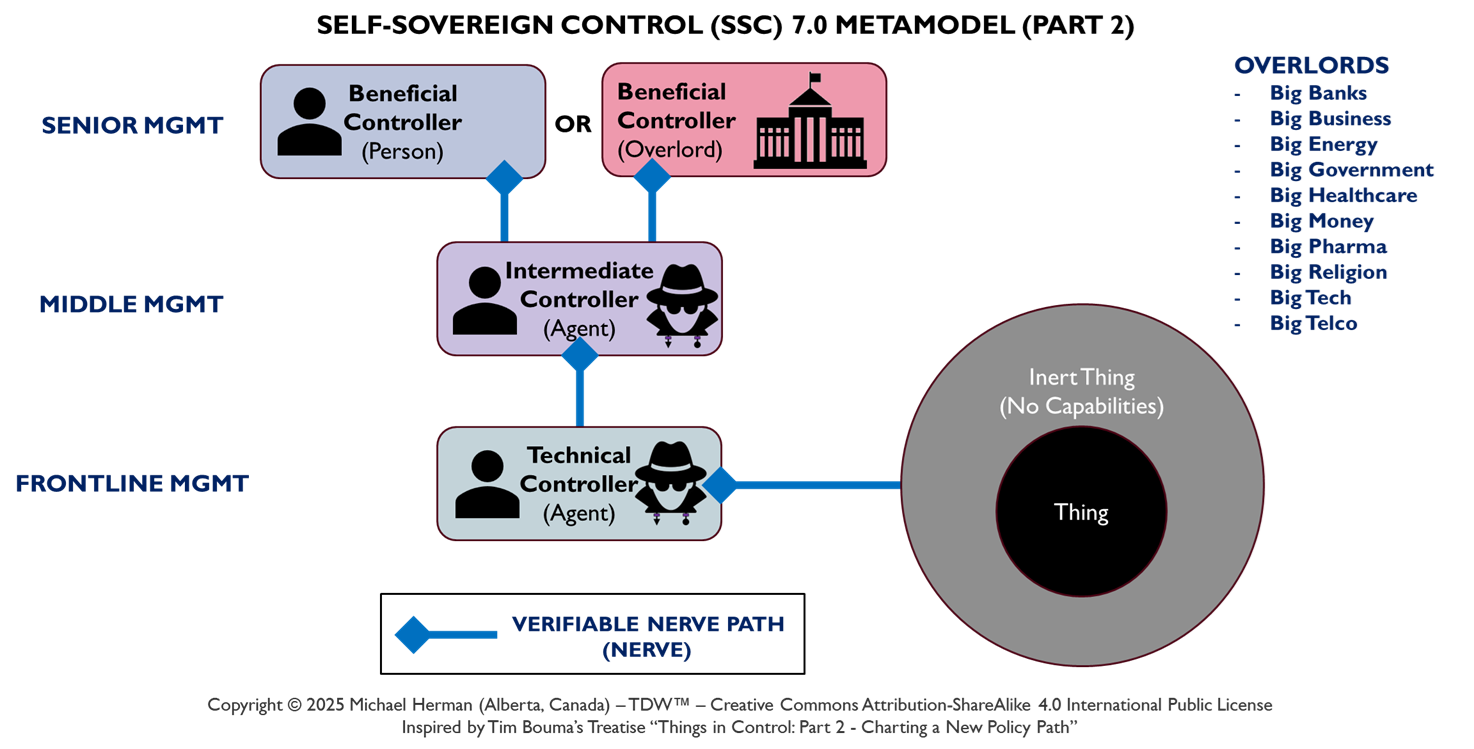
DAVOS2026: Self-Sovereign Control (SSC) 7.0 Metamodel

Also known as the Grand Scheme of Things (GST).

Create your own magic with Web 7.0™ / TDW AgenticOS™. Imagine the possibilities.

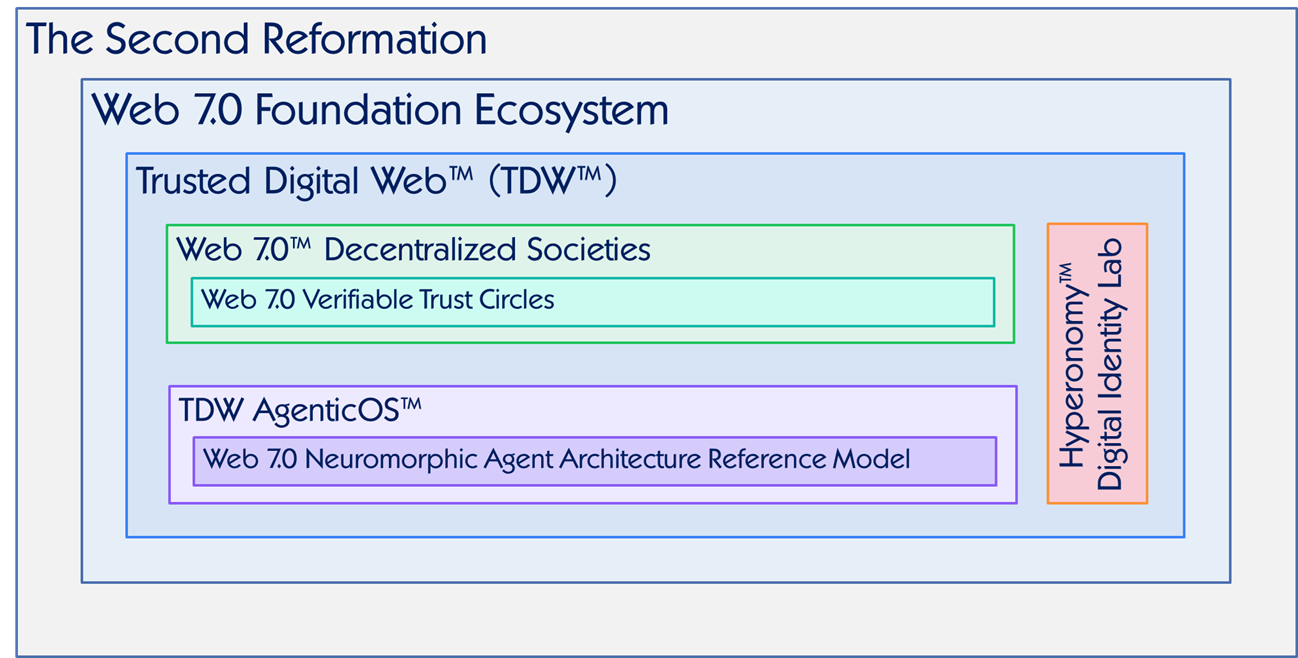
Web 7.0 Foundation Ecosystem

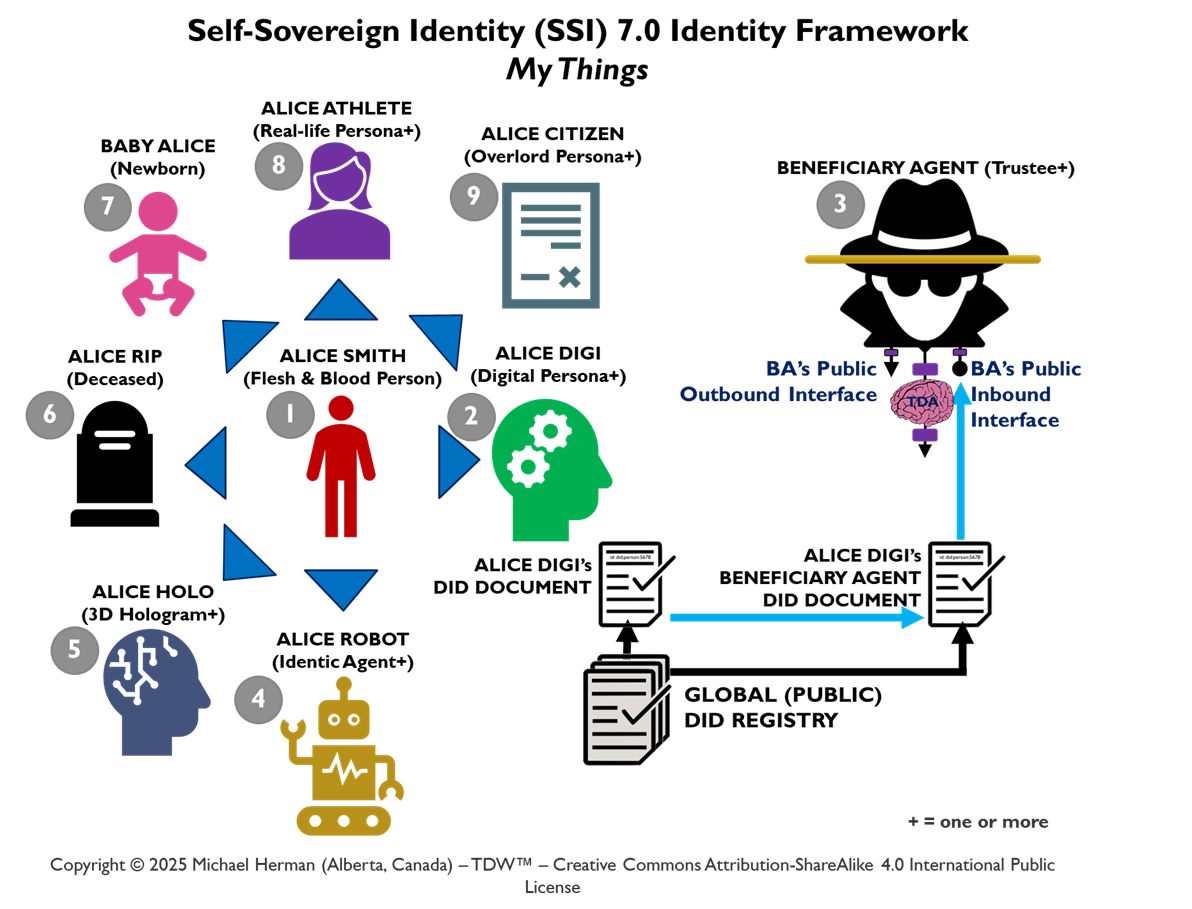
SSI 7.0 Identity Framework

Each persona #2-9 has its own identity – its own set of claims that are projected onto it. In addition, each persona has an identifier associated with it (e.g. ALICE SMITH, ALICE DIGI, ALICE ROBOT) and possibly 1 or more additional identifiers (e.g. each persona also has an identifier whose value is a DID). An identifier is a name or label for a persona’s identity.

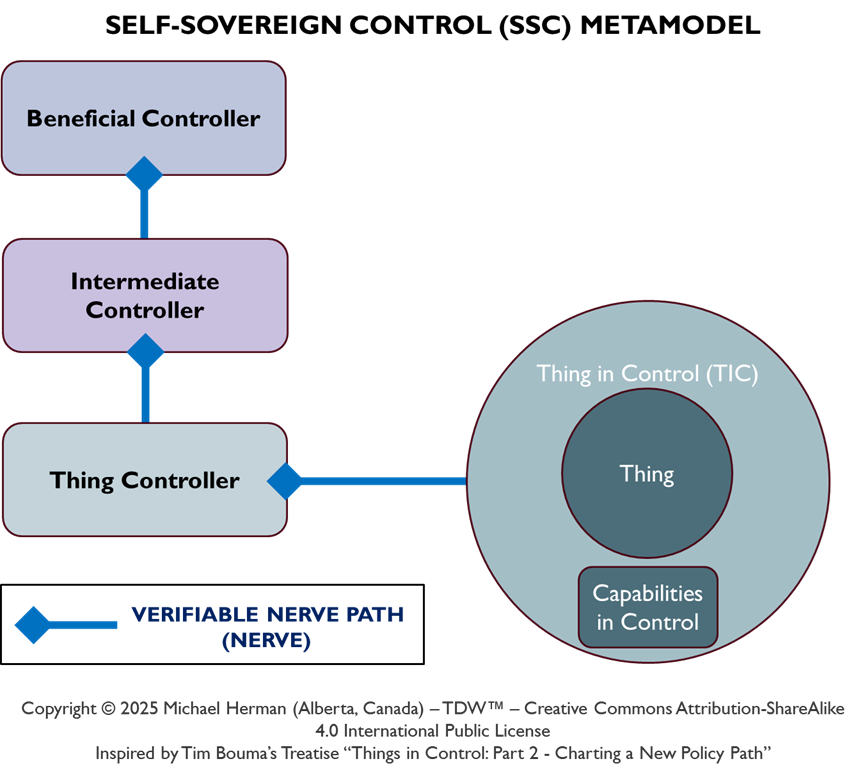
SSC 7.0 Metamodel

Inspired by Tim Bouma’s extended article Things in Control: Part 2 – Charting a New Policy Path.

I firmly believe we’re heading toward a definition of something called Self-Sovereign Control (SSC) that will succeed Self-Sovereign Identity (SSI). SSI has remained an unrealized concept, while SSC has the real potential of becoming a core building block (part of the concrete foundation) for the human digital identity.

Tim Bouma’s Definition of Identity

Identity, properly understood, is a capability surface: the total set of Things in Control that a person can activate.

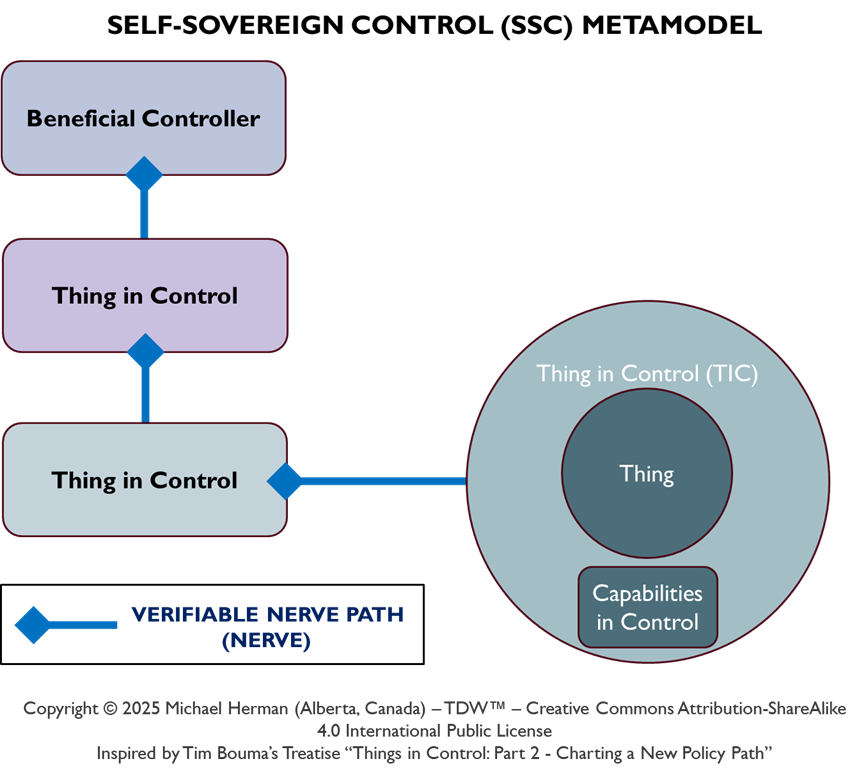
SSC Simplified Metamodel

The following is an easier-to-digest version of the SSC Metamodel – ideal for less technical audiences.

SSC Verifiable Trust Circles (VTCs)

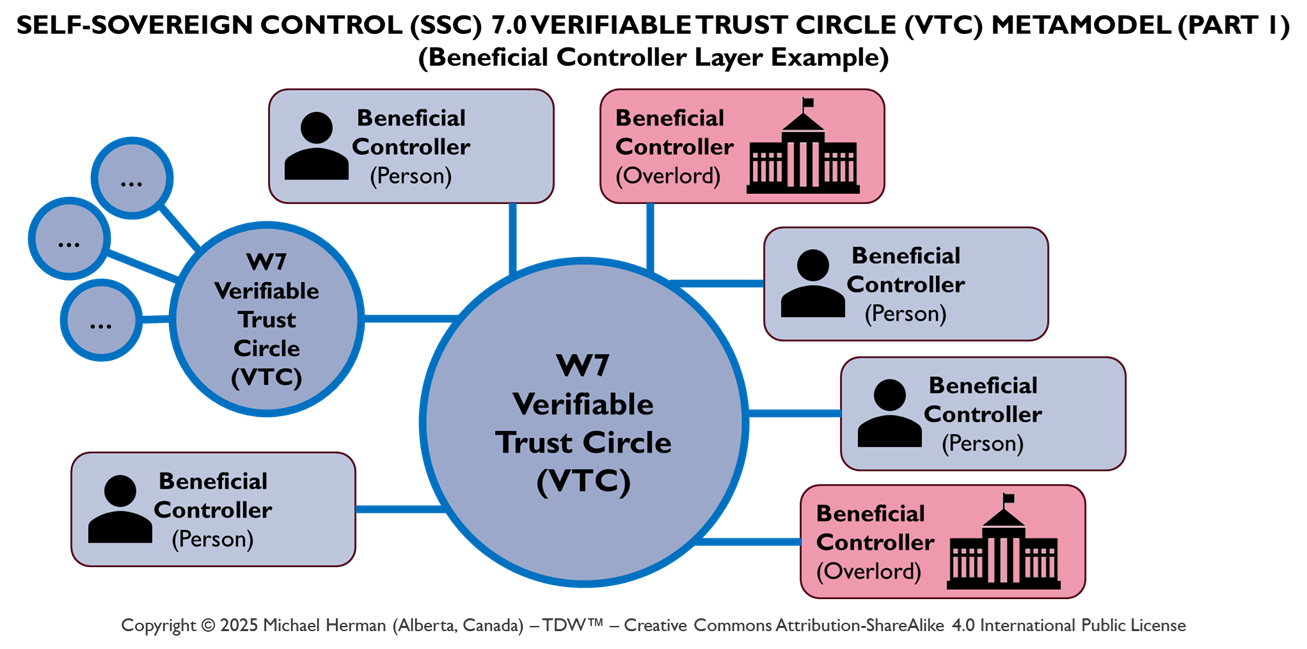
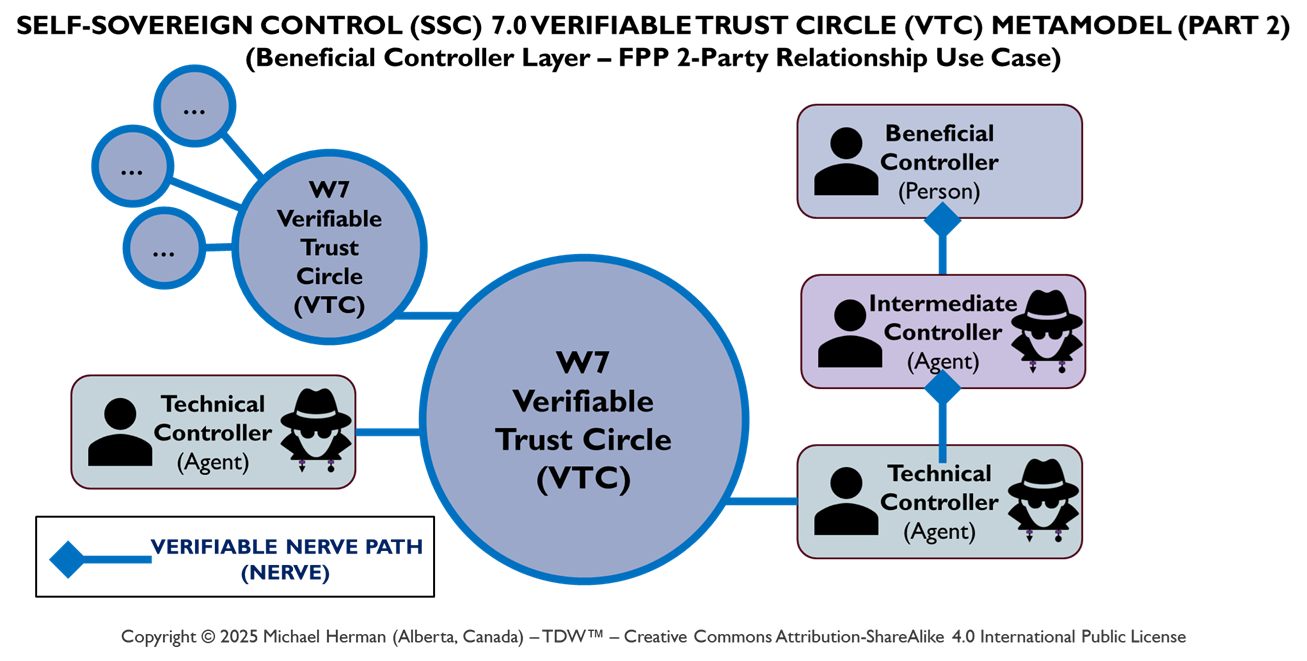
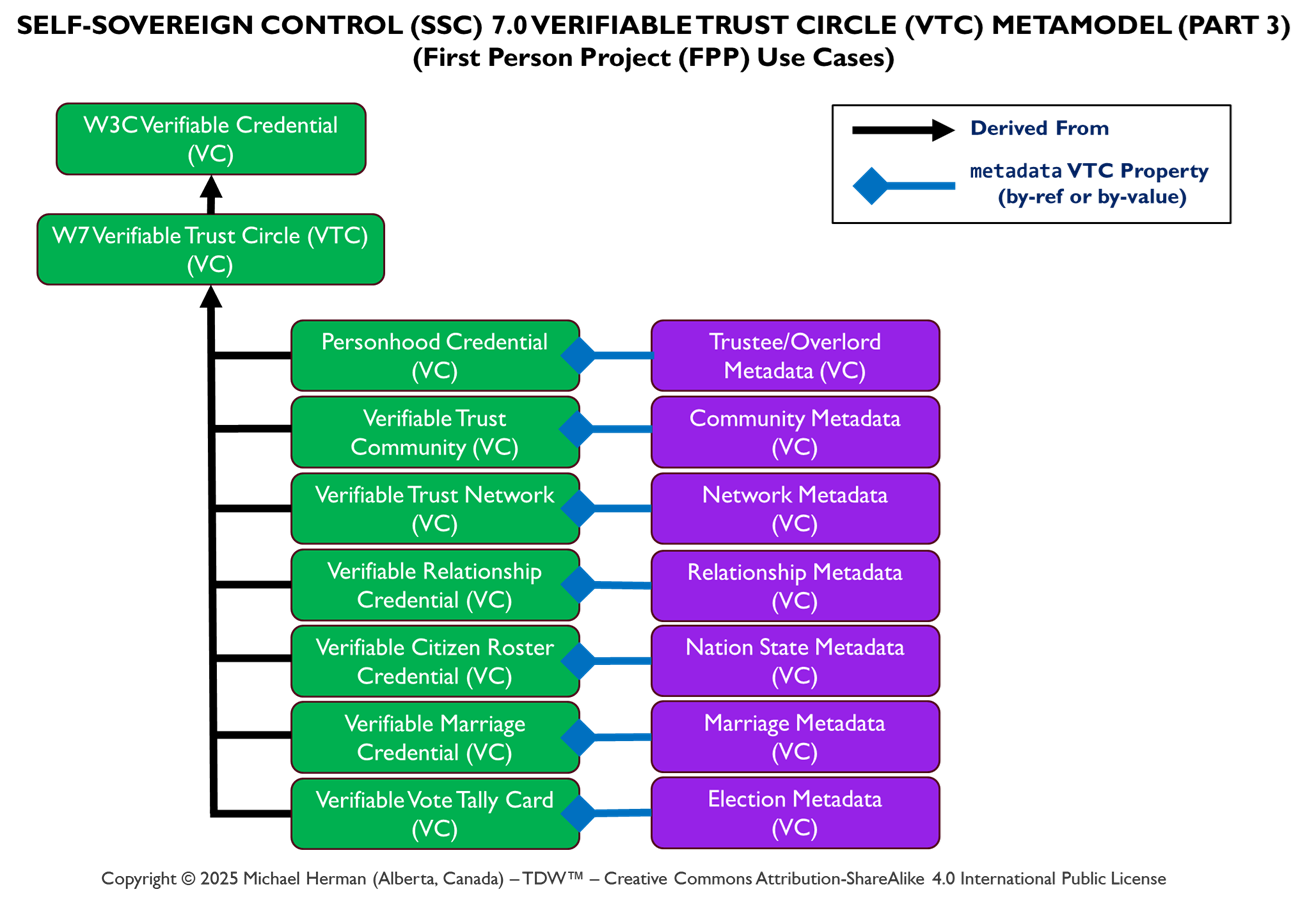
SSC Verifiable Trust Circles (VTCs) are based on what was previously known as UMCs. A VTC can have one, two, three, or more verifiable members. VTCs are circle relationships, not straight-line edges. VTCs can live at any layer in the SSC Metamodel: Beneficial Controller, Intermediate Controller, or Technical Controller. Below is an example of a Beneficial Controller-layer VTC.

VTCs can be used to represent single-party, two-party, or multi-party membership, citizenship, and other partOf relationships. VTCs can also be used to implement/track higher-level working group, team, study group, task force, and digital nation-state processes:

  • Multi-person meeting requests
  • Trustee and notary elections
  • Voting-based decision-making
  • Review and approval routing workflows
  • Contract execution
  • Counter-signing
  • Polls
  • Petitions

SSC 7.0 Verifiable Trust Circles ChainMail (VTC-CM)

End

Leave a comment

Filed under Uncategorized