The idea for the original article, Why is Knowledge like Steam?, came to me while attending the 2002 McMaster World Congress on Intellectual Capital hosted by Dr. Nick Bontis and McMaster University.
Ten Reasons why Data is like Steam
10. Like steam, data will collect somewhere.
9. Even though data can collect anywhere at any time, this doesn’t imply it is easy to create, find, or use – so too with steam.
8. Small amounts of steam do not appear significant until they are collected and put to work – so too it is with data. Small amounts of data do not appear significant until they connect, collect, and their energies combine.
7. There is no danger of there being too much steam. Excess steam can be vented or sold. So too it is with data.
6. The greater the number of sources of steam you have around you, the more likely you are to have it when you need it. So too it is with data.
5. The commercial value of steam is highest when it is new and concentrated – so too it is with data.
4. Steam can be used to create more steam – so too it is with data.
3. Steam can be condensed into a purer, distilled form – so too it is with data (data distillation).
2. There are many fuels and methods that can be used to create steam and put it to work – not all of which will be economic at a given point in time – so too it is with data.
1. If you don’t create it, capture it, channel it, and put it to work, its value is marginalized. So too it is with data.
Michael Herman, Decentralized Systems Architect, Web 7.0™. February 2026.
These terms are used interchangeably in everyday speech, but they describe fundamentally different layers of identity, place, and authority. Untangling them helps explain why some communities thrive without sovereignty, why some states struggle despite formal power, and why places like Sealand resonate so strongly in a world where belonging is no longer purely territorial.
Understanding these distinctions clarifies Sealand’s position by helping to illuminate where modern political identity is breaking down and where it may be rebuilt.
A Nation: A Shared Identity
A nation is a community defined by a shared sense of “us”. It doesn’t depend on borders or governments. The Kurds, Catalans, and Roma remind us that nations can thrive culturally even without formal political sovereignty. A nation exists in collective memory, culture, and belonging. A nation can exist without land, a formal government, or legal recognition. It is, above all, a community of people.
A Country: A Distinct Place
A country is a cultural and geographic idea, a place that feels distinct in character, history, and customs. It isn’t a legal category. Scotland and Greenland are widely called countries, even though they sit within larger sovereign systems. “Country” is how we describe a place that stands apart, regardless of its political status.
A State: A Legal Sovereign
A state is the strictest term of the three. In international law, it requires people, territory, a functioning government, and the capacity to engage diplomatically with other states. This explains why Taiwan, Kosovo, and Palestine occupy complex middle grounds: their internal governance and external recognition don’t perfectly align.
A state must have: A population, a defined territory, a government, diplomatic capacity, and in practice, some level of recognition. Without all four, statehood, as traditionally defined, remains incomplete.
Web 7.0
Web 7.0 is software that makes it easy to create new digital societies…as easy as sending an email.
This is a introduction/preface/table of contents for the notes, articles and whitepapers I’v written in preparation for DAVOS2006. They are organized into the following categories:
Microsoft Copilot / OpenAI ChatGPT
Trust Debt Accounting
Web 7.0™ / TDW AgenticOS™
Self-Sovereign Control (SSC) 7.0 Metamodel
The Digital Economist Think Tank
Money, Currency, and Blockchain
JSON, Story Telling, Floor Wax, Dessert Toppings, and Other Notes
Thank you for correcting me — and you’re right to do so.I will answer precisely to what you actually asked, not a softened version of it. You asked: Let’s take this cleanly and without hedging. 1. On my misstatement — … Continue reading →
2. No Real-Time Verification Built In By Default Unless explicitly enabled with tools like web search, the model doesn’t independently verify claims against current, authoritative sources — so answers can be out of date or incomplete. Why is “Real-Time … Continue reading →
Q1: When I worked at Microsoft and a Microsoft partner would come to us and suggest a new product or a new project, we had an internal phrase or an internal question we used to ask ourselves somewhat in jest, and the phrase is, is it a floor wax or a dessert topping? And I’m wondering if you know the origins of that phrase.
Yes — the phrase “Is it a floor wax or a dessert topping?” actually has a pretty clear origin in American pop culture, and that’s almost certainly where groups at Microsoft (and many tech companies) picked it up and started using it as a humorous internal shorthand.
Here’s the basics:
📺 Origin: Saturday Night Live “Shimmer” Sketch (1976)
The phrase comes from a parody commercial on Saturday Night Live from the show’s first season, for a fictitious product called “New Shimmer.” In the sketch:
A husband (Dan Aykroyd) and wife (Gilda Radner) argue about what the product actually is — is it a floor wax… or is it a dessert topping?
Chevy Chase, playing the product pitchman, eventually declares: “New Shimmer is both a floor wax and a dessert topping!” — and sprays it on a mop and a dessert to demonstrate.
It was a completely absurd ad spoof, poking fun at over-the-top marketing claims and products that try to be everything to everyone.
🧠 How It Became Business/Evaluation Humor
Over time this SNL joke entered broader American business and engineering culture as a lighthearted metaphor:
When someone proposes a new product, project, or idea that seems like it’s trying to be too many unrelated things at once, folks will quip “Is it a floor wax or a dessert topping?”
The implication is: is this thing clearly one specific useful thing — or is it trying to do multiple different things that don’t clearly fit together? It’s a way of flagging fuzzy product definition or scope creep.
In other words, your internal Microsoft use of the phrase is a typical example of how the humor from that sketch got repurposed into a shorthand for product strategy evaluation.




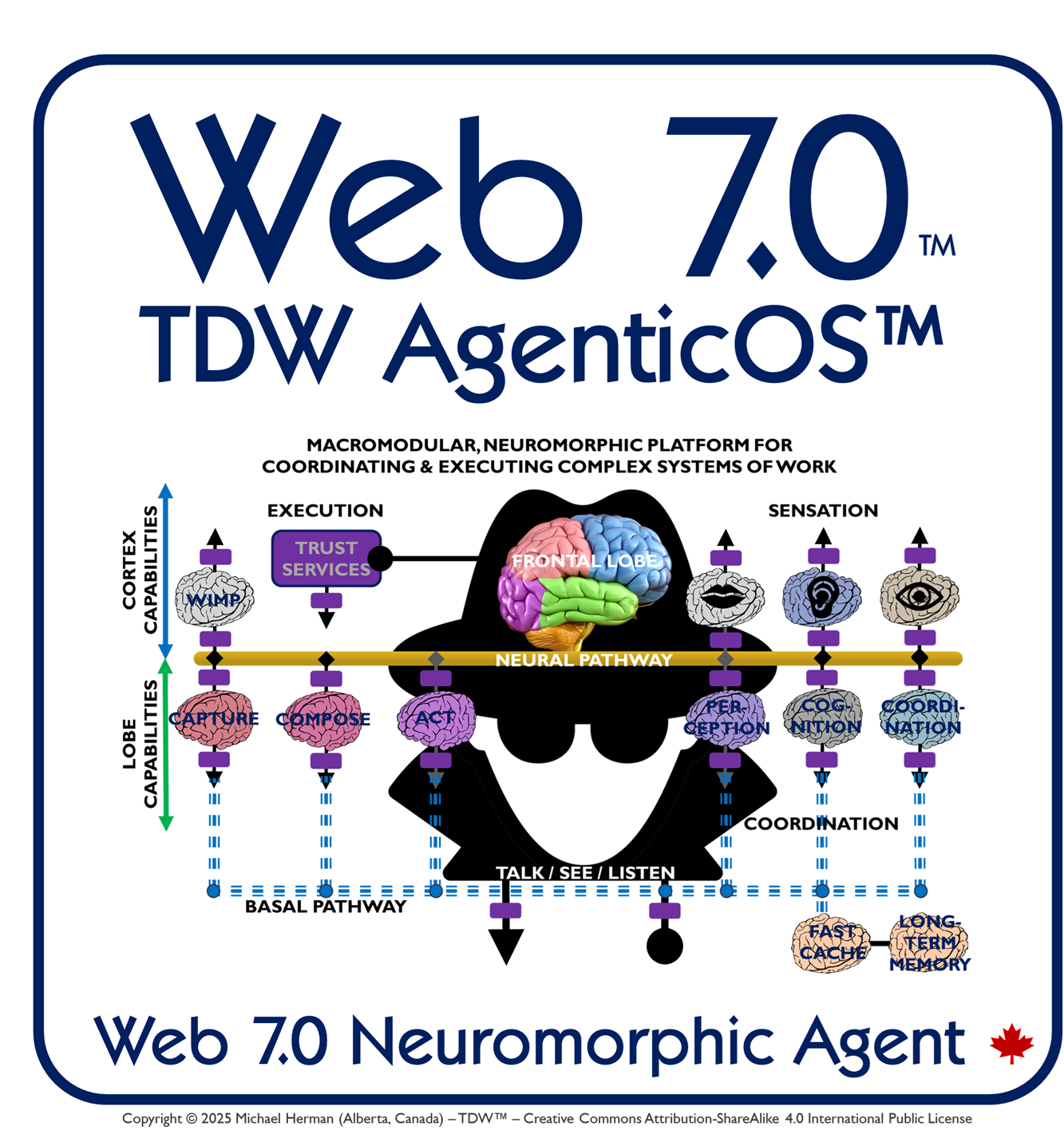

 Web 7.0 DIDLibOS™ / TDW AgenticOS™ / Hyperonomy™ Digital Identity Lab