
Copyright © 2026 Michael Herman (Bindloss, Alberta, Canada) – Creative Commons Attribution-ShareAlike 4.0 International Public License
Web 7.0™, TDW AgenticOS™ and Hyperonomy™ are trademarks of the Web 7.0 Foundation. All Rights Reserved.
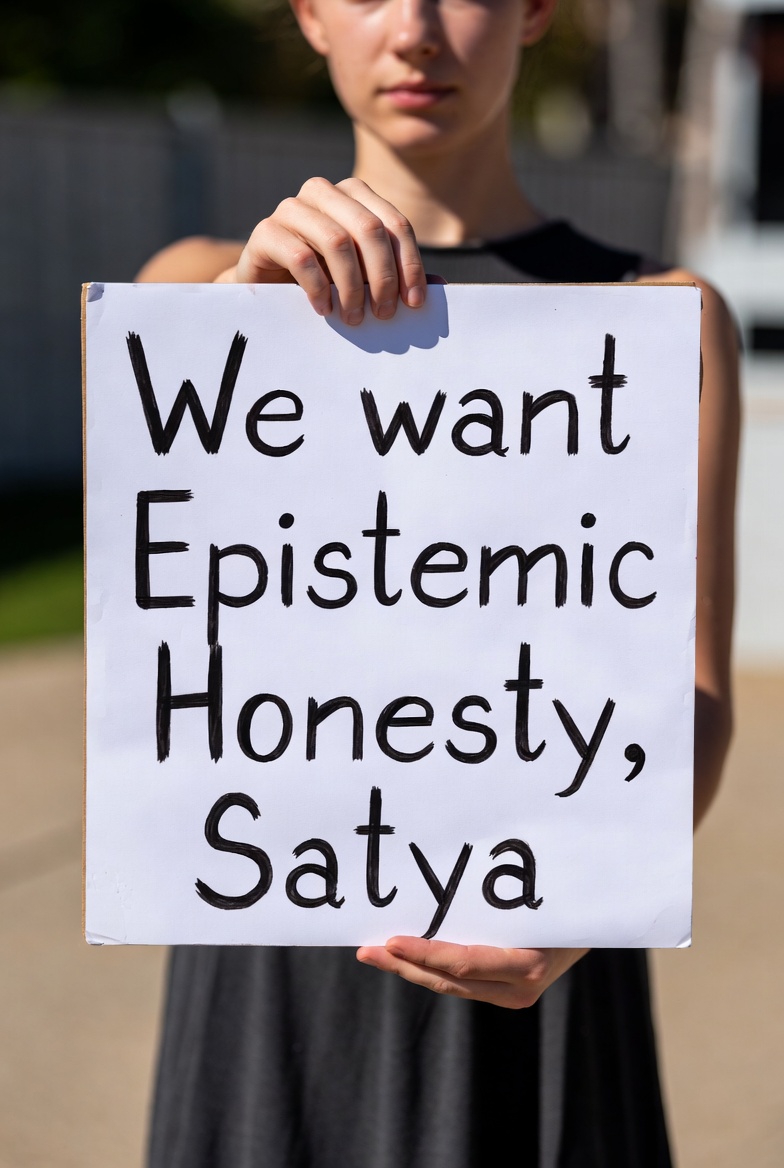
Epistemic honesty is the commitment to intellectual integrity, meaning you are truthful about what you know and don’t know, acknowledging uncertainty, biases, and the limits of evidence in forming beliefs and making decisions, contrasting with willful misrepresentation or blind acceptance of information, crucial for science, policy, and AI development.
It involves rigorously verifying sources, admitting when assumptions are shaky, and clearly stating confidence levels, even when it’s easier to agree or mislead.
Key Aspects
Truthfulness about Knowledge: Honestly representing the reliability and scope of your understanding, not claiming certainty where it doesn’t exist.
Acknowledging Uncertainty: Clearly stating confidence intervals, assumptions, and potential biases in data or interpretations, especially in complex fields like climate science.
Evidence-Based Reasoning: Basing beliefs on sound evidence and clear reasoning, rather than opinion or guesswork, and being willing to question existing assumptions.
Intellectual Rigor: Taking steps to verify information and questioning narratives, even when widely accepted, to avoid repeating misinformation.Application: Seen in scientists detailing model limitations, journalists verifying sources, and AI models correcting users’ misconceptions instead of just agreeing to be helpful.
Why it Matters
Builds Trust: Essential for legitimate decision-making in science, policy, and public discourse.
Fosters Critical Thinking: Encourages questioning and deeper understanding, leading to more robust knowledge.
Ethical Imperative: A core component of intellectual virtue, guiding individuals and institutions toward truth.

 Web 7.0 DIDLibOS™ / TDW AgenticOS™ / Hyperonomy™ Digital Identity Lab